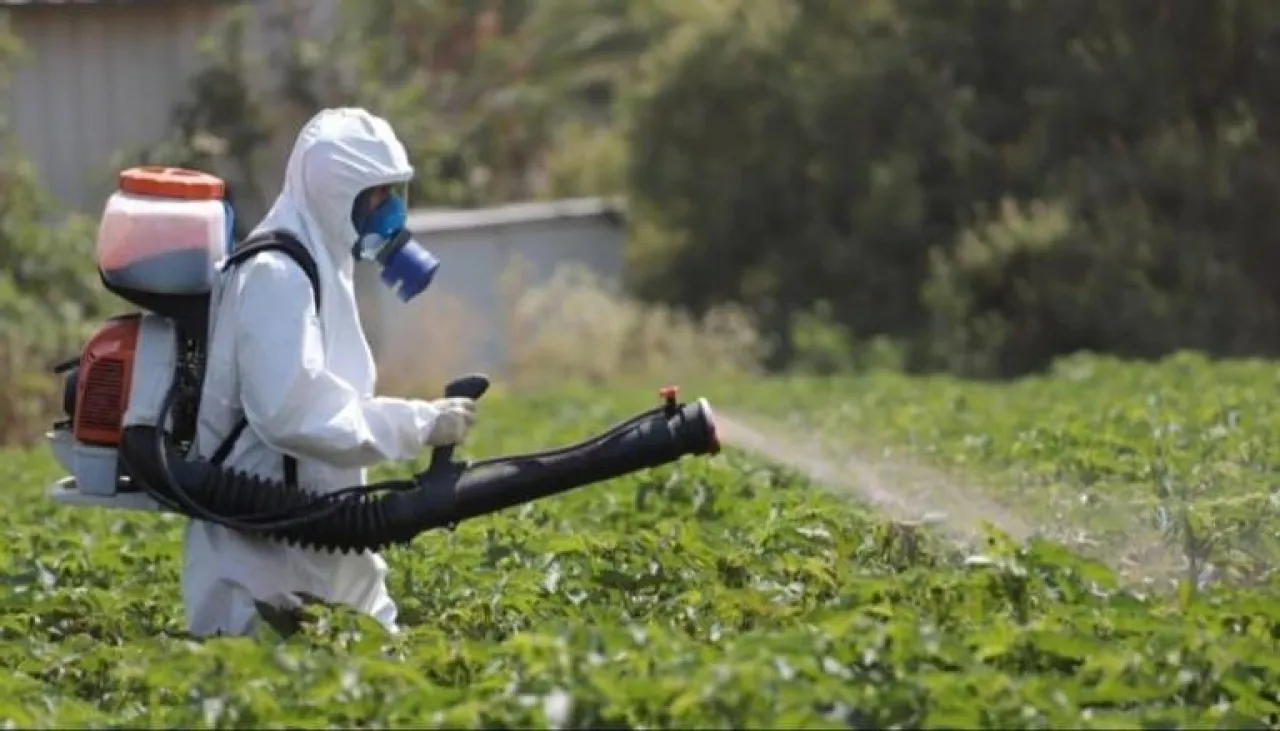
Khaberni - A recent scientific study reveals alarming data linking exposure to agricultural pesticides to a significant increase in the risk of cancer.
While the focus was previously on individual substances, this study sheds light on a new, more complex risk known as the "mixture effect," which raises serious questions about the unseen dangers threatening millions of people.
A study published in "Nature Health" after 8 years of field research found a "strong association" between exposure to agricultural pesticides and increased rates of certain types of cancer, especially in areas experiencing intensive use of these substances, according to the French medical site "Top Santé."
The study, conducted by researchers from France and Peru, was based on extensive analysis involving data from about 160,000 patients diagnosed with cancer between 2007 and 2020.
An unprecedented methodology reveals the hidden danger
Researchers first created a detailed map of pesticide distribution in the environment and then linked it to the health data of patients, enabling them to identify the most exposed areas and measure health effects more realistically.
This study distinguishes itself from previous ones by not only focusing on one substance but studying the simultaneous exposure to several pesticides, known as the "mixture effect," where the interaction of chemicals can produce effects more dangerous than the impact of each substance individually.
Alarming results: a 150% increase in cancer risk
In the 436 areas covered by the study, researchers recorded an average increase of 150% in the risk of cancer among people exposed to a mixture of pesticides.
Notably, none of these pesticides is classified individually as a "confirmed carcinogen" by the World Health Organization, which supports the hypothesis that the real danger lies in the combined interaction between them.
Daily exposure to a mixture of chemicals
The study showed that individuals in affected areas are exposed to about 12 different types of pesticides, often at high concentrations, complicating the assessment of health risks.
It also indicated that climatic phenomena such as El Niño could increase the spread of these substances in the environment, changing wind and rain patterns and thus widening the exposure range.
Why do these findings represent an important shift?
Scientists have always struggled to prove the link between pesticides and cancer due to most previous studies relying on laboratory experiments or analyzing individual substances, far from the complex reality of human exposure.
However, this study, thanks to its reliance on extensive field data and the "multiple exposure" model, provides evidence closer to reality, which might prompt a reassessment of current safety standards.