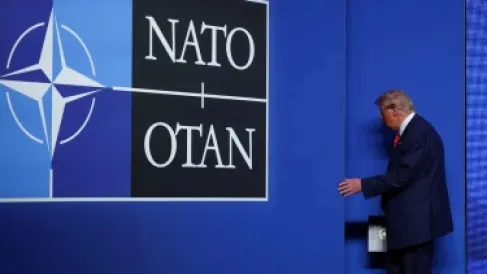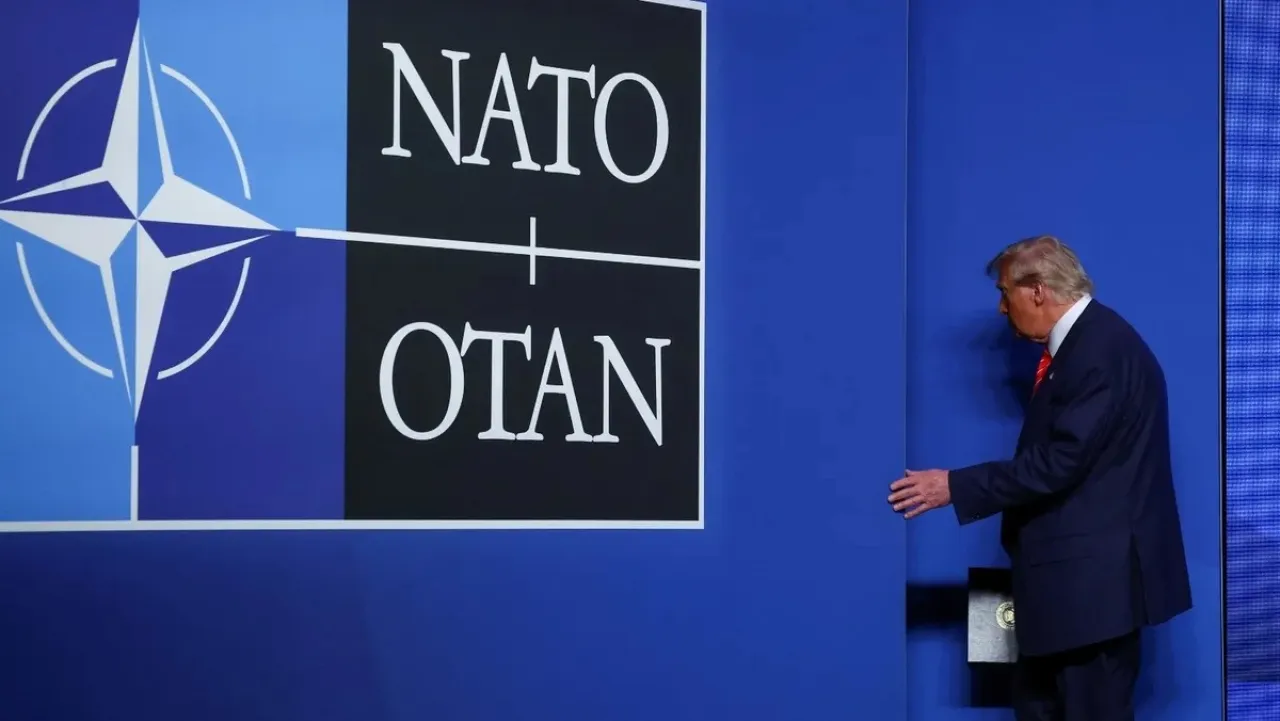
Khaberni - President Donald Trump's repeated talk about the potential withdrawal of the United States from the North Atlantic Treaty Organization (NATO) raises complex legal and constitutional questions. The treaty dictates a specific mechanism for withdrawal that takes a full year, meanwhile, U.S. law imposes limitations on the president's powers, indicating that any move of this nature would not only be a political decision but a legal, constitutional, and strategic battle as well.
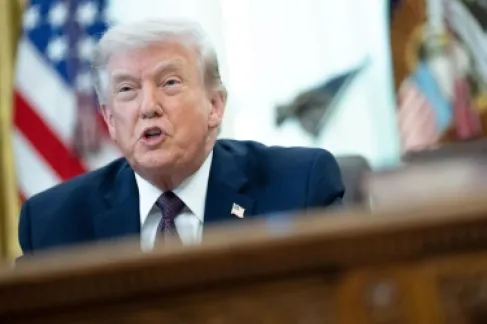
The president's threat on Wednesday to withdraw from "NATO" puts the future of the world's largest military alliance at an "unprecedented test," at a time when escalating challenges from Russia, repercussions of the American-Israeli war on Iran, and rising global energy prices emerge.
The United States represents the backbone of NATO's capabilities, in terms of forces, nuclear capabilities, or funding, meaning that a U.S. withdrawal from the alliance could lead to significant changes in the European security structure, according to the Council on Foreign Relations, an American research center specializing in U.S. foreign policy and international relations.
The Center for Strategic and International Studies noted that U.S. withdrawal from NATO could weaken the principle of military deterrence in Europe, and force European countries to increase their defense spending. It might also lead the old continent to establish an independent European security system apart from the United States.
What does the "NATO" treaty say about the withdrawal mechanism?
Article 13 of the North Atlantic Treaty states that any member state can withdraw from the alliance after submitting an official notification to the United States, as the depository state of the treaty, with the withdrawal becoming effective after one year from the date of the notice, meaning that withdrawal is not immediate but requires a one-year timeline before it becomes official.
Interestingly, the treaty does not clarify the mechanism that should be followed if the United States itself wishes to withdraw from the alliance, creating a legal issue that experts will need to resolve.
Who has the authority to withdraw from NATO: The President or Congress?
A study issued by the American Congressional Research Service in February 2026 clarified that the matter of U.S. withdrawal from NATO relates not only to international law but is fundamentally connected to American constitutional law and the distribution of powers between the president and Congress.
The American Constitution grants the President broad powers in managing foreign policy, but it also assigns a vital role to the Senate in ratifying international treaties, raising legal questions about the authority to make decisions regarding treaty withdrawal.
The American Constitution does not explicitly state which body holds the power to terminate treaties or withdraw from them, leading historically to different precedents. Some U.S. presidents have terminated international treaties without Congress's approval, while some members of Congress believe that ending treaties should follow the same process used for their approval, meaning through the Senate.
Can the President withdraw without Congress's approval?
Congress has taken a clear legislative step in this matter, recognizing within the National Defense Authorization Act in September 2025, a provision that prevents the President from suspending U.S. membership in NATO or withdrawing or terminating the treaty without Congress's approval or without a two-thirds majority of the Senate members, meaning any decision to withdraw from the alliance cannot be made unilaterally by the President but requires legislative authority approval.
A Congressional Research Service study indicated that this legislative text reflects Congress's view that NATO represents a long-term strategic security commitment for the United States, and any decision to withdraw from it should be subject to legislative approval, considering the broad military, political, and security implications that may arise.
What happens if the President tries to withdraw without Congress's approval?
If a constitutional dispute arises between the President and Congress regarding powers, this could lead to a constitutional conflict, especially if a president attempts to withdraw from NATO without Congress's approval. In such a case, recourse to the judiciary, and potentially to the Supreme Court, might occur to resolve the constitutional powers related to ending international treaties.
The Supreme Court has previously avoided directly resolving some disputes related to ending treaties, considering these matters as "political questions" that the judiciary prefers not to intervene in, leaving them to the executive and legislative branches.
However, the Congressional study mentioned that a U.S. withdrawal from NATO could represent a different case given the strategic importance of the alliance, potentially prompting judicial intervention if a clear constitutional dispute arises.
What are the international implications of the United States withdrawing from NATO?
The U.S. withdrawal from NATO would not only terminate its legal obligations within the alliance but would also have significant strategic implications. As the largest military member within the alliance, the U.S. serves as the backbone of the alliance's deterrence and collective defense capabilities, therefore any American withdrawal could lead to significant changes in the European security structure and the nature of security balances within the alliance.
Withdrawing from the treaty does not necessarily imply ending all forms of military cooperation between the United States and European countries. The U.S. can continue with bilateral or multilateral defense agreements outside NATO's framework, but withdrawal would mean ending the official commitment to Article 5 of the treaty, which establishes the principle of collective defense, one of the alliance's foundational principles.
Is there a difference between an official withdrawal and reducing commitment to the alliance?
There is a difference between an official withdrawal from the alliance and reducing the American commitment to the alliance without a formal withdrawal. Any American administration can reduce the number of U.S. forces deployed in Europe, diminish participation in alliance operations, or redistribute military resources, which could practically affect the United States' role in the alliance even without a formal decision to withdraw, according to a Congressional Research Center study.
Withdrawal is not merely a political decision but a complex legal and constitutional one that requires internal legal procedures and an international time frame. It could lead to a domestic constitutional crisis in the United States in addition to wide-ranging strategic implications for European security and the international order.