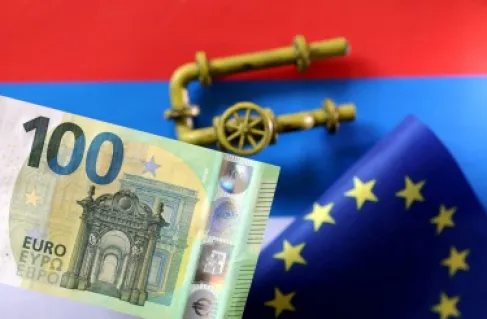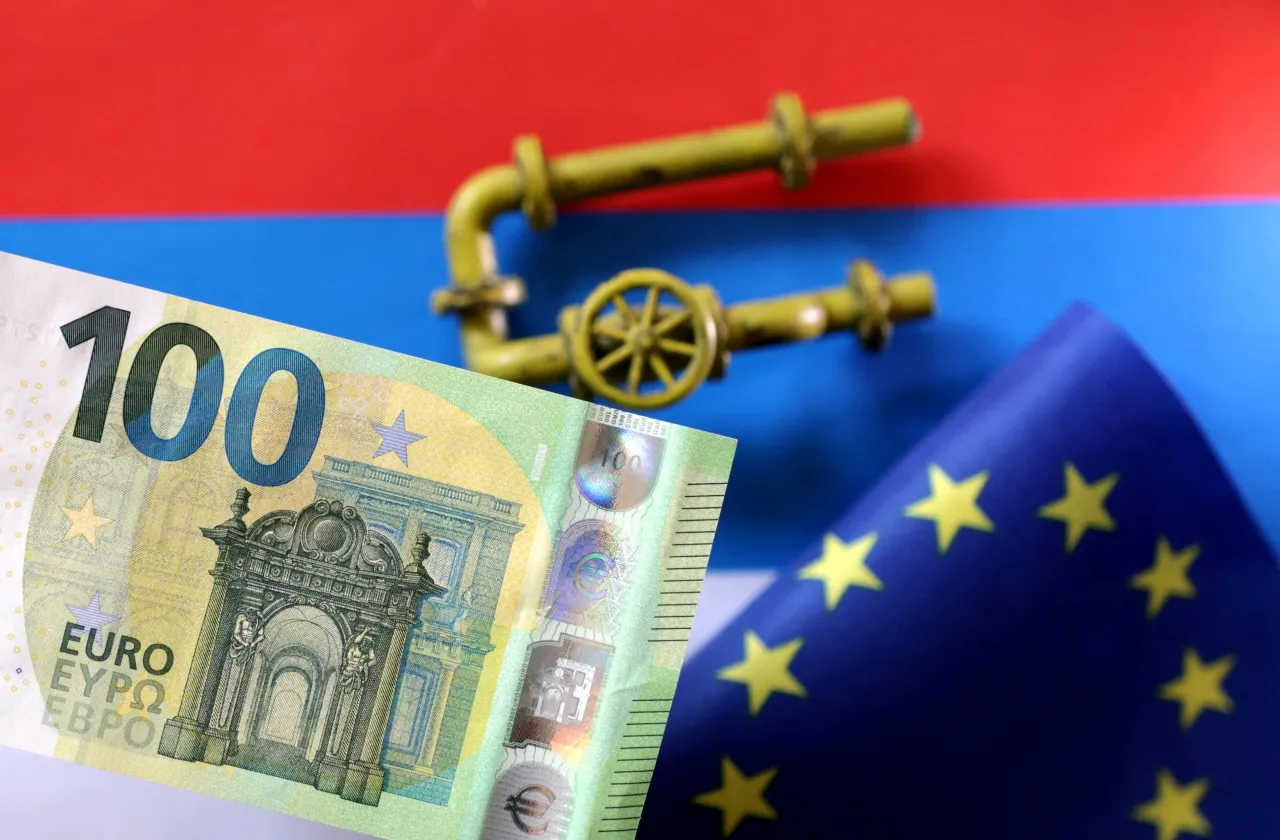
Khaberni - Calculations conducted by Reuters on Wednesday revealed that the average daily natural gas supplies issued by the giant Russian energy company Gazprom to Europe via the "TurkStream" pipeline rose by 22% this past March compared to the same month last year, reaching 55 million cubic meters.
The supplies increased following the actual closure of the Strait of Hormuz, which transmits about 20% of the world's crude oil and liquefied natural gas, to most ships due to the war on Iran, exposing the energy markets to a significant shortage of oil and gas supply.
Turkey has now become the only route for Russian gas to reach Europe after Ukraine chose not to extend a five-year agreement with Moscow that expired in January 2025.
Calculations based on data from the European Network of Transmission System Operators for Gas showed that the total Russian gas supplies to Europe via the TurkStream pipeline last month reached 1.7 billion cubic meters, up from 1.4 billion cubic meters in March 2025. The supplies have been generally stable since last February.
During the first three months of this year, Russian gas exports through pipelines increased by 11% year-on-year to reach about 5 billion cubic meters.
A Contrary Direction to Europe's Plans
Reuters calculations indicate that gas exports from the company to Europe dropped by 44% last year to only 18 billion cubic meters, marking the lowest level since the mid-1970s following the closure of the Ukrainian route.
Russian gas exports via pipelines to Europe peaked at about 180 billion cubic meters annually during the years 2018-2019.
Russia provided about 40% of the European Union's gas needs, either through pipelines or by transporting liquefied natural gas, but this percentage decreased to 13% in 2025, according to Reuters.
The European Union aims to completely stop importing Russian gas by 2027.
However, there is opposition to the European Union's plan to stop importing gas from Russia by some European countries such as Hungary, which heavily relies on it.
Kremlin spokesman Dmitry Peskov described the European leaders' policy aimed at banning the import of Russian gas as akin to "shooting oneself in the foot," noting that European leaders are harming their people with this policy because it will incur higher energy costs, while Moscow has alternative markets.
"A Serious Situation"
This comes at a time when the EU Energy Commissioner Dan Jorgensen confirmed that Europe is facing a "very serious situation" with no clear end in sight for the ongoing crisis in the energy markets.
The Politico website quoted Jorgensen saying after an exceptional meeting of the 27 energy ministers of the European Union on Tuesday, "Even if peace is resolved tomorrow, we will not return to normal anytime soon."
Jorgensen added in his speech before the energy ministers of the Union states, "The more we can save on oil consumption, especially diesel and jet fuel, the better off we will be."
Jorgensen urged member states to follow the advice of the International Energy Agency, which includes working from home whenever possible, reducing speed limits on highways by 10 kilometers per hour, promoting public transport, and increasing carpooling.