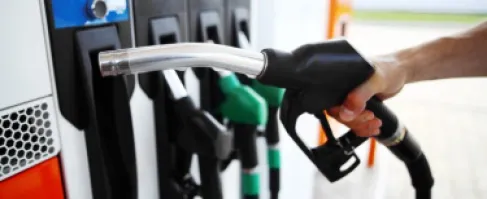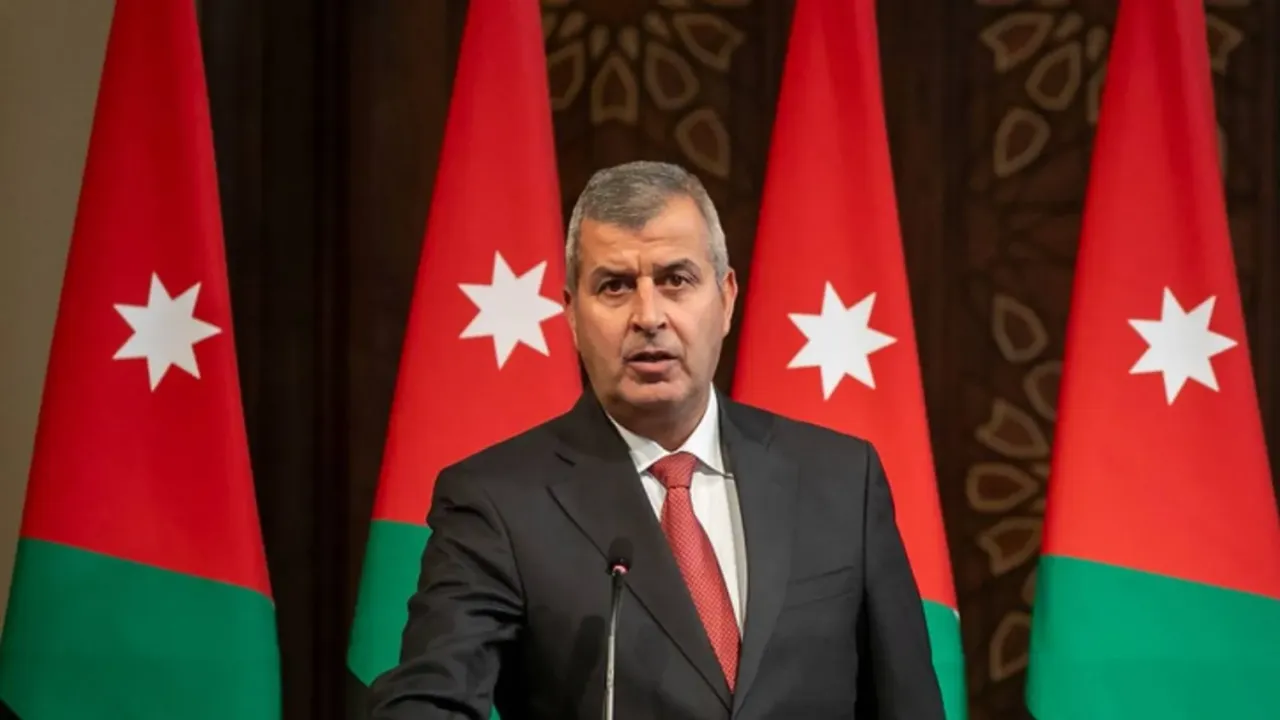
Khaberni - The Minister of Energy and Mineral Resources, Saleh Al-Kharabsheh, said that the government directed the pricing committee to adopt a gradual approach in raising the prices of oil derivatives, noting that the global rise does not directly reflect on the pricing for April.
Al-Kharabsheh confirmed during his talk on "Ayn FM" radio that the government has been keen to alleviate the burdens on citizens and various economic sectors.
He explained that applying the normal pricing equation would have led to a higher price increase, noting that the gasoline price before the raise was 82 piasters and became 91 piasters, whereas it would have reached about 1.16 dinars and 5 fils if the formula had been fully applied.
He added that applying the equation to diesel would have raised its price to about 1.12 dinars instead of 65 piasters, noting that the global price for diesel, excluding taxes and including shipping costs, is about 95 piasters.
He confirmed that the government has borne 62% of the rise in gasoline prices, and 84% of the rise in diesel prices, pointing out that it will continue to monitor global prices during the current month, and that any global rise will be reflected locally in a gradual manner.
The government incurs 150 million dinars
Al-Kharabsheh clarified that the government has borne about 150 million dinars during the current crisis, distributed in two parts; the first relates to electricity, as it had to resort to using diesel and heavy fuel instead of gas for electricity generation, raising the cost by about 90 million dinars.
He indicated that the government has clearly announced that it will bear this cost without reflecting it on the electricity bill at this stage.
As for the second part, amounting to about 70 million dinars, it is due to the difference in global oil prices, which the government has also borne.
The fuel price difference clause is still zero
He said that the pricing of oil derivatives in case of war cessation depends on the extent of damage to energy facilities and the continuity of supplies, in addition to demand and global prices, noting that the pricing of fuels in Jordan depends on the average global prices for the previous month.
He confirmed that the fuel price difference clause in the electricity bill is still zero and will not be activated at the current time, with emphasis on the necessity of prices not rising in the coming days.
He pointed out that the price of a barrel of oil rose from 70 dollars at the beginning of the crisis to more than 110 dollars currently, while the price of a million British thermal units of natural gas rose from 8.5 to 28 dollars, compared to 6.5 dollars for the gas arriving to Jordan via pipelines.
Will Jordan export gas?
In relation to the Risha field, he explained that the National Petroleum Company has a production capacity of up to 80 million cubic meters per day, although the actual production is less due to the lack of sufficient infrastructure to transport these quantities.
He noted that the current production is used directly for electricity generation at the Risha station, while Jordan's daily gas needs range between 330 and 340 million cubic meters.
He added that the company issued a tender to drill 80 wells, expected to be completed by 2029, which will increase production to 418 million cubic meters per day, in addition to working on establishing a pipeline connecting the field to the Arab Gas Pipeline.
He explained that upon completion of these projects, Jordan will be able to use gas locally in various sectors, with the possibility of exporting the surplus.
Iraqi oil through Jordan
Regarding the export of Iraqi oil through Jordan, Al-Kharabsheh mentioned that technical discussions and studies are still ongoing in this regard.
He confirmed that Jordan currently receives 10 to 15 thousand barrels per day of Iraqi oil at a discount of 16 dollars from Brent crude, explaining that this discount covers transport costs amounting to 6 dollars per barrel, in addition to quality differences and other fees.
He pointed out that the transportation of oil is shared equally between Jordanian and Iraqi carriers, and that Jordan provides facilitations, including a 75% discount on port handling fees, in addition to providing the Rutbah area with electricity.
He explained that Jordan's needs amount to about 150 thousand barrels per day, while the quantities imported from Iraq do not exceed 15 thousand barrels.
Jordan as a regional energy hub
Al-Kharabsheh confirmed that Jordan is open to exporting energy products from Gulf countries through its territory to the Syrian ports, in light of a global trend to look for alternative energy transport routes.
He indicated that the country's vision is to turn Jordan into a regional hub for energy exchange, benefiting from its geographical location and infrastructure, in addition to its growing role in green energy projects, such as green hydrogen.
Is the programmed blackout coming?
Regarding the possibility of resorting to a scheduled power outage, Al-Kharabsheh confirmed that there is currently no intention for this option.
He pointed out that the government has activated emergency plans since the beginning of the crisis, which are applied in stages according to the developments of the situation, explaining that Jordan is still at the first level.
He emphasized the importance of rationing consumption to avoid any pressures on the inventory.
In conclusion, he noted that the government's tax revenues will be affected due to not fully reflecting the pricing formula, which may lead to a loss estimated at about 70 million dinars during the current month.