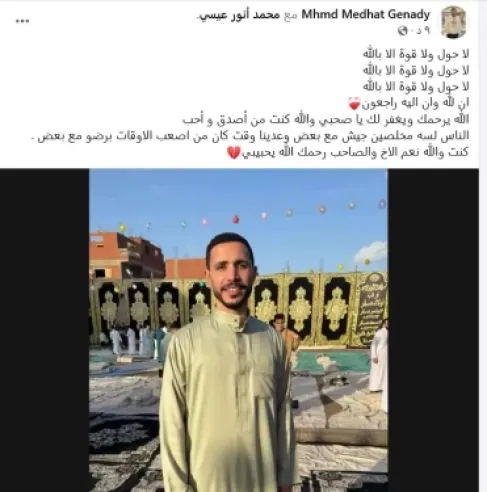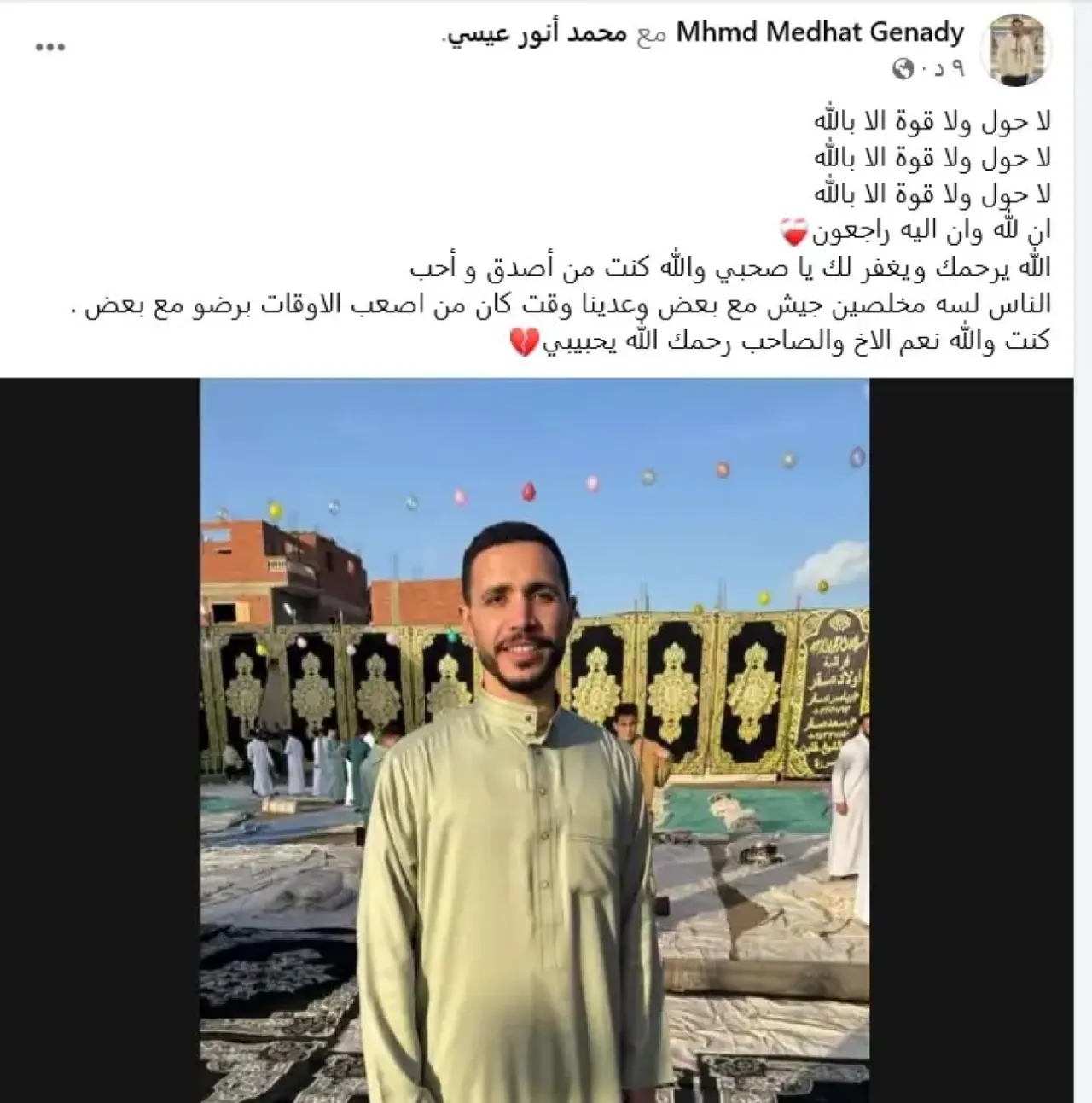
Khaberni - In a shocking twist that shook the village of Sarwa in Qallin center, Kafr El Sheikh governorate in northern Egypt, a young man in his late twenties died today, Tuesday, inside his home due to a sudden heart attack, just a few hours after he posted moving words mourning his friend and neighbor who died in Cameroon.
According to Egyptian media, Mohamed Anwar Issa wrote on his personal account with words overflowing with grief and shock: "This world is but a place of misery and hardship, and the relief is in heaven.. To God belongs what He gave, and to Him belongs what He took, and everything with Him has a predetermined time, and we only say what pleases God.. Verily to Allah we belong and to Him we will return.. Our brother Mohamed Azab is in the care of Allah, we ask you for prayers".
But the words that were a farewell to his friend quickly turned into an indirect farewell to himself as the post spread widely on social media.
Users wondered whether these words were a prophecy or if it was the shock of separation that ended his life, while the villagers and friends of the two young men are still in deep shock.
Despite its dramatic nature, this incident is not entirely isolated from a known scientific context. In modern medicine, there exists what is known as the broken heart syndrome, a documented condition that occurs as a result of severe emotional shock, such as the loss of a loved one.
According to a previous report by the American Heart Association, severe psychological stress can lead to a temporary dysfunction of the heart muscle, causing symptoms similar to a heart attack, and in rare cases, it may be fatal.
Studies published in The Lancet journal indicate that intense grief can increase the risk of death in the days and weeks following the loss of a loved one, due to disturbances in blood pressure, increased stress hormones like cortisol and adrenaline. These changes might lead to cardiac arrhythmias or sudden clots, especially if there is an undiagnosed pre-existing health predisposition.
It is notable that the rates of sudden deaths among young people have become a global concern, linking some studies to various factors, including stress, an unhealthy lifestyle, the lack of regular check-ups, and increased psychological pressures.