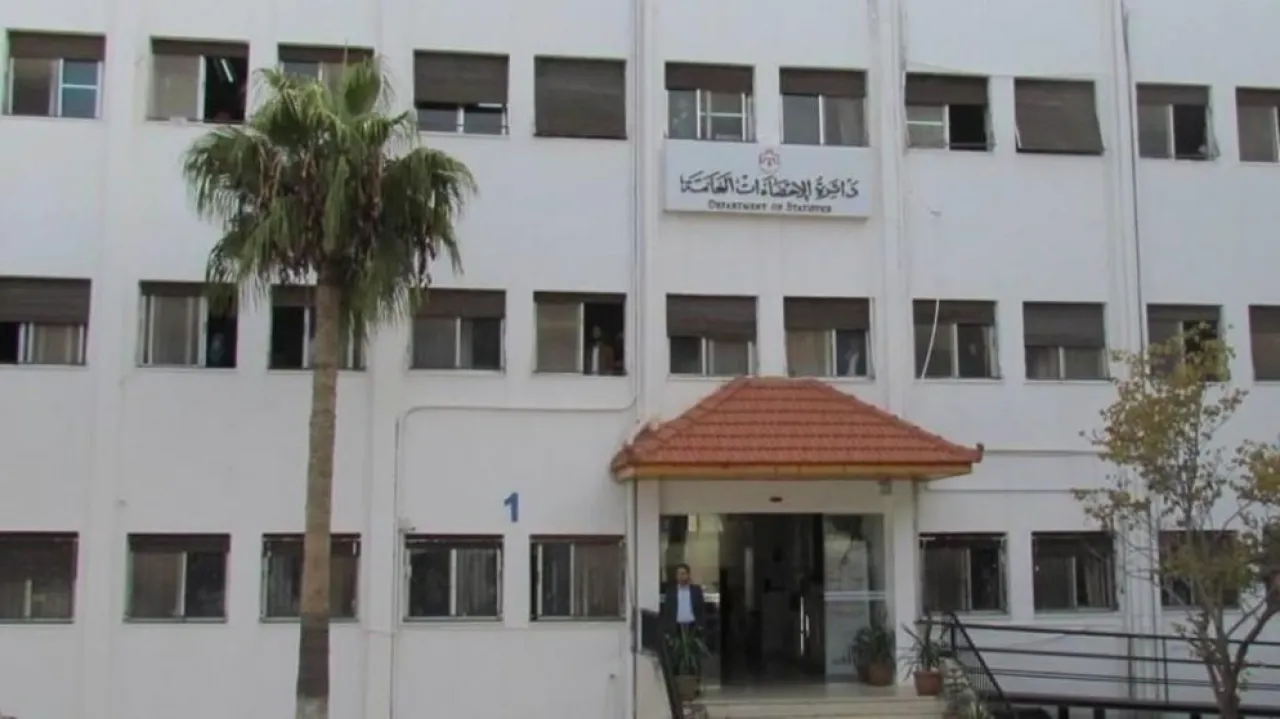
Khaberni - The Department of Statistics has started implementing the third phase of the 2026 General Census of Population and Housing "Enumeration Phase" since mid-February 2026, and it will continue for about 6 months.
The Director General of the Department of Statistics, Haider Freihat, in a press interview, called on the citizens and non-Jordanian residents in the kingdom to cooperate, facilitate the tasks of the statistical researchers during their field visits, and provide them with the required information, confirming that all data collected are protected under the Statistics Law No. 8 of 2025, treated confidentially, and used for statistical purposes only.
Freihat emphasized the importance of citizens verifying the identity of the statistical researcher before providing any information, noting that the identity of the researcher can be confirmed by scanning the QR code on the official badge carried by the researcher.
Freihat stressed that cooperating with statistical researchers is a form of expressing citizenship and national responsibility, given the census's importance in providing accurate data that contributes to serving the community and enhancing comprehensive development.
He indicated that the Department sent short text messages via phone to citizens and residents this week to all citizens and residents, introducing the launch of the 2026 population census, emphasizing the importance of cooperating with statistical researchers, and ensuring the confidentiality of the data protected under the law, in addition to providing them with means of inquiry and communication when needed.
In the same context, Freihat said that the Department is aiming for a mixed census model in the 2026 General Census of Population and Housing, which combines field counting by the statistical researcher, and the systematic use of administrative records, with the aim of improving data quality and execution efficiency, and reducing time and cost.
He added that this model relies on integrating data from government administrative records, including civil status, education, and health records, throughout the various census stages, from preparation and enumeration to the actual count and data processing, which enhances population coverage comprehensiveness and minimizes duplicity.
He explained that using administrative records contributes to improving the quality of the statistical figure by providing updated and accurate data, supporting verification and comparison mechanisms, in addition to enabling the automatic filling of several basic variables, which reduces the burden on citizens and field researchers, and increases the efficiency of fieldwork.
Freihat confirmed that this integration directly reflects on the optimization of time and resources, by reducing the number of field visits, improving researchers' productivity, and reducing operational requirements while maintaining field counting as an essential element for verification and completing data not available in administrative records.
Freihat also explained that the mixed census establishes a nucleus for a sustainable record-based census capable of periodic updating, supporting decision-makers in monitoring demographic shifts, improving the targeting of policies and public services, and enhancing national planning based on reliable data, within a governance framework and law that ensures information confidentiality and privacy protection.
In the same framework, Freihat noted that the Department adopted the self-counting methodology by the citizen without intervention from the statistical researcher for the first time in the history of population censuses in the kingdom, with the goal of developing statistical data collection methods and keeping up with digital transformation.
He added that introducing self-counting represents a qualitative leap in national statistical work, as it allows citizens and residents to enter their data themselves through secure electronic means, contributing to enhancing the efficiency of the census and improving the quality of statistical data.
He pointed out that adopting self-counting in the 2026 census comes as a transitional phase in preparation for expanding this methodology in upcoming censuses, and Jordan is moving towards increasing reliance on self-counting more significantly in the 2035 census, as part of a long-term vision for updating the official statistical system.
He clarified that the Department of Statistics will continue to use traditional field counting methods alongside self-counting to ensure the inclusion of all groups, especially those unable to use digital means, and to ensure the accuracy and comprehensiveness of the results.
Freihat confirmed that all data collected are confidential and protected under the General Statistics Law No. 8 of 2025, and the Department commits to applying the highest technical and technological standards to ensure information security, stressing that all collected data are used for statistical purposes only, according to the regulating legislations.
He mentioned that the General Statistics will implement awareness and media campaigns to explain the mechanism of self-counting and its importance, contributing to enhancing citizen participation and successfully conducting the General Census of Population and Housing 2026.
It is noted that the General Statistics completed a previous phase, which is the parceling phase where 24,000 statistical blocks were designated, to be used for researchers' access to homes.