Khaberni - In continuation of the escalation, the latest Iranian missile barrage in central Israel revealed the use of cluster missiles with extensive destructive capabilities that are not limited to a single point of impact but extend to a wide geographical range.
The spread of the alarms, according to Al Jazeera's office director in Palestine, Walid al-Omari, covered a large geographical area including greater Tel Aviv and the coastal plain, from the western slopes of the West Bank to the city of Netanya to the north, passing through Ben Gurion Airport and its surroundings.
This wide area indicates the nature of the attack, as it no longer targets specific objectives but now includes densely populated urban areas, thus complicating the task of air defenses and increasing the level of dangers to civilians and infrastructure.
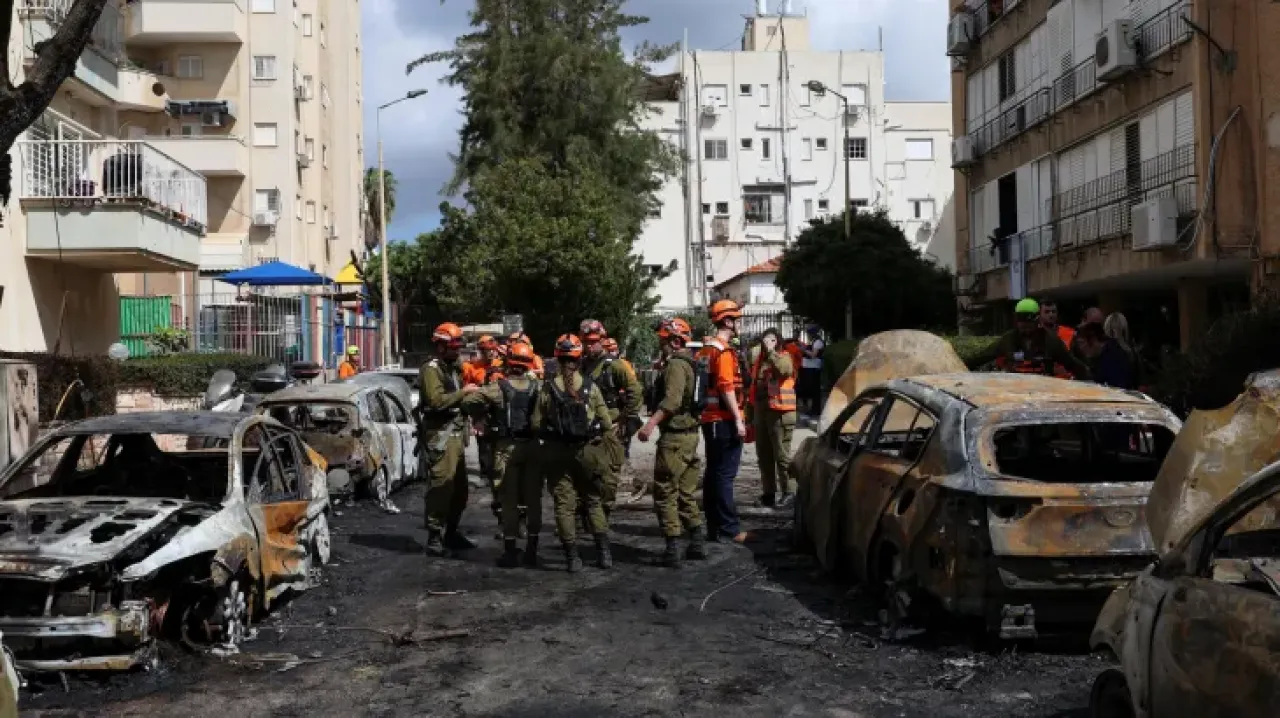
At the same time, Israeli confirmations reported the fallout of cluster missile shrapnel in several areas, including Bnei Brak and Petah Tikva, where munitions scattered in no less than ten locations, causing material damage and fires in vehicles and buildings.
According to preliminary data, the number of injured has risen to 9 due to this strike, although initial estimates indicated no injuries, before the full picture gradually emerged as ambulance teams arrived at the impact sites.
Spread Despite Interception
In this context, Omari explains that the cluster missile targeting Tel Aviv was partially intercepted, yet this did not prevent the scattering of its small munitions payload, which falls over wide areas even after the interception is successful.
The danger of this type of missile lies in its mechanism, as it explodes in the air or upon interception, releasing dozens of small warheads or bombs that scatter randomly, making every point within their range a potential target for impact.
Omari indicates that the spread of these munitions can reach a diameter of 10 kilometers, which explains the multiple impact sites and the extent of damage affecting neighboring cities within the same urban area.
And there are various types of these missiles; some carry 3 or 4 heavy explosive warheads, each weighing about 100 kilograms, and others carry dozens of lighter warheads, but they are more widespread and impactful in the area.
There is also a third type, according to Omari, that carries up to 80 small munitions, making it closer to "area bombing," where the small bombs are densely distributed and turn into a widespread threat that is difficult to contain quickly.
These characteristics pose a significant challenge to Israeli air defense systems, which include multiple layers such as Iron Dome, David's Sling, and systems like "Arrow" and "Patriot," and "THAAD," alongside American systems.
Effectiveness of Full Interception
Despite the ability of these systems to intercept ballistic missiles, they struggle to deal with fragmentary munitions that continue to fall even after the carrier missile is destroyed, reducing the effectiveness of full interception.
The images coming from several sites, especially in Bnei Brak, show fires in vehicles and damage to buildings, which, according to Omari, are mostly caused by the explosive munitions themselves, not just the shrapnel, which explains the extent of material losses.
And this is reinforced by Israeli media reports of burning cars and widespread damage as a result of these munitions, which transform into small bombs causing direct destruction in their vicinity upon impact.
Bnei Brak gains special significance in this context, as it is one of the most densely populated areas, home to more than 270,000 residents, making any fall of munitions there have a multiplied effect in terms of potential losses.
Earlier, the Israeli Ministry of Health announced that 6,131 injured were transported to hospitals since the start of the war, including 118 patients still receiving treatment.