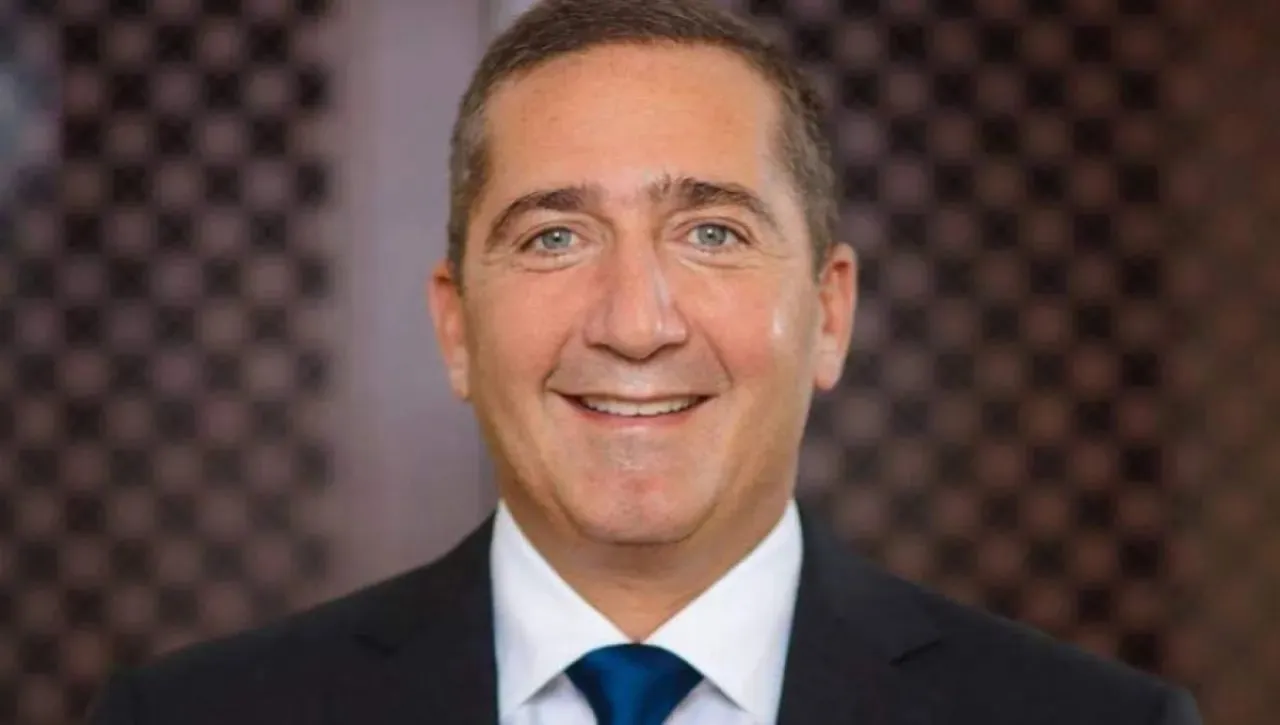
Khaberni - Former Prime Minister Samir al-Rifai emphasized that the Jordanian priority amidst the current regional transformations must remain decisively clear: "Jordan first, Jordan last, forever Jordan."
Al-Rifai stressed, during a dialogue session at the Institute of Politics and Society, within a series of sessions titled "The Current Regional War and Jordanian National Security: The American-Israeli War on Iran", attended by a group of researchers, experts, and interested youth, that safeguarding the Jordanian state, protecting its institutions, and maintaining its stability, is the foundation for any Jordanian role in defending just Arab causes or engaging in regional and international interactions.
He called for a balanced reading of the conflict, warning against falling into two opposing illusions; the first is exonerating the Iranian project or overlooking its practices in the name of the Palestinian cause, and the second is ignoring the nature of the Israeli project and its danger under the pretext of confronting Iran, emphasizing that both illusions lead to a deficient understanding of the conflict's reality and complexities.
Al-Rifai indicated at the beginning of his talk that what the region is experiencing today should not be read merely as a pure religious conflict, nor as a simple moral confrontation between camps of good and evil, noting that it is a power struggle with multiple projects, each having its own calculations, fears, and tools, which requires a serious political reading that starts from the logic of the state and interest, not from the logic of emotional alignment.
He emphasized that this approach represents the main entry to understanding the complexities of the regional scene, asserting that reducing or simplifying the conflict weakens the ability to handle it and leads to biased or inaccurate readings, which do not serve the national interests of the states, including Jordan.
He stressed that the current Israeli project, under the dominion of the nationalist and religious right, poses a serious threat to the overall regional structure, noting that this project no longer merely manages occupation, but seeks to reshape political, demographic, and geographic realities, which undermines the chances of a political settlement and pushes towards eliminating the two-state solution.
He added that this course opens the door to dangerous scenarios, including pushing towards the displacement of Palestinians, and creating realities that could directly impact Jordan, politically, security-wise, or demographically, making these developments a matter directly affecting Jordanian national security.
In this context, Al-Rifai emphasized that the West Bank is no longer just a file of political or humanitarian solidarity, but has become a direct Jordanian national security issue, in light of increasing risks associated with population displacement or land depopulation, a matter that compels Jordan to keep this file at the core of its strategic and diplomatic thinking.
He confirmed that protecting the West Bank, and preventing any path that leads to the displacement of Palestinians or undermining the prospects for establishing their independent state, must remain a Jordanian priority, as it is an integral part of protecting Jordanian national security and stabilizing the region.
Conversely, Al-Rifai clarified that Iran should not be interpreted solely through its religious or sectarian dimension, but rather as a political state project, possessing a clear vision of its interests and goals, and operating in the region with the logic of force and influence.
He noted that Iran has used religion and sect at different stages as tools of mobilization and means of influence, but it has moved in the region not purely based on sectarian motivations, but with precise calculations that prioritize the state's interest over any other considerations, which requires reading its political behavior within this framework.
He added that reducing Iran to being just a religious state represents a common analytical error, as its behavior reflects a clear political pragmatism, employing ideology when it serves its goals, and sidelining or ignoring it when it does not align with its interests.
Al-Rifai discussed the transformations that the region has witnessed since 2003, noting that the occupation of Iraq represented a pivotal turning point that led to a profound imbalance in the Arab regional system, providing Iran with exceptional opportunities for expansion and infiltration in several Arab arenas, including Iraq, Syria, Lebanon, and Yemen.
He explained that this expansion enabled Iran to build a wide network of influence and multiple pressure cards, but at the same time it was costly on several levels, whether in terms of draining Iranian resources, or in terms of its impact on the stability of Arab states, undermining national state institutions, and enhancing the logic of militias and sub-identities.
He pointed out that this course also negatively reflected on the Iranian people themselves, who bore the burdens of this expansion at the expense of their developmental and economic priorities, highlighting the nature of the trade-offs made by the Iranian state in managing its regional policies.
In the context of analyzing the nature of regional relationships, Al-Rifai confirmed that states do not move according to the logic of emotions or moral loyalty, but according to interests and necessities, which is clearly evident in Iranian relations with several countries, including Russia and Turkey.
He explained that these relationships, despite historical tensions, exhibited levels of coordination and understanding when interests intersected, reflecting the pragmatic nature of international politics, and confirming that alliances are built on the basis of interests, not ideological harmony.
He added that Iran is not a charity organization, nor a state governed by emotion, but a state of interest par excellence, which explains the nature of its movements and behavior in the region.
He also mentioned that Iran has only engaged in direct military confrontation with Israel in limited contexts related to maintaining its prestige, reflecting the precise nature of its calculations in managing the conflict, far from propagandistic rhetoric or slogans.
On the domestic level, Al-Rifai warned of the risks of polarization and societal division, noting that social media has often deepened divisions, fostering narratives of betrayal and oversimplification, weakening the immunity of societies and serving the projects that benefit from state disintegration.
He stressed that protecting awareness, promoting rational dialogue, and distinguishing between opinion and incitement, are no longer secondary cultural issues, but part of the essential requirements of political and social security.
In terms of the Jordanian stance, Al-Rifai emphasized that the Jordanian decision is not made under the pressure of emotion, chanting or outbidding, but is built within state institutions, and within strategic assessment circles, based on prolonged and accumulated experience in dealing with regional crises.
He pointed out that this approach was one of the reasons for Jordan's ability to maintain its stability and equilibrium, and to avoid many of the pitfalls experienced by other countries in the region.
He reaffirmed that Jordan must remain steadfast in its position among competing projects, as a state that knows its interests, protects its sovereignty, and refuses to be a battleground for settling scores or a field for chaos.
He also emphasized the importance of maintaining the international trust that Jordan has accumulated over decades, considering it one of the most crucial elements of its strength, and a lever for its regional and international role, along with the need to strengthen its Arab relations, and engage in a more stable regional environment.
He mentioned that the next phase requires greater self-reliance, enhancing Arab integration, and opening prospects for economic and security cooperation among Arab states, which achieves collective interest in facing shared challenges.
Al-Rifai confirmed that Jordan today faces the duty of awareness and the necessity of cohesion, and facing the obligation to protect the state and secure the compass, emphasizing that rallying around the Jordanian state, the Hashemite leadership, and trust in decision-making institutions, are among the most important conditions for political resilience in this critical phase.
He added that Jordan was not built by chance, nor shaped by slogans, but by state awareness, sacrifices, sweat and blood, and the wisdom of leadership, and by the loyalty of the community, which imposes a collective responsibility to preserve it and enhance its stability.
He confirmed that the strength of Jordan and its continuation in playing its regional role requires maintaining its internal unity, enhancing self-confidence, and continuing to adopt a moderate and rational approach in dealing with challenges.
He stressed that the next phase does not tolerate hesitation or division, but requires clarity in the compass, steadiness in position, and deep political awareness, prioritizing Jordan's interest above all considerations, and enhancing its ability to face challenges in a highly complex regional environment.