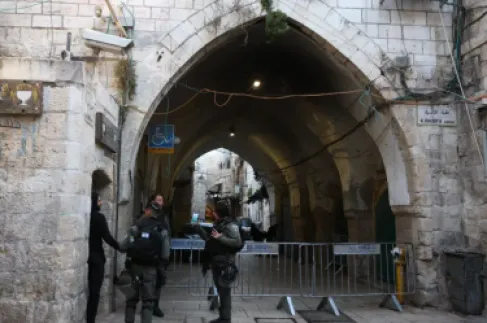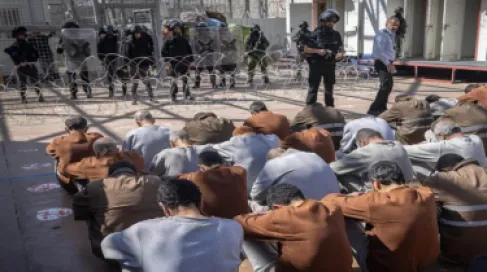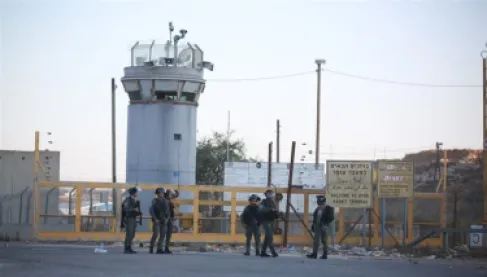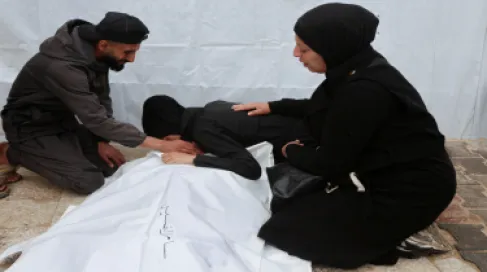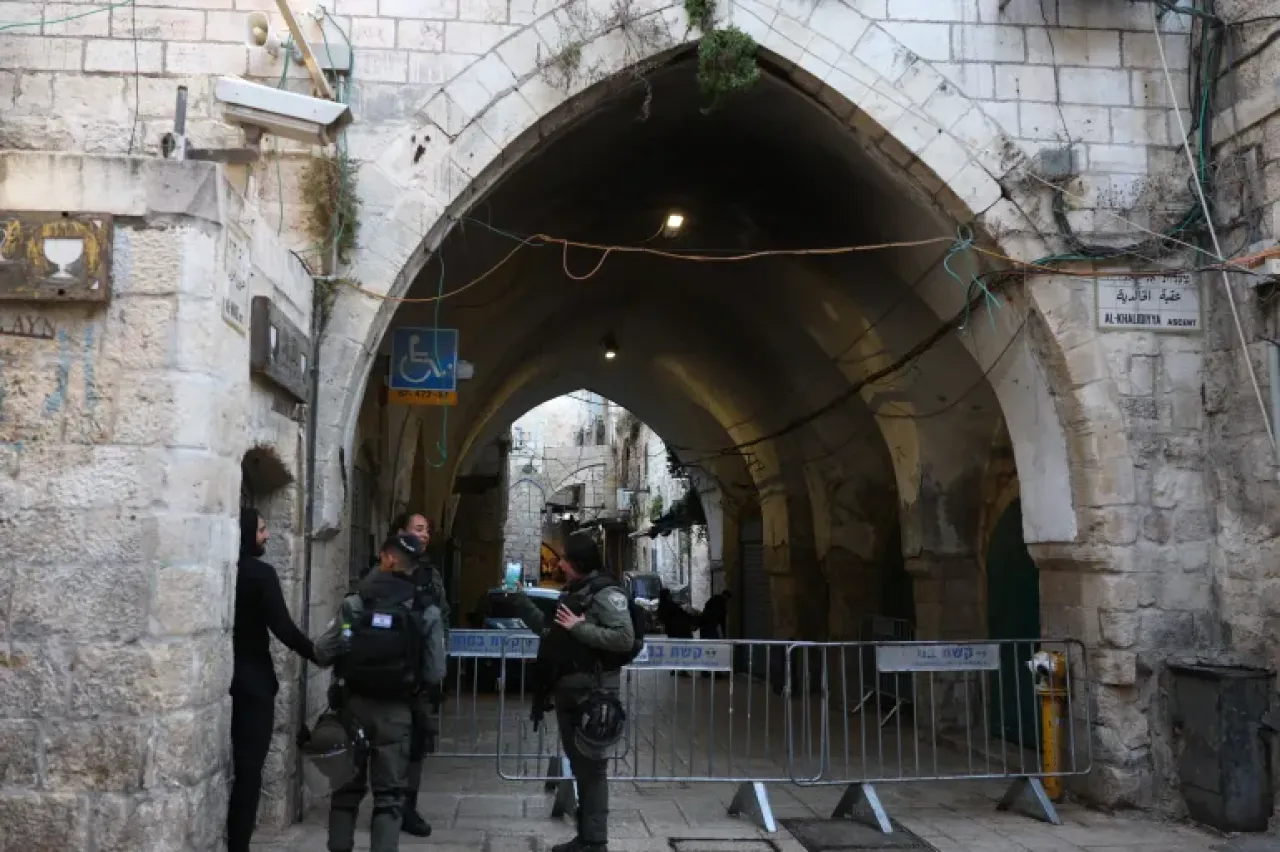
Khaberni - The Israeli occupation authorities' closure of the blessed Al-Aqsa Mosque enters its second month, amid warnings of the implications of the authorities' unilateral actions to change the status quo and reach the imposition of new realities, in an attempt to Judaize it and undermine the Islamic Waqf Department.
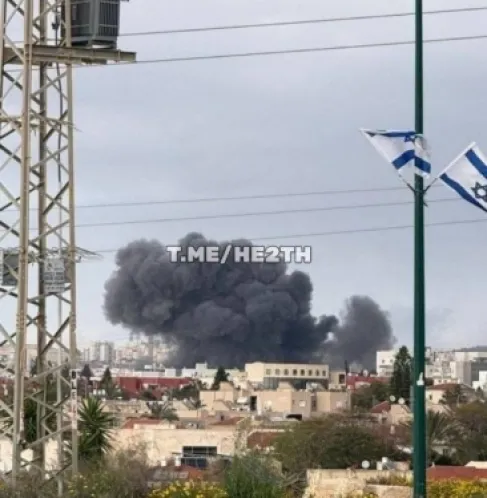
Under the pretext of the "state of emergency" declared since the beginning of the joint American-Israeli attack on Iran on February 28, the occupation authorities continue to close the mosque and prevent worshippers from reaching it.
Two experts believe that the continuous closure of this holy site for a whole month - for the first time since the occupation of East Jerusalem in 1967 - was not just a transient measure, but part of a broader context that aims to impose new realities on the ground, create a formula for controlling access and worship, and test the limits of local and international reactions.
Why should the state of emergency not apply to Jerusalem?
Munir Nuseibeh, a professor of international law at Al-Quds University, says that closing the Al-Aqsa Mosque even for one day carries more than one violation:
Jerusalem is an occupied city - according to international law - and the occupation has no sovereignty over it. The Israeli military and settlement presence is "illegal" and must end as soon as possible, according to the International Court of Justice's advisory opinion issued in July 2024.
The state of emergency and the instructions of the Israeli army's home front should not be applied to Jerusalem, including the Al-Aqsa Mosque, since it is not subject to the sovereignty of the occupation but to the administration of the Waqf Department affiliated with Jordan.
The closure constitutes a breach of the law known as "Status Quo," which is classified internationally, and was established during the Ottoman rule, and relates to holy places that must "remain as they are without any tampering or breach".
Moreover, the restriction on the number of people who are allowed to be in Al-Aqsa or completely prohibiting them from entering it, violates the status quo, as this law states that the mosque along with its courtyards, prayer areas, schools, and roofed and unroofed landmarks is exclusively owned by Muslims, and they manage it in everything related to tourism and visitation of this sacred site, which covers an area of 144 dunams (one dunam equals one thousand square meters).
According to the Fourth Geneva Convention, the occupying power must respect the religious beliefs and practices of the residents under occupation, and ensure that access to places of worship is not denied, religious ceremonies are not disrupted, or collective measures affecting the religious right are taken, which has been occurring since the month and repeatedly since the occupation of East Jerusalem in 1967.
The timing of the closure
According to Abdullah Marouf, a scholar and former media and public relations official at Al-Aqsa Mosque, the continuous closure of Al-Aqsa Mosque for a month should not be taken lightly or considered a normal development in the course of the conflict, especially since there are reports that the occupation plans to extend the closure initially until April 15 next.
Marouf described the matter as "extremely dangerous".
He adds that "this closure was and still is intentional," aiming primarily to carry out what could be called a "practical test" during the toughest times for the police of the occupation as it occurred mid-Ramadan, to bring about significant changes in the mosque after the end of the closure, and it has nothing to do with the ongoing war in any way.
What's happening during the closure?
Marouf reveals "substantial modifications" made by the occupation during the closure over more than a month in how to manage the affairs of Al-Aqsa Mosque, considering that the regional tension has no relation to what happens in Al-Aqsa Mosque and the Church of the Resurrection, where Palm Sunday was prevented, and it can be said that it was just an Israeli pretext to change the status quo in the mosque.
These are the measures of the occupation:
Limiting the number of people allowed from the Islamic Waqf Department to enter to only 25 people.
Imposing prior knowledge of each person entering Al-Aqsa, their reason, method, time, and duration of entry.
Directly dismissing employees after the completion of anyone's work immediately.
He pointed to developments in how the police of the occupation deal with the mosque, referring to a picture he said was "intentional" posted by a policeman inside Al-Aqsa with the date, in a highly provocative manner placing one foot over the other "implying that the intention was to send a message that the occupation has become the master of the place in Al-Aqsa and not just a temporary presence".
According to Marouf, the occupation's message to the Palestinians is that it has become the sole administrative authority in the mosque, the real sovereign of the sacred site, and it alone decides how it is managed without any consideration for the Islamic presence represented by the Jordanian Islamic Waqf Department, and without any consideration for the Jerusalemites originally.
Silence in service of the occupation
In Marouf's view, the occupation no longer values the popular Palestinian presence in Jerusalem and sees that the Palestinians are incapable of enforcing their will in Al-Aqsa from this day forward.
He stated that the official Arab silence and the modest official responses, even from the secular and popular frameworks throughout this month, are what encourage the occupation to do what it wants in the mosque.
He concluded that popular and official deterrence is now required, as the least that can be done is "to escalate the situation in the region, taking advantage of the occupation living in a fragile internal situation and a soft flank due to the ongoing war, and not as it tries to portray to the Palestinian people".