Khaberni - The newsletter from the Family Health Care Institute (one of the King Hussein Foundation's institutes) offers important information today, Monday, about potassium iodide and its role in protecting from the complications of nuclear radiation, which is considered especially perilous if resulting from nuclear accidents or radiation leaks, representing one of the most serious health threats humans might face.
The newsletter provides readers with information about potassium iodide, how it works, its benefits in the event of radiation exposure, and its limitations, as well as its side effects and the groups that should seek medical advice before using it.
Among the organs most affected by this radiation is the thyroid gland, due to its high capacity to absorb iodine. In this context, potassium iodide (KI) emerges as one of the most important medical preventative measures used to reduce the damage resulting from exposure to radioactive iodine. This article aims to clarify the importance of potassium iodide, how it works, its benefits, its limitations, and safety considerations associated with its use.
What is potassium iodide?
Potassium iodide is a chemical compound consisting of the elements potassium and iodine, and is a source of stable iodine (non-radioactive). This compound is used in medicine to treat iodine deficiency and some thyroid gland disorders, as well as in nuclear emergencies to protect the thyroid gland from absorbing radioactive iodine.
How potassium iodide works:
During a radiation leak, radioactive isotopes of iodine, such as iodine-131, may be released into the environment. This radioactive iodine can enter the human body through inhalation or consuming contaminated food and water. Once inside the body, it moves to the thyroid gland where it is absorbed and stored, increasing the risk of serious diseases.
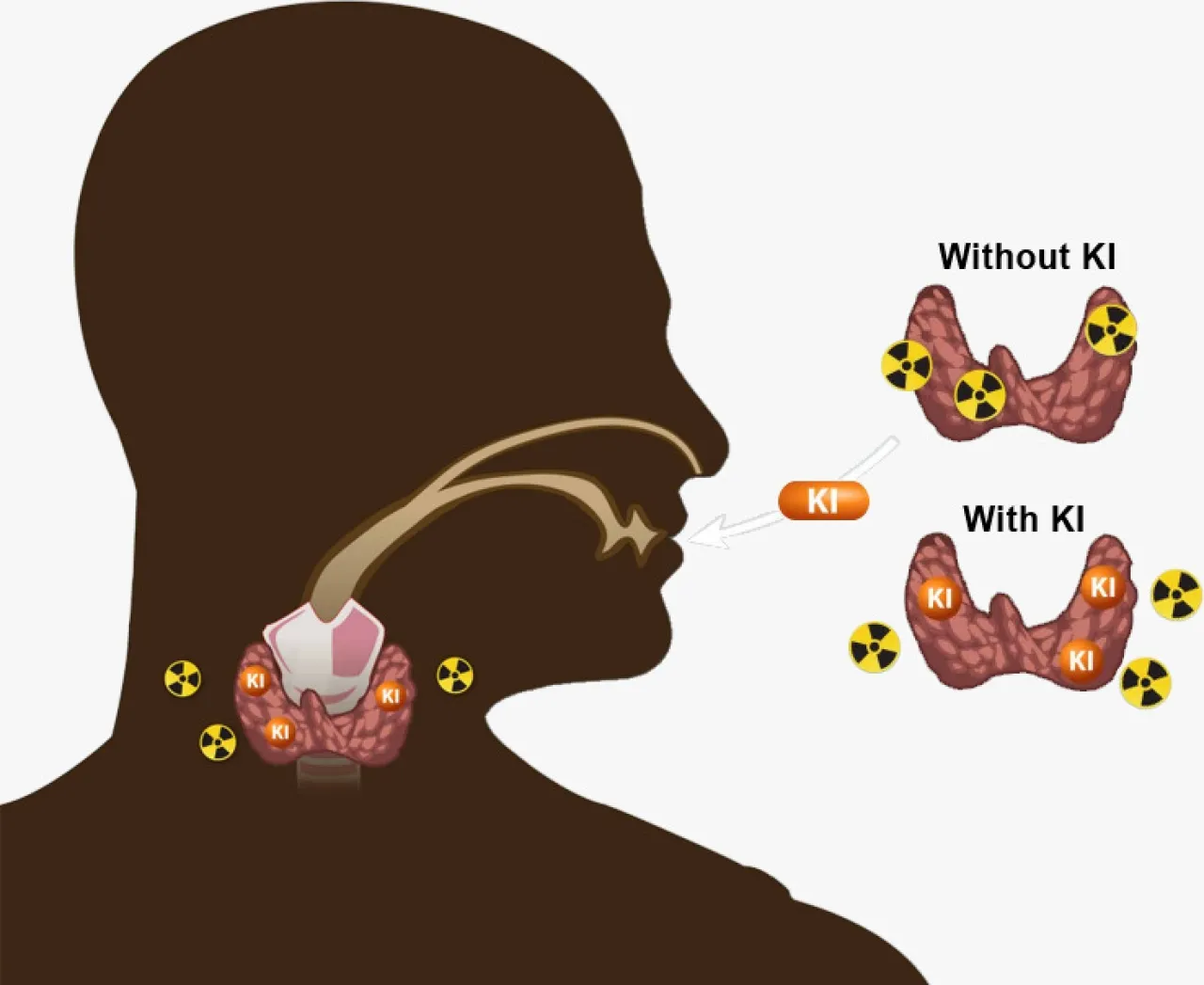
Potassium iodide works through a mechanism known as "thyroid saturation with iodine", where:
- It supplies the body with a sufficient amount of stable iodine.
- The thyroid gland fills up with non-radioactive iodine.
- The absorption of radioactive iodine diminishes or stops.
Thus, the accumulation of radioactive substances inside the thyroid gland is reduced, limiting potential damage.
Benefits of potassium iodide in radiation exposure:
1 - Protection against thyroid cancer:
Thyroid cancer is among the most significant risks associated with exposure to radioactive iodine, especially in children and adolescents. Studies have shown that using potassium iodide significantly reduces the risk of this type of cancer.
2 - Maintaining thyroid function:
Potassium iodide helps protect the thyroid gland from radiation damage, contributing to the maintenance of normal hormone production, and preventing disorders such as hypothyroidism or hyperthyroidism.
3 - Quick effectiveness in emergencies:
Potassium iodide is fast-acting, beginning to protect the thyroid gland shortly after its intake. Its effectiveness is maximized when used before radiation exposure or immediately afterwards.
4 - Ease of use and availability:
Potassium iodide is available in tablet or liquid solution form, easy to use, and can be rapidly distributed on a large scale, making it an important tool in emergency health plans.
Limitations of potassium iodide use:
Despite its substantial benefits, potassium iodide is not a comprehensive solution for all types of radiation, and its main limitations include:
- It does not protect against all radioactive substances, only radioactive iodine.
- It does not prevent radiation from entering the body, but reduces its absorption in the thyroid gland only.
- Its effectiveness decreases if taken a long time after exposure.
- It is not recommended for random use or without guidance from specialized health authorities.
Safety and side effects:
Potassium iodide is relatively safe when used in recommended doses, yet it can cause some side effects, such as:
- Digestive system disturbances (like nausea or stomach pain).
- Rare allergic reactions.
- Disruption of thyroid gland functions in some individuals.
Caution is advised when using it among the following groups:
- Pregnant and nursing women.
- Newborn children.
- People with thyroid diseases.
In these cases, it is preferable to consult a doctor before use.