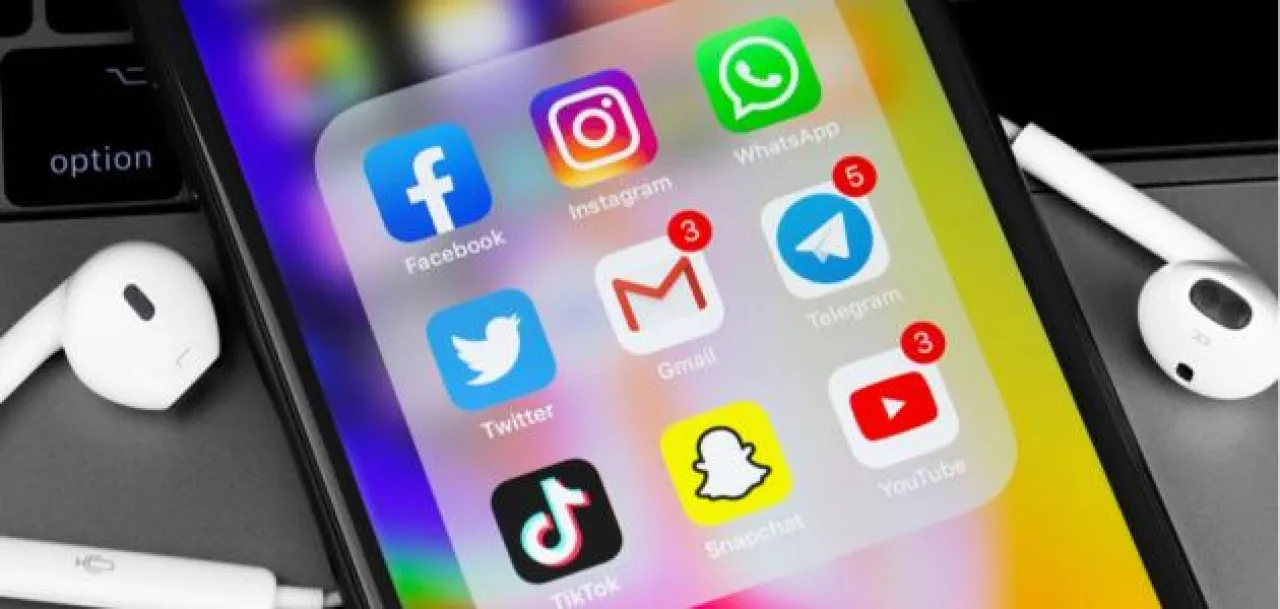
Khaberni - Have you ever talked with your friend about a specific product, and then, minutes later, were surprised to see an ad for it on your phone? This experience has become so common to the extent that it worries many users, making them wonder: Are apps actually spying on us? Or is there a more realistic technical explanation?
We will uncover the truth behind this phenomenon, explain how digital advertising systems work, and why it seems like they are “listening” to what we say.
First: Do apps actually listen to your conversations?
The common belief is that apps use the microphone to listen to your conversations in order to display personalized ads. However, in reality, there is no strong evidence that major companies do this directly, as such behavior could expose them to huge legal issues.
Companies like Google and Meta (formerly Facebook) assert that they do not use the microphone for this purpose without user consent.
But, this does not mean what you see is just a coincidence!
Second: How do apps know what you are interested in?
Instead of “voice spying”, apps rely on advanced technologies to gather and analyze data, including:
Tracking your online activity
Everything you search for or click on gets recorded in one way or another, such as:
The websites you visit
The products you view
The searches you conduct
Analyzing your interests and behavior
Using artificial intelligence, your digital behavior is analyzed to predict what you might like later on.
Data shared between apps
When you use multiple apps that are linked together, data is exchanged between them (usually with your consent), which helps to build an accurate picture of your interests.
Geographic location
If you are in a certain place (like a shopping mall), you may start seeing ads related to nearby shops.
Third: Why do you feel the ad is related to your conversation?
This feeling has both a psychological and technical explanation:
The “selective attention” effect
When you talk about something specific, your mind becomes more aware of it, thus you easily notice any related ads.
Smart prediction
You might have searched for something similar previously without noticing, and the system displays an ad at a time when you are interested in it.
Temporal correlation
Sometimes the appearance of the ad is merely a smart coincidence, but it seems as if it is a direct result of what you said.
Fourth: The role of algorithms in advertising
Algorithms are the masterminds behind this phenomenon. They:
Analyze your data continuously
Compare your behavior with millions of other users
Predict what you might need or want
In other words, they do not “hear you,” but they “understand” you deeply based on your data.
Fifth: Is your data at risk?
The data collected by apps may raise privacy concerns, especially if you are not aware of how it is used. Therefore, it is important to know:
Most apps collect data to enhance advertisements and services
You can control permissions (like microphone and location)
You can stop personalized ads from your account settings
Sixth: How can you protect your privacy?
If you are uncomfortable with this type of tracking, you can take some steps:
Review app permissions
Check which apps have access to the microphone or location.
Use a secure browser
Some browsers offer better protection against tracking.
Turn off personalized ads
You can disable this feature from your account settings on most platforms.
Delete search history
Regularly cleaning up your data reduces the accuracy of tracking.
Seventh: Should we be concerned?
Not necessarily, but it is important to be aware. Today's technology is capable of analyzing your behavior with amazing accuracy, which can be beneficial at times (like seeing products you are interested in), but it can be annoying or worrying for some.
The key is balance: benefiting from technology while maintaining your privacy.