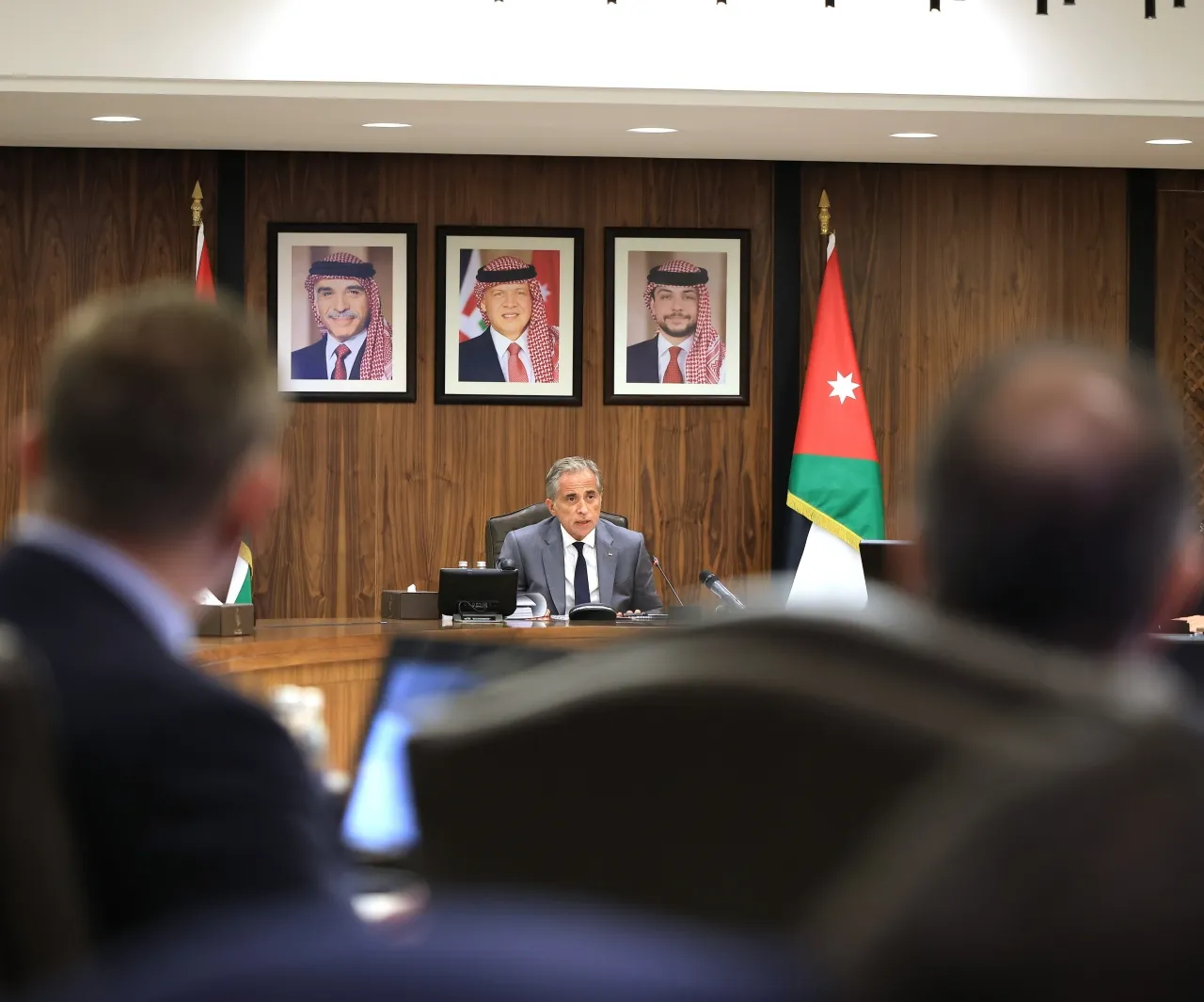
Khaberni – Jafar Hassan said that Jordan refused from day one of the war to be a battleground or a launchpad for attacking any party, confirming that the kingdom has threatened no one and did not employ militias to assault any entity.
Hassan added that Jordan is strong with its Hashemite leadership, Arab army, security agencies, and people, despite facing wars, crises, and challenges, emphasizing that protecting the country's stability has been and will remain a top priority.
He explained that over the past 25 years, Jordan has witnessed major crises in the region, yet its economy has shown resilience, flexibility, and the ability to adapt, confirming that anyone who bet against Jordan has lost.
He pointed out that the armed forces and security agencies continue to perform their duty in protecting the skies and land of the kingdom and have intercepted hundreds of drones and missiles targeting the country, confirming that they are a source of reassurance and pride for the Jordanians.
He said that His Majesty the King warned of the dangers of war and its repercussions, pointing to Jordan's ongoing efforts to push for diplomatic solutions and comprehensive calm that ensures the security of Arab states and the stability of the region.
Hassan confirmed that what happens will be at the expense of the region unless action is taken as a single Arab front, emphasizing that Jordan's interest comes first and foremost.
In economic matters, he clarified that the government had taken proactive measures since the beginning of the war to ensure sustainability of supply and continuity of the economy and availability of strategic stock of goods.
He added that the government ensured during the first month of the crisis not to make any decisions that would hinder economic activity or harm the private sector, while maintaining positive economic indicators.
He pointed to meetings held with various parties and decisions taken to ensure stability of supply chains and prices, confirming that these measures were necessary and successful.
He referred to the government's monitoring of market developments and taking necessary measures to protect the citizens, especially in the face of the threat of rising prices, indicating that the goal is to prevent imbalances and ensure market stability and counter monopolistic practices.
He confirmed that the government will provide support to military and civil institutions to secure basic goods for the citizens at appropriate prices, and will not hesitate to impose price caps in cases of unjustified hikes.
He stressed that the government will impose strict penalties on violators and monopolists of goods, including fines up to 10,000 Dinars and closing of establishments, and may even lead to imprisonment depending on the nature of the violations.
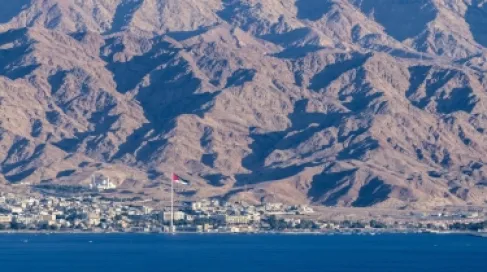
He explained that the strategic stock of goods and energy is secure, and that the port of Aqaba operates with high efficiency and receives ships normally, becoming a point of trust for several Arab countries.
He referred to the alternative precautionary measures for land shipping, and the benefit from Arab ports on the Mediterranean Sea in case the crisis continues, to facilitate import and export operations at the lowest costs.
He confirmed that the Jordanian skies remained open, and that Royal Jordanian continues its flights normally.
In the energy file, he said that the main challenge is represented by the globally rising prices, pointing to a policy of gradual reflection of these prices locally to minimize their impact on the citizens and the economy.
He added that the government will not currently fully reflect the global rise in fuel prices in order to mitigate the repercussions of the war, with compensation to be gradually made later.
He explained that Jordan is now in a better position compared to the 2011–2013 crisis after diversifying energy sources, although the monthly costs of the war in this sector have exceeded 150 million Dinars.
He confirmed that the government will make decisions to support the tourism sector affected by the war, while continuing to implement strategic projects without delay.
He referred to some of these major projects like the national water carrier, which has reached advanced stages, in addition to railway projects that are being negotiated soon.
Hassan concluded by emphasizing that the war underscores the importance of Arab cooperation in transportation, trade, and industry, noting that Jordan is seen as a supply hub in the region, with ongoing discussions to develop Arab partnerships and expand opportunities for joint manufacturing.