Khaberni - As the war entered its second month, Israel escalated its attacks on strategic industrial facilities in Iran, thereby increasing economic pressure on civilians.
On Thursday and Friday, Israel targeted key iron and steel production facilities in Iran, as well as other industrial sites, which Tehran considered a serious escalation, saying it would move the war to a new stage.
Targeting dual-use (military and civilian) intermediate industries is an old wartime tactic used during World War II and in subsequent conflicts to weaken an opponent's production capacity, but it casts a heavy shadow on civilian populations.
In August 1943, the United States bombed iron ball bearing factories in Schweinfurt, Germany, as part of the Allies' plan to destroy bottlenecks in German military industries.
According to a report prepared by Mahmoud Al-Kan for Al Jazeera, iron balls were used in almost all industries: tanks, aviation, engines, and civilian industries.
Targeting bottlenecks that might be used in military industries has long been a classic wartime tactic to deprive the opponent of future production capabilities, but it comes at a high cost to civilians.
Striking large factories
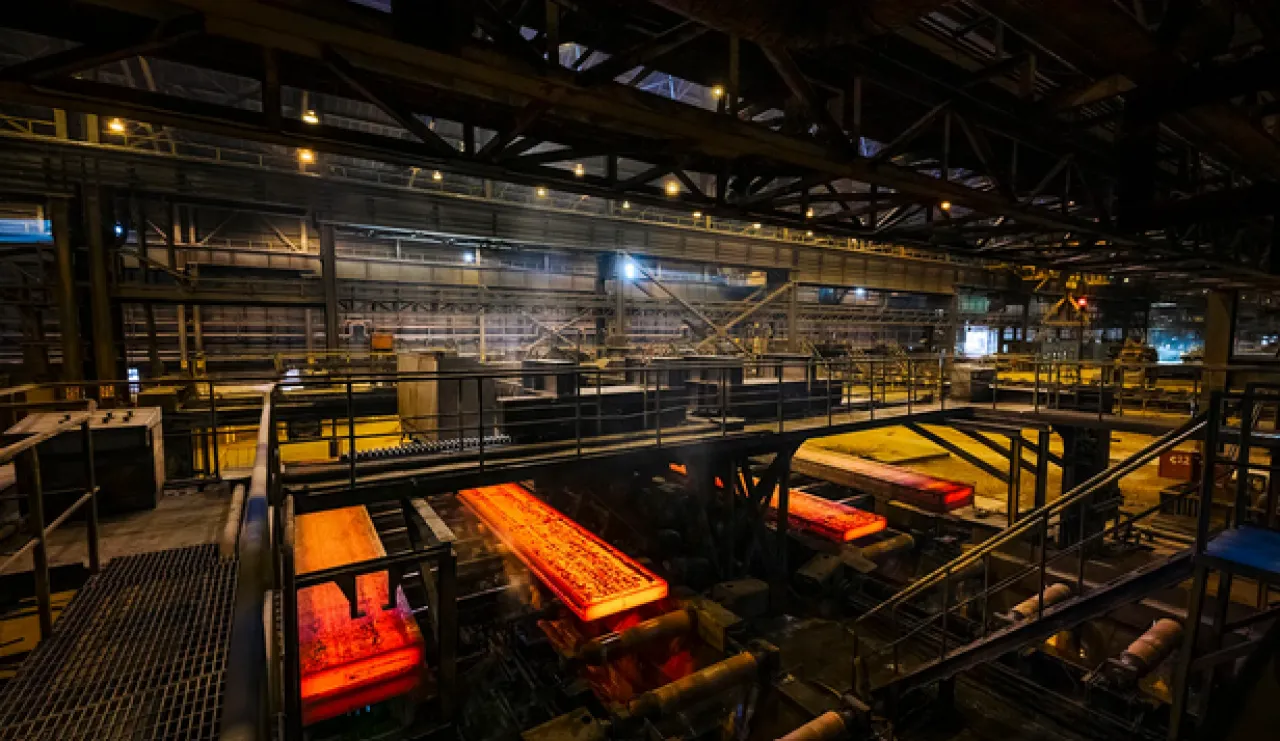
In an escalation of this wartime pattern, Israel bombed the two largest iron and steel factories in Iran: the Khuzestan Steel Factory in Ahvaz and the Mobarakeh Steel Factory in Isfahan, which is one of the largest steel factories in the Middle East and the largest industrial unit in Iran.
This is the third time that Israel has targeted civilian targets in Iran, having previously targeted the South Pars gas field, which it said generated revenue for the Revolutionary Guards.
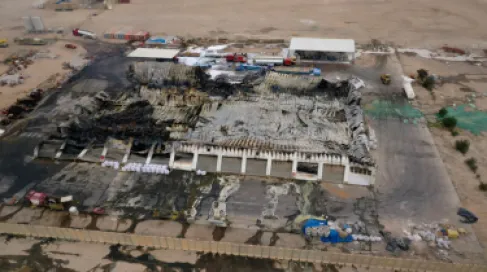
Satellite images also showed the destruction of a carbon fiber factory in the industrial area of Lia in the south of Qazvin province, which Israel had previously requested to be evacuated.
Carbon fibers are a sensitive part of unmanned aircraft structures as they allow for a lightweight, relatively low-cost build, giving the drone an economic advantage with low cost and long flight range, meaning it is possible to manufacture swarms at lower costs than fighter jets and cruise missiles.
After this strike on the industrial and economic sector, Iran vowed to retaliate, stating that the war had entered a new stage, and that it would target economic and industrial sectors in Israel and others linked to the United States.
The shift to this dangerous stage does not mean that Iran will be unable to continue fighting, for the Allies discovered after destroying the iron ball bearing factories in Schweinfurt that the German military industry was capable of adapting, and that wars may not stop with these strikes.