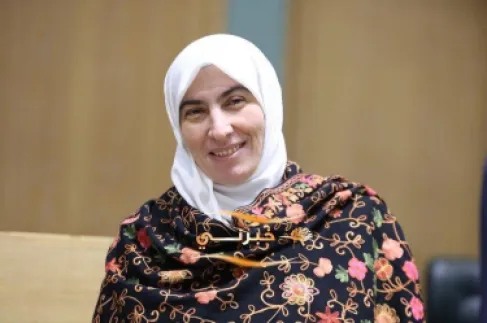
Khaberni - Faisal Al-Fayez, President of the Senate, reaffirmed that protecting the oceans and seas is not only an ethical and human obligation but a necessity for the continuity of life. They cover two-thirds of the Earth's surface and are a major source of food for humanity, particularly at a time when famine and hunger are rampant due to wars, conflicts, and natural disasters.
He said that preserving the marine environment is no longer just a matter of national concern but embodies the concept of "the common heritage of mankind," a principle laid down by the 1982 Law of the Sea, in light of the pivotal role of the environment in the life of all humanity.
These comments were made in his speech at the 46th annual forum of Parliamentarians for Global Action and the fourth meeting of the Advisory Assembly of Parliamentarians for the Oceans, which began its proceedings today, Friday, at the Mexican Senate, with the participation of numerous governmental representatives, parliaments, and international organizations concerned with the environment, governance, and human rights, aimed to discuss various issues related to the protection and conservation of the marine environment.
In his speech, attended by the Jordanian Ambassador to Mexico, Adli Al-Khalidi, Al-Fayez noted Jordan's adherence to the United Nations Convention on Marine Biodiversity, out of a belief in the importance of international cooperation in conserving marine biological diversity, protecting marine natural resources, and reducing marine pollution. He indicated that Jordan had implemented strict measures to protect the coasts of the Gulf of Aqaba and monitor its marine life and coral reefs.
Al-Fayez added that under the directives of His Majesty King Abdullah II, the Aqaba Marine Park was established, which today stands as one of Jordan's prominent natural treasures, known for its exceptional biological diversity and unique ecosystems. The park contains hundreds of species of coral reefs and is renowned for its fish diversity and waterfowl, making it a leading global destination for sustainable ecotourism.
The President of the Senate also noted that in Jordan's efforts to protect the marine environment, His Majesty King Abdullah II has emphasized at various international forums, including United Nations climate conferences and the Third United Nations Ocean Conference held in Nice in 2025, that the oceans are a global common resource upon which billions of humans depend, and their protection requires international action based on science, innovation, and cooperation.
He explained that, despite Jordan having a limited coastal strip and facing economic challenges and limited natural resources, it has taken the initiative to prioritize the protection of the marine environment. In this context, in 2020, Jordan announced the establishment of its first national marine reserve in the Gulf of Aqaba to protect the coral reefs and biodiversity and enhance integrated management of coastal areas, pointing out that about 30% of Jordan's coastline in Aqaba is now a protected area, clearly contributing to the global goal of protecting 30% of the oceans by 2030.
Al-Fayez mentioned that the Aqaba reserve has gained international recognition by being included in the Green List of the International Union for Conservation of Nature and listed on the preliminary list for nomination to the UNESCO World Heritage List.
He emphasized that as part of its efforts and endeavors to protect the marine environment, Jordan continues to support advanced scientific programs to study coral reefs in the Gulf of Aqaba, which show an exceptional ability to adapt to rising temperatures, granting Jordan significant scientific importance globally in efforts to protect coral reefs amid global climate change.
He stated that protecting the marine environment is linked to conserving marine fisheries and their sustainability, supporting the livelihoods of fishermen and the development of local communities. Jordan works to enhance sustainable management of fish resources and develop pioneering projects for breeding certain marine species, within the framework of promoting a sustainable blue economy.
He added that, stemming from the royal vision, Jordan launched the project to develop the International Centre for the Aqaba Marine Reserve, which aims to create a global destination that combines applied scientific research, environmental protection, ecotourism, education, and awareness through a center for marine science and technology, in addition to the Aqaba Marine Reserve, which forms the beating heart of the project.
Al-Fayez noted that through this project, Jordan seeks to become an international center of innovation in the field of coral reef protection and developing practical solutions to the challenges facing the oceans amid climate change.
Al-Fayez emphasized during the forum the importance of everyone recognizing that marine pollution, with its diverse sources, has become one of the major global challenges affecting the oceans and seas, and the environmental and economic security of nations and communities alike, requiring international efforts and stringent legal rules to regulate the protection of the marine environment and continuously and permanently conserve its resources and wealth for sustainable development.
He mentioned that current international efforts to protect the marine environment are insufficient, despite the existence of the high seas treaty and its ratification by dozens of countries, a legally binding treaty to protect marine biodiversity in the high seas, allowing for the creation of marine reserves in international waters. He indicated that pollution has increased and diversified to levels that may threaten the global environmental balance.
He concluded by stressing that the challenge of preserving oceans and seas, protecting the marine environment, natural and animal resources, and balancing environmental protection with sustainable development requires parliamentarians and various parliamentary institutions to enact effective legal legislation to reduce pollution of seas and oceans and at the same time facilitate the establishment and expansion of marine environmental reserves.
Al-Fayez called for supporting scientific research in ocean and sea sciences, adopting policies that contribute to protecting the marine environment, achieving sustainable development goals "Life Below Water and Protecting Biodiversity," and the necessity for the international community to take more effective steps to protect oceans and seas, based on principles of maritime governance and protecting the future of the marine environment.
The forum discusses the role of parliamentarians and parliaments in enacting legislation that contributes to conserving marine biodiversity addition to several issues state commitments to environmental protection agreements related to the marine environment in oceans and seas, governance, innovation, susta...