Khaberni - During wars, small investors usually do not seek quick gains as much as they look for protecting their savings and minimizing losses. This is the most important entrance to understand what should be done amid the dramatic fluctuations in oil, gold, stocks, and cryptocurrencies due to the American-Israeli war on Iran, according to experts.
The biggest mistake in such moments is to deal with the market with a "quick profit" mentality because the uncertainty environment increases assets' sensitivity to daily news, making emotional decisions more costly than thoughtful ones. Therefore, the first advice seems simple but crucial: temporarily switch your goal from maximizing returns to protecting capital, then look for gradual growth instead of sudden jumps.
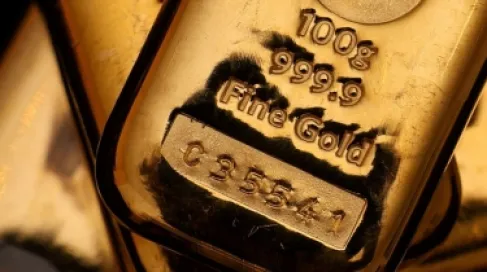
From this angle, market strategies specialist Jad Hariri, in a talk with Al Jazeera Net, believes that a small investor with a limited portfolio should not put all his money in one asset, even if it seems like a "safe haven" at first glance because the market re-prices assets quickly during crises. Gold itself may drop during some sessions as liquidity and the dollar may rise at the expense of other tools. Thus, he believes, the key idea is diversification, not betting on one direction.
Diversification First
Diversification means spreading money across more than one asset category, so any sudden shock doesn't turn into a complete blow to the savings. According to Hariri's perspective, this distribution might include some gold, some silver, and some U.S. defense stocks, while keeping cash within the portfolio.
Financial markets expert Mohammed Younis, in a discussion with Al Jazeera Net, reinforces the same idea, but in a simpler framework suitable for small investors, saying that a small portfolio can benefit from spreading money among stocks, fixed-income instruments, and a percentage of gold or silver because reducing concentration in a single asset lessens the risks, even if the portfolio value is limited.
Liquidity is Not a Luxury
One of the most common mistakes during turbulent times is to invest all savings at once, then face psychological pressure with the first downward wave. Therefore, Younis emphasizes the importance of maintaining a reasonable amount of liquidity, because cash not only provides some security but also leaves room for maneuver if buying opportunities arise at significant downturns.
Hariri agrees with this view, seeing the presence of liquidity within the portfolio not as a sign of hesitation but as a tool for defense and flexibility at the same time. If markets experience a sharp decline, liquidity becomes a weapon that allows re-entering at lower levels instead of being forced to sell at a loss.
In other words, liquidity is not always idle money; it can be part of the same plan, especially when military and political news can change market directions within hours.
Don't Chase the News
In times of war, the screen is filled with contradictory signals—a piece of news raises oil prices, another depresses them, a political statement pushes gold up, then a denial or calming brings the prices down again. In this environment, many sell in panic and buy in rush, which Younis considers being one of the most damaging behaviors for small investors.
The safest rule here is to stick to a clear plan: what percentage of gold? How much liquidity? When to buy? When to stop? Without these rules, the investor shifts from being a decision-maker to just a recipient of market fluctuations.
Gold for Hedging, Not for Speculation
Many confuse buying gold to protect purchasing power and buying it hoping for a quick jump. Younis points out that gold and silver should be seen as hedging tools against inflation and currency fluctuations, not as means for daily speculation.
He notes that some investors rush to the precious metal as tensions escalate, then become confused if the price later declines. However, real hedging is not measured by a day or two but by the role of the asset within the portfolio over a longer period.
Therefore, including gold or silver in the portfolio might be logical, but with the condition that it does not turn into a full bet on the metal alone, and that purchases are not made under the influence of fear alone.
What About Stocks?
Despite the prevailing anxiety in the markets, Hariri does not see sharp downturns as a signal for complete withdrawal from stocks, but rather as an opportunity for gradual rebuilding of positions, particularly in American defense sector stocks—companies less sensitive to economic cycles compared to growth and speculative sectors.
But this idea does not mean random purchasing; rather, it means gradual buying in calculated amounts, because rising oil prices might increase inflationary pressures and rekindle fears of tightening interest rates, which generally pressure stocks. Thus, the question is not: Should I buy or not? But: What should I buy, in what percentage, and in how many installments?
Cryptocurrencies
In this specific dossier, Hariri is particularly cautious, not ruling out an investment opportunity in Bitcoin after significant declines, but limiting that to a small percentage of the portfolio, no more than 5% to 10%, for those who can handle higher risk and understand the nature of this asset.
Survival Plan
The essence of the advice offered by both experts can be summarized in 7 practical rules for small investors:
Start with protecting capital, not chasing quick profit.
Spread the portfolio across multiple assets.
Maintain reasonable liquidity.
Do not make decisions under news pressure.
Treat gold and silver as long-term hedging tools.
Gradually enter stocks, not all at once.
Avoid borrowing for investment during this stage.
Above all, knowledge remains a part of protection itself. A small investor does not need to predict every market movement, but needs to understand what they own, why they own it, when to buy, and when to wait. In times of war, disciplined waiting may be a better investment decision than hasty action.