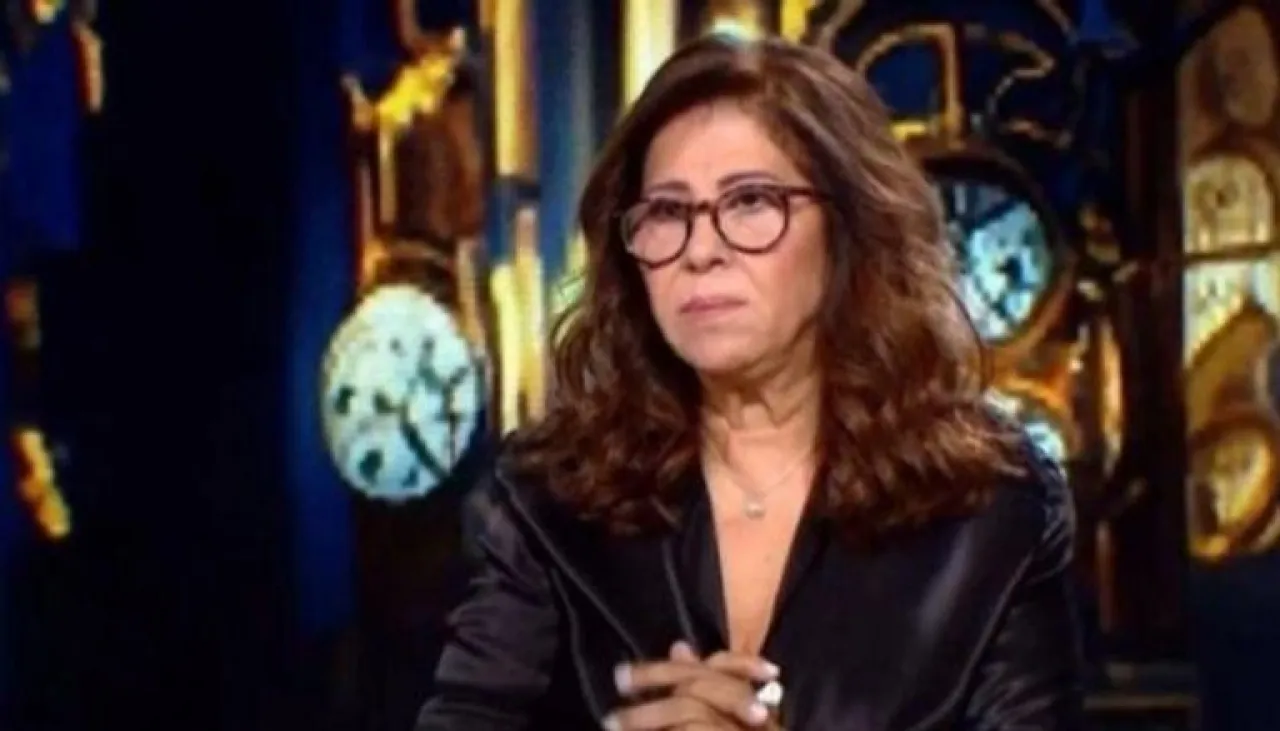
Khaberni - As the first quarter of 2026 concludes, the name of the Lebanese prediction expert Leila Abdel Latif again dominates search engines and social media platforms, amid a state of anticipation and controversy that accompanies her "exciting" predictions at the beginning of each year.
While some supporters see in her a "special ability" and opponents categorize her as "coincidence and general analysis," Leila Abdel Latif's predictions remain fertile material for Arab and international interaction.
In the last hours, social media sites have been buzzing with statements attributed to Leila Abdel Latif concerning the possibility of suspending schooling in Egypt during 2026. This interest coincided with weather forecasts warning of severe weather waves and actual government decisions to temporarily suspend schooling this week in some areas to protect students.
Leila Abdel Latif mentioned that her predictions include potential astronomical effects that could impact the regularity of the educational process, indicating that some scenarios might prompt authorities to take exceptional measures, like suspending schooling for short periods.
Despite her insistence that these predictions are not based on official data or prior governmental decisions, the actual occurrence of the suspension coinciding with her statements has led many to wonder: Are her prophecies indeed starting to come true?
Leila Abdel Latif also pointed out that the education sector in Egypt might face challenges linked to economic and social conditions, which could lead to limited disturbances, attracting widespread reaction among followers who are divided between supporters and those surprised by what is happening on the ground.
Leila Abdel Latif revealed in a series of TV appearances and posts on her official accounts a set of predictions covering all levels, with the most notable ones as follows:
Political earthquakes and assassination attempts: "The predictions lady" indicated that the first half of 2026 would witness unprecedented security tensions, warning of the possibility that prominent political and military figures in the Arab region could face assassination attempts that might change the geopolitical scene.
The economy at stake: Financial crises were not absent from the scene, as the predictions expected continued volatility in global markets, with a special mention of "crazy jumps" in gold prices due to sudden international crises.
Nature's wrath: The predictions included warnings of natural disasters (earthquakes or floods) potentially affecting countries not accustomed to such phenomena, raising a state of global concern.
The art scene: She spoke of resounding successes of Arab artistic works, though not without a "dark side" by predicting controversial events for some stars.
Have the predictions come true?
A large segment of followers believes that some of what Leila Abdel Latif mentioned is beginning to find its way to reality, especially regarding global tensions and the choking economic crises that the world is indeed experiencing since the beginning of 2026.
However, some believe that these predictions primarily rely on "reading the general scene"; as the world is already going through a state of political boiling, economic turmoil, and climate change, making the occurrence of these events plausible from an analytical, not an astronomical standpoint.
Why does the public believe her?.. The psychology of "prediction"
Experts in psychology explain the public's attraction to these predictions despite scientific criticisms, for several reasons:
The boldness of the statements: The ability to name sensitive areas (like education and politics) with a confident tone.
The connection to reality: Linking the predictions to events that matter to the ordinary citizen in their daily life (like schooling or gold).
The power of social media: The rapid spread of clips as soon as any similar event occurs, enhancing the audience's mental image that she "predicted the event".
The scientific opinion and warnings
In contrast, specialists and astronomers emphasize that "horoscopes and predictions" are not precise science and should not be relied upon as a reference for making decisions.
Experts confirm that these predictions remain in the realm of "entertainment content," warning against being carried away by them in a way that might cause psychological anxiety or affect social stability.
Experts' advice: Treat these predictions as general readings of the future, do not use them as a ruler to measure your life or decisions, and always stay behind the official data issued by governmental bodies.
The unseen is in the knowledge of God
While Leila Abdel Latif continues to stir controversy with her predictions that sometimes hit and sometimes miss, the real bet is on public awareness to differentiate between "strategic analysis" and "foretelling the unseen." The year 2026 still has much in store, and only time will reveal the truth of these prophecies.