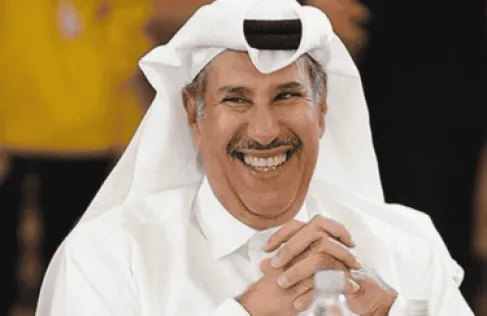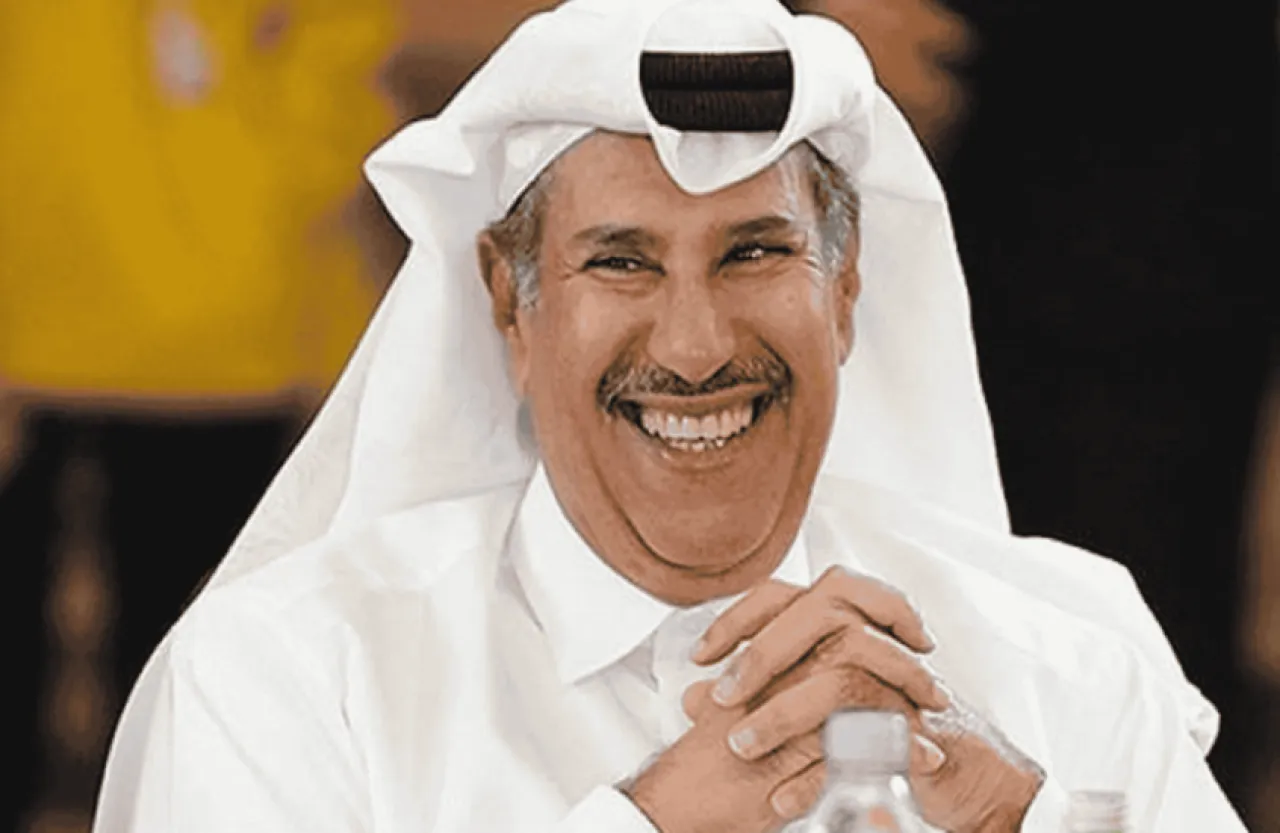
Khaberni - Former Qatari Foreign Minister Hamad bin Jassim emphasized the necessity for the participation of the Arab Gulf states in the American-Iranian negotiations to ensure the security and stability of the region.
The Middle East is witnessing an escalation in the American-Israeli war on Iran, amid international diplomatic efforts to contain the conflict and prevent the region from sliding into a broad military confrontation.
The files top the agenda for future negotiations possibly include the Iranian nuclear program, Tehran's regional influence, and the security of navigation in strategic straits, chiefly the Strait of Hormuz. At this time, Gulf capitals express their concern about any agreements that might be concluded without considering their vital security and economic interests.
In this context, the former Qatari Foreign Minister, Sheikh Hamad bin Jassim bin Jaber Al Thani, stated on the "X" platform that the current historical moment requires a unified and clear Gulf stance.
Attendance of the Gulf Cooperation Council states
He emphasized that "the Gulf Cooperation Council states cannot be absent from any table where the future regional outline is being drawn," considering that the security of the region "is not a secondary issue, nor a topic to be discussed on our behalf, but is the essence of our stability and existence."
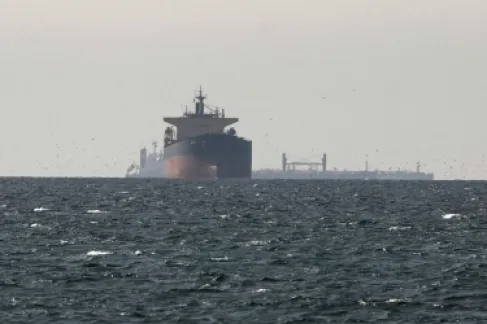
Bin Jassim warned against any attempt to deal with the Strait of Hormuz as a political tool, explaining: "The issue of the Strait of Hormuz must be put in its proper place: it is not a bargaining chip, nor an instrument of pressure. It is an international passage that must remain open unconditionally and under any circumstance," even demanding that "it be opened before any agreement so as not to be tied to any negotiations or used as a bargaining chip."
Unilateral control of Hormuz a direct threat
He saw that "any attempt to impose unilateral control over it, or to transform it into a tool for extortion, represents a direct threat not only to the Gulf Cooperation Council states and the region but to the entire global economy.
Sheikh Hamad bin Jassim talked about the exorbitant costs borne by the Gulf states as a result of this conflict, saying: "This crisis was imposed on us without consultation, and we have borne its economic and strategic repercussions, from disruptions in exports, restriction of trade movements, energy security threats, and regional stability disturbances."
He stressed that "it is important for our countries not to accept being the party that bears the cost of conflicts they did not ignite."
Direct and indirect losses
Bin Jassim called for the Gulf states to have the right to present their demands, asserting that "it is our full right, indeed our duty, to present the extent of the losses we have incurred, both direct and indirect, including the full or partial disruption of our exports." He added: "And if all parties will present their losses at the negotiation table, it is only right that the demands of the Gulf Cooperation Council states be strongly present, and that we demand fair compensation reflecting the extent of the damage we have suffered."
He concluded his remarks with a clear and firm invitation, saying: "The coming phase cannot tolerate ambiguity, nor accept marginalization. The voice of the Gulf Cooperation Council states must be present with their allies, heard, and influential in everything that is drawn for the future of this region. This is not a choice… but a necessity."