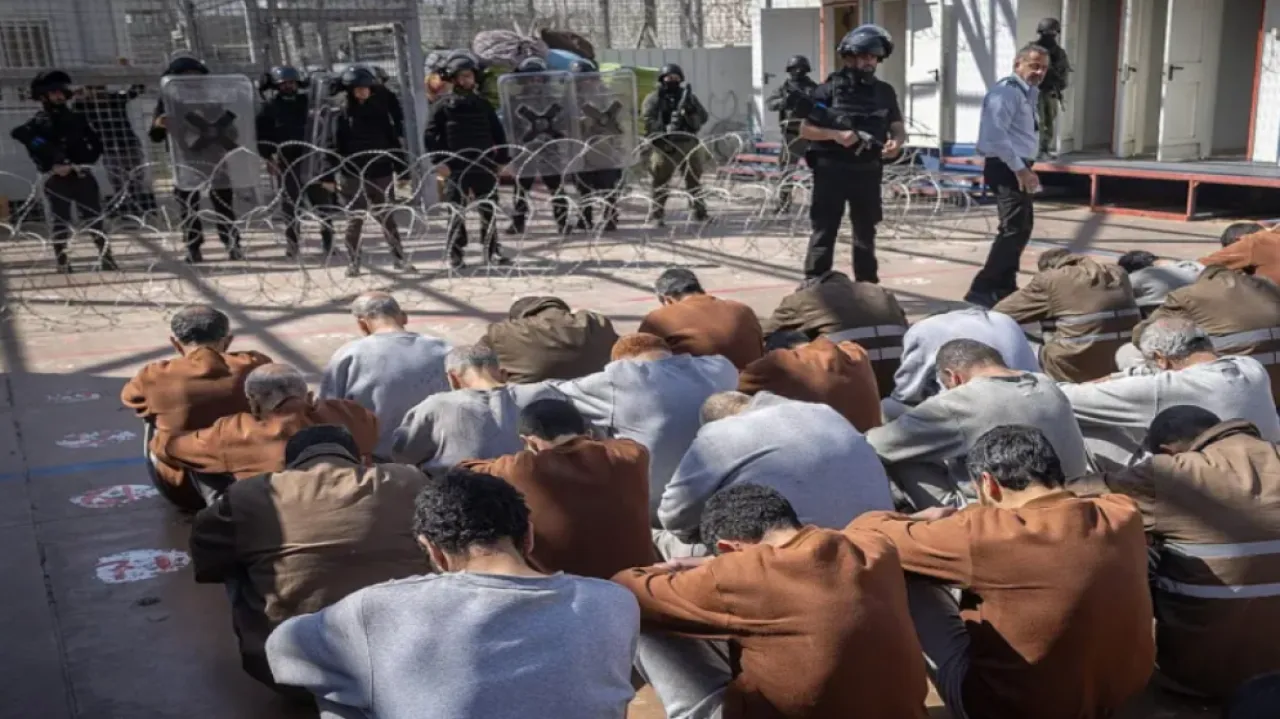
Khaberni - The European Union expressed its deep concern about the bill on executing prisoners approved by the National Security Committee in the Knesset, in preparation for its presentation for voting in the second and third readings next week.
European Union spokesperson Anwar Al-Anouni stated on Wednesday that the project "represents a worrying step," emphasizing that the Union opposes the death penalty "in all cases and under all circumstances" as it violates the right to life and cannot be implemented without violating the absolute right to be free from torture and mistreatment.
The National Security Committee in the Knesset approved on Tuesday a bill that imposes the death penalty on anyone who "deliberately causes the death of a person in an act classified as a terrorist act," with a provision that no pardon can be granted, meaning the sentence is final without the possibility of being reduced or changed later.
According to the text of the bill, the penalty is mandatorily imposed without the need for judicial consensus, to be carried out by hanging through the prison service of the occupying power within no more than 90 days from its issuance.
The bill also stipulates that its purpose is "to set the death penalty for perpetrators of killings classified as terrorist acts," including those who "deliberately kill a person with the intent to harm a citizen or resident in Israel or out of denial of the state's existence," punishable only by death or life imprisonment.
The bill includes discrimination in its application mechanism between inside Israel and the occupied West Bank, stipulating the death penalty in the West Bank as the primary punishment, with the military court having exceptional authority to impose life imprisonment in "special circumstances," in addition to granting the so-called "Minister of Security" the authority to determine the judicial body competent to try the accused.
The bill also grants the head of the government of the occupation the power to request the postponement of the implementation of the death sentence in "special circumstances" for a period not exceeding 180 days, despite setting the basic execution deadline at 90 days.
In his comment, the European Union emphasized that the death penalty "has no proven deterrent effect and makes judicial errors irreparable," noting that Israel had long been committed to an actual halt in carrying out death sentences.
It considered the approval of the bill "represents a serious regression" from this approach, urging Israel to adhere to its previous positions and its obligations under international law, as well as to respect democratic principles, as stipulated by the Partnership Agreement between the European Union and Israel.
It should be noted that the bill was introduced by Knesset member Limor Son Har-Melekh from the "Otzma Yehudit" party, led by Minister Itamar Ben-Gvir.