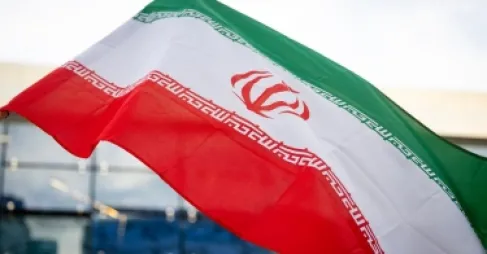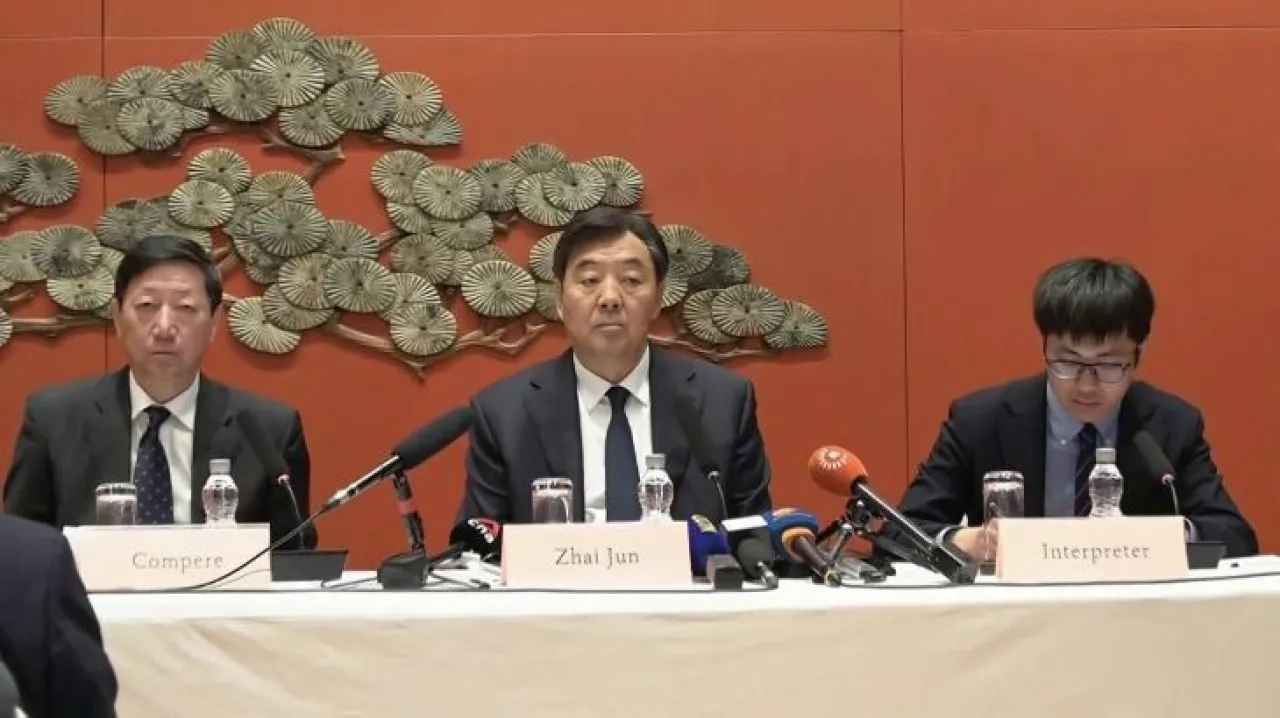
Khaberni - The Chinese special envoy to the Middle East, Chai Jiun, called for a ceasefire between the United States and Israel on one side and Iran on the other, and to begin negotiations, affirming that he witnessed the extent of the region's impact by the war.
In a press conference in Beijing, Chai said he conveyed China's position to the countries of the region during his visit to five countries: Saudi Arabia, Egypt, UAE, Bahrain, and Kuwait.
He emphasized that his country's stance dictates that this war should not have erupted, stating, "The United States and Israel attacked Iran without the approval of the Security Council, and this is a blatant violation of the charter of the United Nations and international laws," and that "China condemns this assault, and the resolution to this crisis must be initiated by deeply understanding the root causes of this conflict."
He called for efforts to prevent the continuation of escalation and assaults, as this war undermines stability and security in the Middle East, affecting global economic security and threatening the countries in the region.
The Chinese envoy also pointed out that the Arab countries, especially the Gulf ones, are suffering from a war in which they had no involvement, calling for the protection of civilians, affirming that "China condemns all attacks that do not differentiate between civilians and military personnel."
Chai stated that the priority now is for a ceasefire, and all parties must immediately cease hostilities, preventing further escalation that could lead to spiraling out of control.
Today, Monday, China urged all parties involved in the Middle East conflict to stop military operations to avoid entering into a "vicious cycle," and to resume negotiations.
Stop the war
For his part, Nader Rong Hua, a board member of the Chinese Middle East Studies Association in London, said China urges Iran to exercise restraint and be mindful of the Gulf countries and neighboring states, noting at the same time that his country has declared its support for sovereignty and territorial integrity, and opposes the American-Israeli attack on it.
Nader revealed that China provided financial aid and assistance to Iran, Iraq, Lebanon, and Jordan, but denied reports that China provided intelligence information to Iran, stating that his country adheres to a principle of not providing any weapons to any party in conflicts, and all its efforts are focused on reducing tensions rather than encouraging parties to fight.
He considered that the threat by the U.S. President Donald Trump to strike Iranian energy resources if Iran does not open the Strait of Hormuz could lead to a more dangerous situation, as Iran would in response target American facilities and interests, endangering the lives of citizens in the region.
It should be noted that Trump announced, today Monday, that the United States had good and constructive talks with Iran, and that he would order the military to postpone any military strikes against power stations and energy infrastructure in Iran for 5 days, while the Iranian Foreign Ministry denied any talks between Tehran and Washington.
China, which buys large quantities of oil from the Middle East, fears that imports might be affected due to the war in the region, and the disruption of maritime navigation in the strategically important Strait of Hormuz, considering it a vital passage between the Indian Ocean and the Gulf.