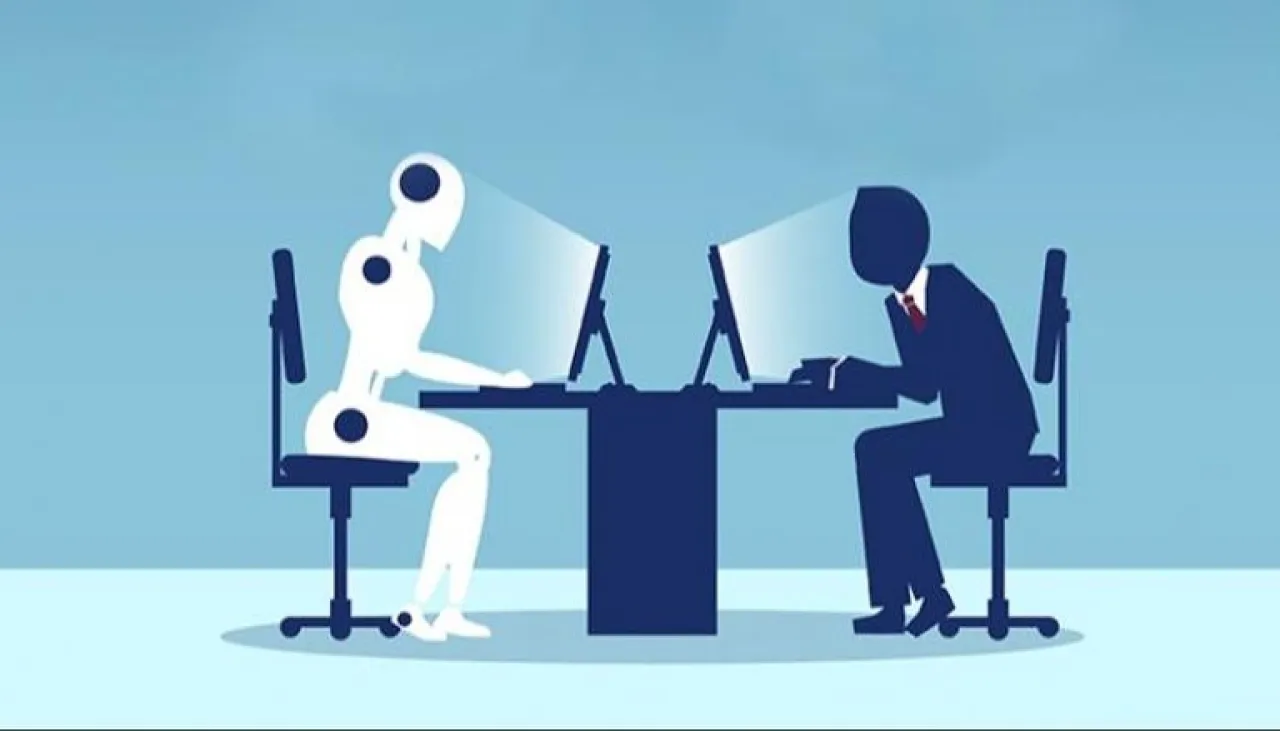
Khaberni - The accusations targeting artificial intelligence in employment sectors are relentless and continuously diversifying, amidst the development of different systems and modern models.
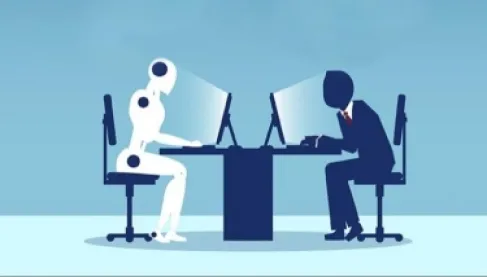
Among the latest accusations directed at artificial intelligence is that conducting job interviews with AI complicates the job acquisition process, a matter highlighted in a recent report by the British Broadcasting Corporation "BBC".
The report features a case study of a young woman named Bhavna Chilukuri, a third-year business management student, as an example of the experience of undergoing a job interview with artificial intelligence.
Chilukuri described the job interview process with AI as "mechanical and harsh", after she applied for over 100 jobs and was rejected for all of them.
The 20-year-old added, "There were moments when I applied for a job and received a rejection in less than two minutes, which was extremely frustrating."
She is convinced that very few job applications, if any, are reviewed by a real person, given the increasing reliance of companies on artificial intelligence for hiring new staff.
Bhavna says: "The first step is to have your CV screened by AI. You can be rejected quickly at this stage. The next step might be an AI-conducted video interview."
Despite her practical experience and multiple internships, she has so far been unable to secure a job after graduating from Queen Mary University in London this summer.
Frustration across an entire generation
This frustration is shared by many of her peers, who find it difficult to make their first steps in their career ladder.
Job opportunities have almost halved since the post-pandemic peak, while rising costs on employers and enhanced rights for new employees have made companies more hesitant to hire.
When companies do decide to hire, they are increasingly resorting to artificial intelligence to help them sort through the massive amounts of applications.
Recent data from LinkedIn indicates that about 89% of hiring officials in the UK plan to use more artificial intelligence in their hiring processes this year.
For Bhavna, this means logging into employment platforms where she is asked consecutive questions before she records her answers on video while staring at her own reflection.
She says, "Sometimes I feel like a robot because I only see myself on the screen, responding to questions for about 20 minutes. My voice becomes somewhat monotone. I don’t speak to anyone, which really loses my personality. It's quite sad."
Fighting back with the same method in application
Meanwhile, the president of one of the world's largest recruitment companies acknowledged that the interview process conducted through artificial intelligence can be frustrating.
The CEO of Adecco, which uses AI for initial candidate screening, Denis Machuel, said: "On average, job applicants need to send out 200 applications to secure a job offer."
He added, "The ability of AI to scale means that in the past, you communicated with 50 people and chose one, meaning 49 people felt frustrated. Now, if you communicate with 500 candidates, 499 will feel frustrated."
Bhavna understands why companies resort to AI in the hiring process, and why some candidates use it themselves as an alternative.
She said, "They receive a flood of applications, so I don’t blame them, but it has reached a level of laziness where students say, 'If you’re going to use AI for screening, I will also use it for applying', and they use it to write their resumes. I don’t blame them either, as everyone is trying to find a solution."
The law firm "Mishcon de Reya" is one among many companies that turn to artificial intelligence in screening job applications after they received 5,000 applications for 35 positions in their latest recruitment round.
The company’s early hiring manager, Tom Wickstead said: "We have more law graduates, fewer jobs available for graduates, and a greater number of candidates using AI to write their applications."
He added, "So for us as an employer, we face this overwhelming number of applications, making it hard to distinguish between them."
How to prepare for a job interview with artificial intelligence?
A Wall Street Journal report said that the experience of a job interview with artificial intelligence can be awkward or confusing for many candidates.
The newspaper provided in a report ways to prepare for a job interview with artificial intelligence after consulting employment experts, career advisors, and managers of AI-supported employment platforms, to gain tips on how to successfully pass a job interview. These tips include the following:
The CEO of Work It Daily, a professional training website, J.T. O'Donnell, told the Wall Street Journal: "AI evaluates performance, speed, confidence, and clarity, not just content."
Candidates might easily fall into the trap of speaking in a prepared or mechanical manner because, without the facial expressions of a human interviewer, they don't know how their answers are received.
The CEO of BrightHire, an AI-supported interview platform, Ben Cesser said: "Even though candidates are not talking to a person face-to-face, they must still prepare and communicate as if they were."
The CEO of AI Mindset, a consulting firm specializing in artificial intelligence, Conor Greenan, said: "Record yourself answering six to eight common questions about topics such as leadership, conflict resolution, and customer service, then review the recording without sound, focusing only on your presence and body language. Afterwards, play the recording with sound only, to listen to your speaking speed, excess words, and clarity. Finally, watch the video with sound, and repeat this process until you feel capable of giving such answers while asleep."
Some AI-supported interview platforms offer training sessions or coaches who work with job candidates on practice interviews supported by artificial intelligence.
Avoid stuffing keywords
Many job applicants try to stuff their responses with keywords that they think the algorithm wants to see, which is a mistake, according to experts.
The Managing Partner at recruitment company "Murray Resources", Keith Wolf: "You should use relevant professional terms naturally, but don’t try to manipulate the algorithm by stuffing keywords only," adding that "Most AI systems are smart enough to detect when someone is being overly mechanical."
In fact, the "Willow" platform for candidate assessment says that it uses AI detection technology to determine when applicants rely on artificial intelligence or keywords in their answers to impress the algorithm.
The report also advised, to speak naturally—not too rapidly or verbosely—and to focus more on the structure of your answers and their clarity rather than the number of keywords in them.
It’s okay to show your personality or use appropriate humor, and the CEO of the AI-supported interview platform "Humanly", Prem Kumar, said: "Expressing personality, tone, or emotions doesn’t confuse the system, nor is it considered a mistake."
Other advisory tips for a successful job interview with artificial intelligence include maintaining eye contact during the interview.
Executives at AI-supported interview platforms say that these systems typically do not evaluate job candidates based on eye contact or facial expressions.
However, since someone will ultimately review your interview, employment advisors and hiring officials recommend looking directly at the camera when recording answers, just as if you were looking at a human interviewer during a personal interview.
The Wall Street Journal report also advised wearing appropriate interview attire, checking your technical devices, which may seem obvious, but it’s worth reminding to ensure a strong wifi connection, closing tabs, stopping notifications, silencing your phone, and eliminating any other distractions before joining a job interview via artificial intelligence.