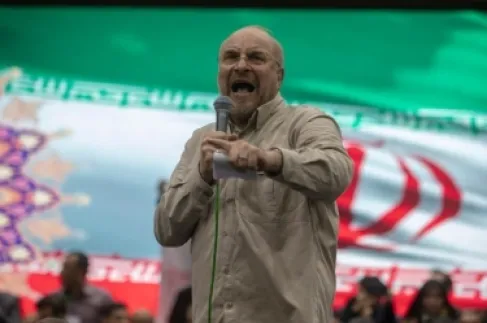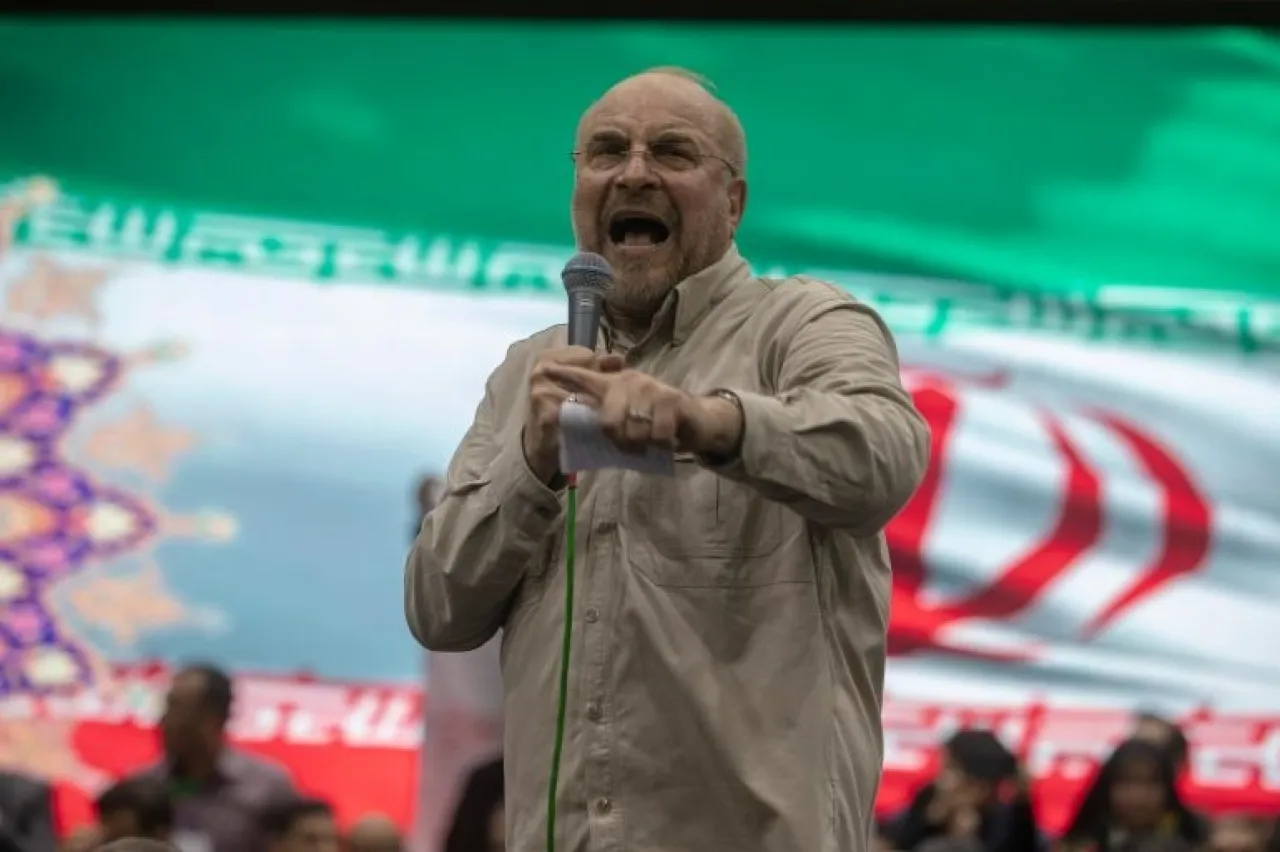
Khaberni - Iranian Parliament Speaker Mohammad Bagher Qalibaf plays an increasingly pivotal role at a crucial moment, especially after the assassination of the Secretary of the Supreme National Security Council, Ali Larijani, and with the ongoing US-Israeli strikes targeting the Iranian political leadership.
With the deaths of more influential figures in Iran, the man - who was a commander in the Revolutionary Guards, Mayor of Tehran, a leader of the national police, and a former presidential candidate - has become a crucial link between political, security, and religious elites.
The leadership in Tehran is waging a bitter war of attrition to hold out against the United States and Israel, who have been waging a war against it since February 28th, starting with the assassination of Supreme Leader Ali Khamenei.
Qalibaf is seen as having been close to Khamenei and trusted by his son Mojtaba, who succeeded him as the supreme leader, and he is among the most prominent voices challenging Israel and the United States, promising revenge for their attack.
Threatening rhetoric
On Thursday, Qalibaf wrote in a post on X platform, "From the core of this people, thousands of martyrs like Khamenei, Larijani, and Bakpour will emerge, this is no exaggeration. Look, another revolution has formed and taken to the streets. Iran was asleep, you are the ones who awakened it," threatening an "uprising."
In a previous address directed at U.S. President Donald Trump and Israeli Prime Minister Benjamin Netanyahu after the killing of Khamenei, he promised to deliver "strikes so devastating that you will beg us."
He said in a speech broadcast on television, "I say to these two filthy criminals and their agents: You have crossed the red line for us, and you must pay the price."
Alongside these positions, Qalibaf also portrayed himself as a renewed pragmatic figure, appearing in his presidential campaign in 2005 in his formal pilot uniform in campaign advertisements to enhance his image as a qualified candidate.
Qalibaf was born in Turqabeh, northeastern Iran, in 1961. Media indicate that his life was partly shaped by the lectures he attended in mosques as a boy during the fervor of the Islamic Revolution in 1979.
Political office
Qalibaf has never ceased his presidential ambitions, running for the office in 2013 and 2024 without success, and withdrawing from the race in 2017.
He replaced Ahmadinejad as Mayor of Tehran, holding the position for 12 years, and is credited with helping to suppress unrest that lasted for months after Ahmadinejad was declared winner of the 2009 elections.
After 12 years as mayor of Tehran, he returned to politics by being elected to parliament and assuming the position of parliament speaker in 2020, giving him one of the most significant positions in the Iranian power hierarchy.
Military role
Regarding the military side of his life, Qalibaf joined the Revolutionary Guards at the beginning of the Iran-Iraq War in 1980, and quickly rose to become a general within just three years.
After the war, he continued his career with the Revolutionary Guards, earned a military pilot license, and ultimately became head of the Air Force unit of the Revolutionary Guards.
Qalibaf's rise reflects the reshaping of decision-making centers in Iran under the pressure of war and ongoing targeting of leaders.
With Israel assassinating prominent figures, players with security backgrounds are coming to the fore, while analysts say this indicates a more hardline phase, the course of which remains dependent on the developments of the war.