Khaberni - Children's libraries play a vital role as cultural and social institutions, contributing to the development of a child's personality, broadening their horizons, and helping them acquire various skills and knowledge.
Children's libraries, which are among the most important educational and cultural institutions, effectively contribute to the comprehensive development of a child's personality and the enhancement of their mental, emotional, and cognitive capacities. They also work to broaden their perspectives, develop their creative skills, and shape their behavioral orientations through targeted information resources and readings that meet their needs.
Public libraries generally provide children with opportunities for varied free reading from an early age and are considered educational centers in the eyes of children as they educate them autonomously and help them access knowledge on their own.
Children's libraries began to spread widely in the second half of the twentieth century due to the abundance of production in children's literature in various forms and types, in addition to the belief that childhood is a distinctive world from the adult world that requires care and attention.
Writer Qais Al-Hanty emphasized the importance and impact of libraries on children, stating, "Having been around children and adolescents for over twenty years; I have directly felt the impact of libraries on their development of personality, interests, knowledge, and openness to many ideas and cultures."
He added, "Indeed, reading books in itself contributes to this development, but the innovative and interactive activities based on and inspired by these books play a fundamental role in the enjoyment of children and adolescents, and consequently, their stronger connection to the libraries. In this case, the impact of libraries extends to include psychological and social aspects as well."
Al-Hanty praised the various and well thought-out events and activities offered by the "Path of Knowledge" library, owned by the Abdul Hamid Shoman Foundation, which includes: readings and discussions, varied reading initiatives, summer and winter clubs, and creative writing workshops, pointing out that all these activities take place within a safe, creative, and humane community that supports children and adolescents and forms an important part of their life journey.
Writer and author Taghreed Al-Najjar said: "Some might think that the role of public libraries in the culture of children has declined in our current era, where information is readily available on our electronic devices and can be accessed with the push of a button. However, the interest in public libraries is still present and in fact, increasing in many societies, especially those libraries that cater to children. This is because the role of the library is not only to provide information but also to build a child's personality and develop their imagination and intellectual and social capabilities."
She noted that public libraries still play an important role in enriching the culture of children and broadening their horizons, as they provide an environment stimulating for learning and discovery through the diverse activities they organize. Here, children find an opportunity to express themselves and discover their talents. These activities include programs within the library and others that may extend outside, making the library a vibrant space for cultural and educational interaction.
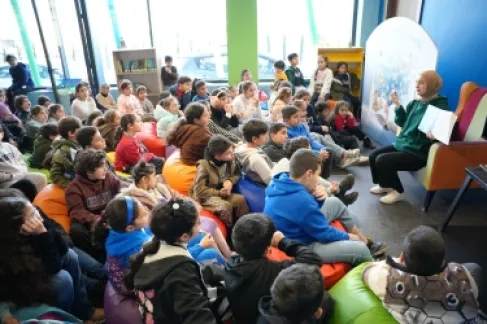
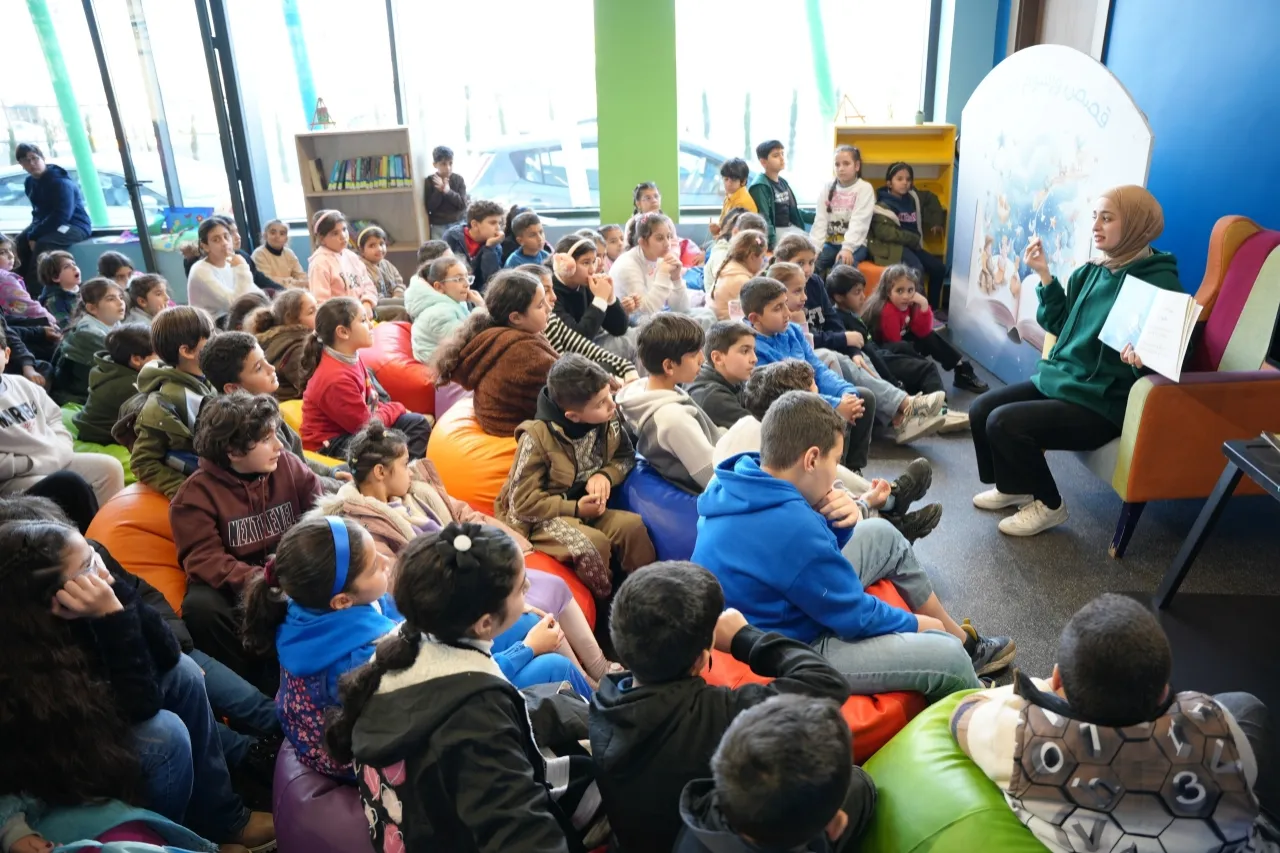
Al-Najjar pointed out that the library gives children a space to meet other children from different environments and backgrounds, which contributes to enhancing their social skills and developing a spirit of cooperation and openness to others, emphasizing that libraries are no longer limited to reading stories in an atmosphere of complete silence, but now offer interactive story readings conducted by librarians or guest writers, where narration becomes an enjoyable experience that combines listening, participation, and dialogue.
She also mentioned that in the public library, the child also encounters different types of literature, from stories and poetry to drama and informative texts, as well as having the opportunity to participate in creative writing workshops that help them develop their literary talent and hone their ability to express themselves.
Al-Najjar confirmed that the role of the library is not limited to children alone but extends to include the family as well. Many libraries organize guidance workshops for parents about child-rearing methods, ways to encourage them to read, and the importance of books in developing a child's personality. Parents are also introduced to the activities and programs offered by the library to be active partners in supporting their children's relationship with reading.
She noted that modern public libraries strive to achieve a balance between the printed book and technological advancement. They provide children with printed books that remain the cornerstone of the reading experience, while at the same time allowing them to use electronic devices for research, learning, and working on various projects. Thus, the library maintains its traditional role as a source of knowledge while keeping up with the digital developments that have become part of children's daily lives.
Al-Najjar highlighted the role of the Path of Knowledge library in attracting children and families to visit it and participate in its activities, which have become widespread in several provinces of the kingdom.
For their part, parents of visitors to the "Path of Knowledge" expressed their satisfaction with their experience visiting the library, considering it a successful and positively impactful experience on their children in terms of enhancing their love for the arts, encouraging reading, and stimulating the imagination. They also expressed their comfort with the safe environment provided by the library branches, in addition to the enjoyable services and activities that help children develop an attachment to the place and return to it voluntarily, reflecting the library's success in creating a stimulating, safe educational and recreational environment.
Some children described their experience visiting the Path of Knowledge library as enjoyable and enriching, noting that they feel great enthusiasm when visiting the library for its educational and knowledge-rich environment, in addition to the enjoyable interactive activities.
In this regard, Nizar Al-Hammoud, director of the Abdul Hamid Shoman library, confirmed that children's libraries today play a vital role in shaping the awareness of generations and broadening their perspectives, through what they offer in terms of a rich knowledge environment and interactive reading and learning experiences. He clarified that the role of these libraries is no longer limited to making books available, but extends to stimulating children's curiosity and their ability to think and express themselves, and building their relationship with reading as an enjoyable and ongoing experience, besides contributing to their cultural and social growth within a safe and discovery-stimulating environment.
It is worth noting that the Path of Knowledge library for children and adolescents (aged 3 to 16) was opened in 2013 at the public library branch in Jabal Amman, as the first interactive library designed for this age group in Jordan. This step represented a significant leap in promoting a love of reading and scientific curiosity among the young, offering a creative environment that develops imagination and knowledge for the future generation.