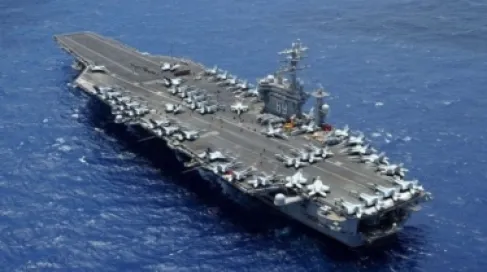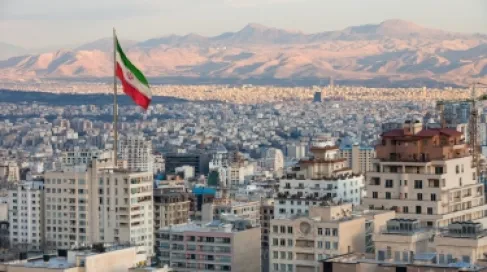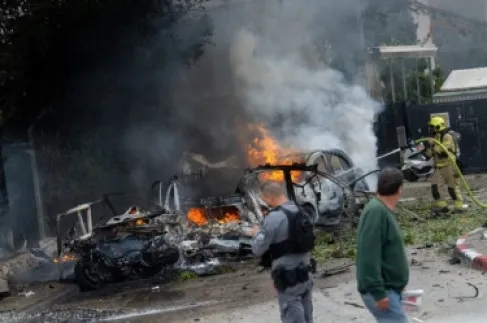
Khaberni - Columnist Paul Post and legal researcher at the University of Chicago, Pegah Bani Hashemi, argue in their joint article in Time magazine that the war on Iran may not be as short as political rhetoric suggests, but could turn into a long-term, complex conflict where military, political, and economic considerations are interlinked.
The article noted that Trump accurately described the war at its onset when he said it "will not be quick". During his announcement of the military campaign against Iran, he talked about potential American losses.
A few days later, he stated that the war could last "4 to 5 weeks," and "much longer if necessary", as he mentioned in an interview with Axios news site that the war would end soon, adding, "Whenever I want it to end, it will end."
According to the Time article, the declared goals of the American administration for the war range from curbing nuclear ambitions to seeking to overthrow the Iranian regime, amidst conflicting estimates regarding the timeline for this confrontation which observers believe could turn into a protracted war of attrition.
In the view of Post and Bani Hashemi, this oscillation in goals reflects an ambiguity in the American strategy regarding how to end the war or what the next phase might look like.
The authors clarified that the situational reality and historical evidence suggest contrary to Trump's claim that the war would be short-term. This is based on data from the American "War Engagement" project, which confirmed that most interstate wars in the past two centuries were relatively short, not exceeding 5 months.
Nevertheless, there are notable exceptions such as the war in Ukraine, which entered its fourth year, or the war between Iran and Iraq in the 1980s that lasted 8 years, according to the article.
Regime collapse is unlikely
According to the authors, it is unlikely that the Iranian regime will collapse. It is not just a government, but a network of political, security, economic, and institutional structures supported by oil revenues and international relationships that have been built over decades.
Even after the assassination of Supreme Leader Ali Khamenei in an airstrike, the government did not fall. Rather, the Islamic Republic quickly followed a constitutional path where power shifted to an interim leadership, with his son Mojtaba Khamenei chosen as the new Supreme Leader.
According to the authors, the Iranian Revolutionary Guard and the affiliated Basij forces have shown resilience in the face of war against much stronger opponents. Over decades, the Revolutionary Guard has undergone intense ideological and organizational scrutiny aimed at cultivating cadre deeply loyal to the regime.
The authors believe that air strikes may damage Iran's military and economic infrastructure, but they will not be sufficient to topple the regime or break the will of these forces.
Mobilization of the masses
Domestically, according to the article, nationalism plays a crucial role in prolonging the conflict. The gesture of supporting ethnic groups like the Kurds, despite Trump's denial, raises concerns among Iranians about the disintegration of the state, prompting both opponents and supporters to rally behind the national flag against foreign intervention, just as happened during the Iran-Iraq war.
Internationally, the crisis's complexities intertwine with reports of Russian intelligence and Chinese technological support for Tehran, in contrast to Washington's request for Ukrainian assistance to counter the Iranian drones.
The authors conclude that the Trump administration appears to be practicing what they call "strategic hedging," hinting at the possibility of a quick victory while simultaneously preparing public opinion for a possibly longer conflict.
However, Post and Bani Hashemi see in their article that this ambiguity in the goals may complicate achieving a clear end to the war and poses a crucial question for decision-makers in Washington and Tel Aviv: Are the desired objectives worth the cost of a comprehensive war of attrition in a highly sensitive region?