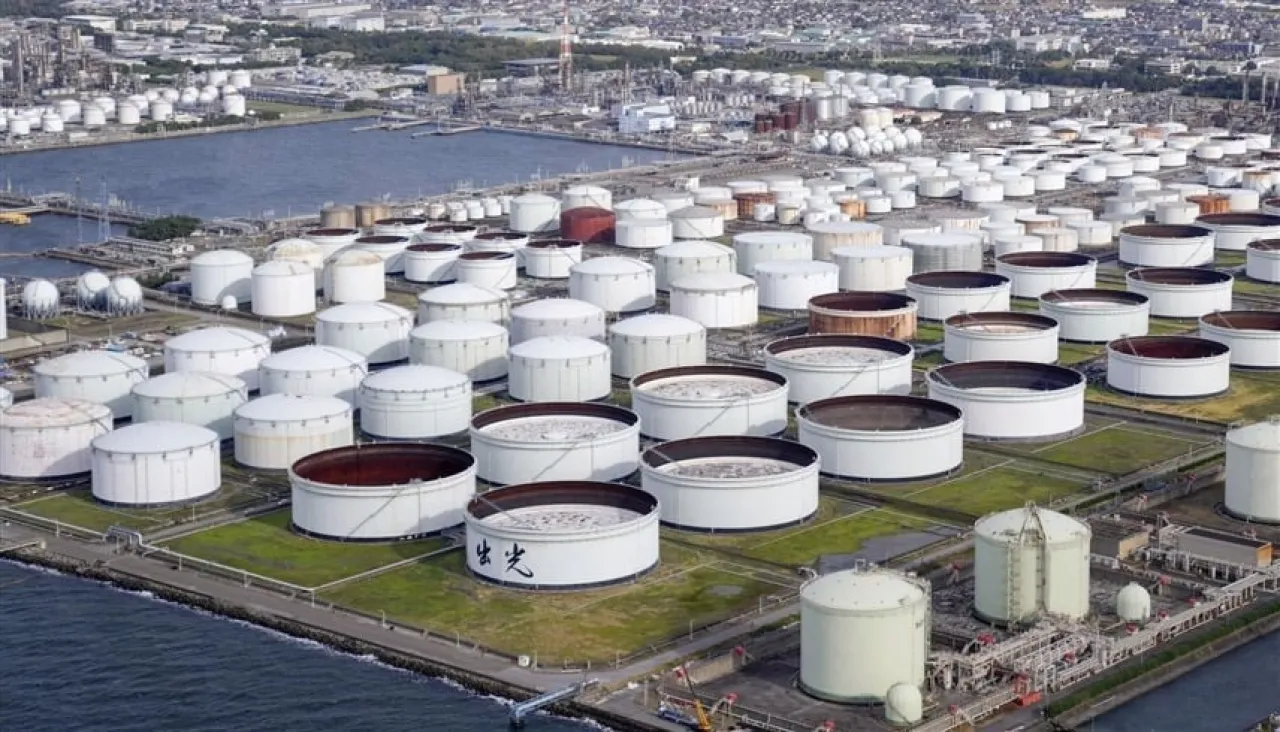
Khaberni - Japan intends to begin withdrawing from its oil reserves tomorrow, Monday, to ease the shock caused by the American-Israeli war on Iran, a clear reminder of an oil crisis that occurred half a century ago which initially prompted Tokyo to store reserves.
With the rise in gasoline prices across Japan due to the war disrupting supplies from the Strait of Hormuz, Tokyo has committed to an unprecedented withdrawal of 80 million barrels of oil, equivalent to about 45 days of supplies.
The government has asked Japanese refineries to use the crude that will be withdrawn, and this will reduce national reserves by 17% to secure domestic supplies.
It is still unknown how much oil Japan will allocate to participate in a global withdrawal of 400 million barrels orchestrated by the International Energy Agency to deal with the supply shock caused by the war, as well as price fluctuations.
Lee Zeldin, the director of the U.S. Environmental Protection Agency, said: "When you see the conflict in the Middle East... you remember that all the crude oil shipped from Alaska to Japan was never targeted by a successful terrorist attack, this conflict is a reminder that many other countries in the Indian and Pacific Ocean regions can look to the United States, where we have the resources."
Gaining time
Japan gets only about 4% of its oil from America after it largely stopped buying oil from Russia since the invasion of Ukraine in 2022, the most recent time Tokyo turned to reserves.
Yuri Hamber, CEO of Tokyo-based "Yuri Group" consulting, said that the withdrawal Japan will perform shows the seriousness with which Tokyo is addressing this disturbance.
He added: "The reserves can help stabilize supplies and prices in the short term, but they are essentially a way of buying time and cannot completely compensate for a prolonged disruption in the Strait of Hormuz."
Japan began a national oil storage system in 1978. As a member of the group of seven major industrialized nations, Japan has oil reserves that can support consumption for 254 days, relying on the Middle East for about 90% of its oil needs.
The Ministry of Economy, Trade, and Industry reported that the country will begin withdrawing an amount equivalent to 15 days of private sector consumption tomorrow, Monday, and an amount equivalent to a month from the state reserve, starting from later this month.