Khaberni - The Ministry of Transport is preparing to launch the second phase of the public transport development project between Amman and the governorates, after the positive results achieved by the first phase of the project, which was launched in mid-2025 and represented an important step in the concept of developing the public transport system and improving mobility services for citizens.
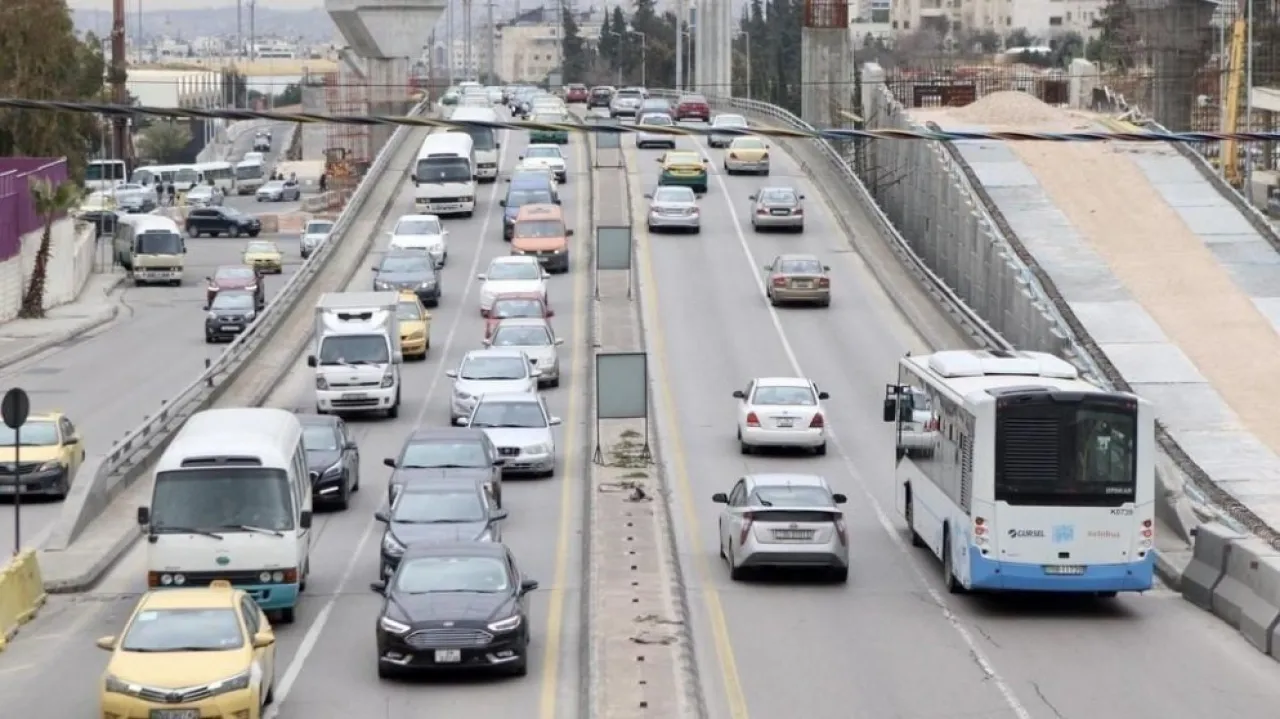
The first phase saw the project operating with a fleet of 121 buses, before it was subsequently enhanced to reach 152 buses operating on 4 main lines connecting the capital Amman with the centers of the governorates of Irbid, Salt, Jerash and Karak, within a modern operational system that relies on regular time schedules and advanced operational standards.
According to operational data for the project, buses have transported more than 1.6 million passengers since the service launch until the end of February, through approximately 139,000 trips, reflecting the increasing popularity of regular public transport services between the governorates and the improvement in their reliability as a practical transport option.
In light of the positive results of the first phase, the ministry is preparing to launch the second phase of the project, which comes as a studied expansion aimed at building a comprehensive national public transport network between the provinces, addressing geographical connectivity gaps, especially between the southern provinces and the capital, in addition to enhancing mobility integration between the northern and central provinces.
The second phase is scheduled to include the operation of 7 new transport routes between the governorates through a fleet of about 180 buses, with a capacity to accommodate about 13.5 thousand passengers daily.
The new routes will include lanes Amman – Ma'an, Amman – Tafilah, Amman – Ajloun, as well as direct lines between several provinces including Irbid – Zarqa, Zarqa – Mafraq, and Jerash – Irbid, Jerash – Mafraq, contributing to the expansion of the public transport network between cities and improving mobility options for citizens.
Buses will be operated within a modern operating system that relies on smart transportation solutions, where buses will be equipped with electronic tracking (GPS) systems to monitor the movement of buses and ensure adherence to timetables, in addition to providing electronic payment systems to facilitate service use, along with operational and control systems that contribute to increasing operational efficiency and improving the quality of service.
The project also relies on a governmentally supported operational model, where the operational support for the second phase is expected to be about 4.2 million dinars annually, in order to ensure the sustainability of the service and maintain tariff stability and enhance the attractiveness of public transport as a practical alternative to private vehicles.
According to the project's execution plan, the trial operation of the second phase is scheduled to begin with full operational readiness in mid-June, with all lines of the new phase fully launched by the end of July.
This project is part of the efforts of the Ministry of Transport to develop a modern and regular public transport system between the governorates, contributing to improving the level of service provided to citizens, supporting economic development in various regions of the kingdom, and enhancing the efficiency of connectivity between cities, and stimulating economic activity by linking labor markets in different areas.
Regular public transport also contributes to reducing the costs of mobility for citizens, reducing reliance on private vehicles, in addition to alleviating traffic congestion and improving the efficiency of using transport infrastructure, which enhances the role of this sector as one of the drivers supporting economic and social development in the Kingdom.
The Council of Ministers had approved the implementation of the second phase of the project to develop regular public transport between the governorates and the capital within 7 main routes, with a total of 180 buses, serving more than 13,000 passengers daily.
The development project aims to expand the national public transport network and enhance connectivity between the southern, central, and northern provinces, and improve service quality through smart transport systems, electronic payment, and tracking and monitoring within buses.
The new routes will be as follows: Amman-Tafilah, Amman-Ma'an, Amman-Ajloun, Zarqa-Mafraq, Zarqa-Irbid, Jerash-Mafraq, and Irbid – Jerash.
The official operation of the "Amman - Irbid" and "Amman - Jerash" lines began on the first of July of the previous year 2025 with government support amounting to 4.5 million dinars.
39 buses are operating on the "Irbid - Amman" line, with two main branches (Irbid – Suweileh – University of Jordan Hospital) and (Irbid – Jordan Street – Northern Complex), with a daily 242 trips.
The "Jerash - Amman" line includes 23 buses operating on two paths, one to the North Complex (17 buses), and the other to the University of Jordan Hospital (6 buses), with a daily 124 trips.
The Ministry of Transport launched the official operation of the Amman - Salt and Amman - Karak lines on December 9th, within the first phase of the project connecting the capital with the centers of the governorates, with a total of 67 buses equipped with the latest advanced devices for both lines.
The Karak - Amman line operates 32 buses equipped with smart transport systems, expected to benefit 122 trips through these buses.
35 buses were allocated to the Salt - Amman line, with 20 buses operating on the route connecting Salt and the University of Jordan Hospital back and forth, and 15 buses operating on the Salt – Patrols Bridge route.