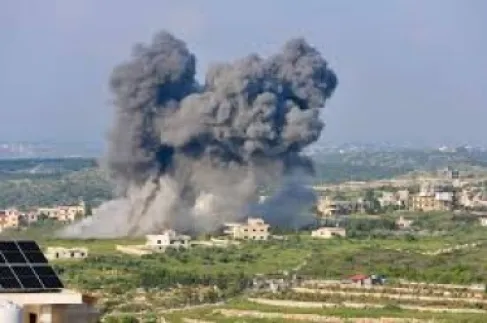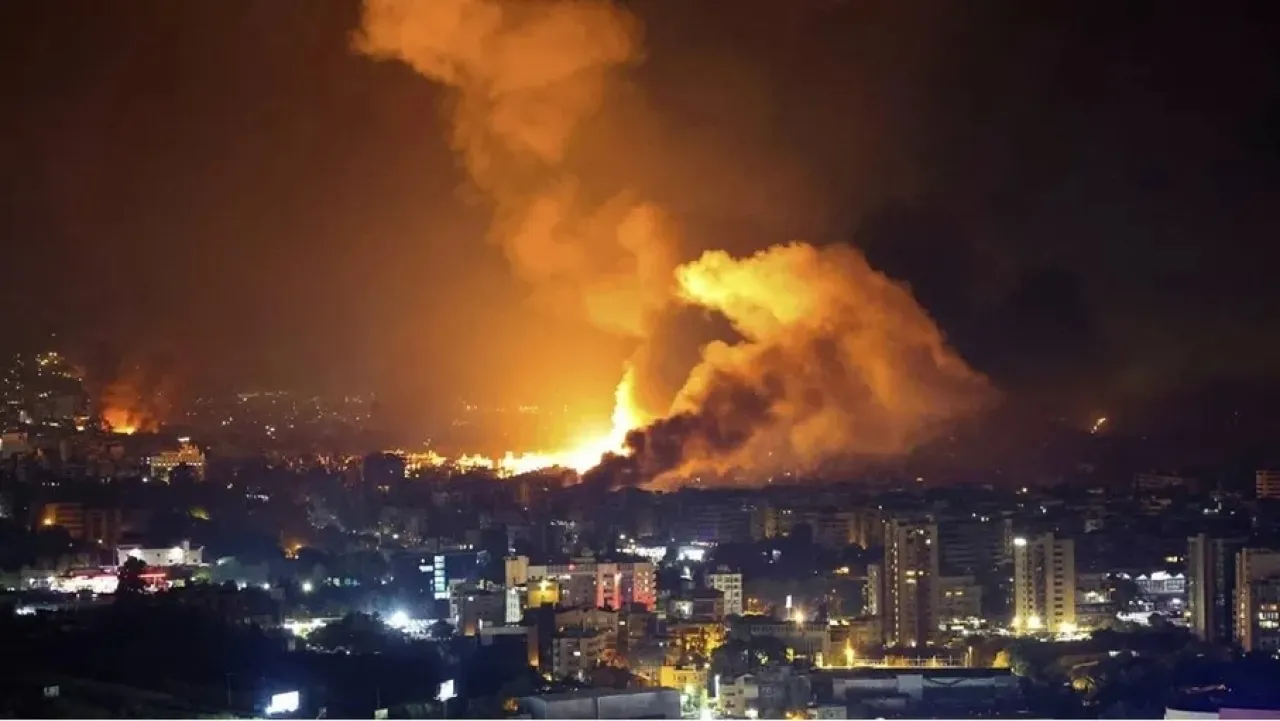
Khaberni - Amidst the escalation of fighting between Hezbollah and Israel, the latter prefers the option of a limited defensive battle deep inside Lebanese territory, avoiding a wide-scale ground invasion, amid fears of the high military cost.
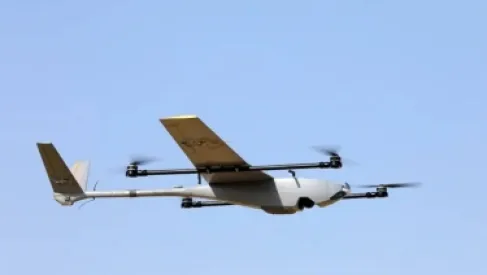
The Hebrew newspaper "Yediot Ahronot" points out that this approach comes amid increasing movements of Hezbollah elements towards the border, while still retaining multiple offensive options including raids and infiltrations, in addition to ongoing missile fire and drone operations, making any extensive ground maneuver risky and requiring careful balancing between tactical security and strategic cost.
According to Israeli estimates reported by "Yediot Ahronot", the hesitation in executing a broad ground invasion in southern Lebanon reflects careful calculations of the profit and loss equation in an encounter with Hezbollah, which has proven its ability to manage combat at a high tactical level. This hesitation is evident in the Israeli military's current preference for engaging in a limited frontal defensive battle deep inside Lebanese territory without engaging in a comprehensive ground incursion.
In the scenario of a limited invasion or "tactical incursion", Israeli forces seek to enter for short distances into southern Lebanon, focusing on controlling hills and border villages as advanced fire points.
However, the risks in this scenario lie in the ongoing daily attrition from sniping and missiles, and the advanced forces becoming static targets, with limited strategic impact on the party's capabilities. Israeli military estimates indicate that while tactical success is possible, it is unlikely to fundamentally change the strategic equation.
In the scenario of a wide invasion, this option involves a deep ground penetration up to the Litani River or further, aiming to establish a large buffer zone free from Hezbollah forces, with operations to clear villages and military infrastructure.
On paper, this scenario could achieve a strategic accomplishment by distancing missile platforms from the border and weakening the party's command and control, and restoring Israel's deterrent image. However, the human and field costs are very high as large losses are expected in urban and mountain warfare, and a long war of attrition could extend for months, with the possibility of opening additional fronts on a regional or domestic level. Thus, this option is fraught with severe risks that Israel cannot afford.
The most likely scenario for the Israeli military is to continue with aerial bombings and precise assassinations, along with repeated limited incursions to dismantle the party's capabilities without declaring a full-scale invasion, aiming to economically and militarily exhaust the party, reduce risks to ground forces, and wait for war developments with Iran or international pressure. This option reflects a cautious approach based on managing a long-term conflict with limited tactical gains without getting involved in a large-scale confrontation.
Why Does the Israeli Army Fear a Full Invasion?
First, the nature of the battlefield in southern Lebanon is ideal for guerrilla warfare, with mountainous terrains and dense valleys, a network of tunnels and fortified positions, and a high capacity for ambushes and close-range clashes.
Second, the current confrontation has shown significant advancement in Hezbollah's capabilities, from widespread deployment of anti-tank missiles to intensive use of drones, and combat experience accumulated over previous wars.
Third, the Israeli military is currently fighting on multiple fronts: Iran and long-range missiles, the Lebanese front, and potential threats in the West Bank, Gaza, and Yemen, which imposes a cautious distribution of power and avoidance of risks in a comprehensive invasion.
From Hezbollah's perspective, any Israeli ground incursion represents an opportunity to turn the Israeli technological superiority into a field burden. The defensive philosophy relies on "breaking the attack instead of preventing it," allowing a limited advance of Israeli forces while slowing their progress and increasing their human costs, turning it into an internal crisis.
The party relies on "zero-distance" ambush tactics, anti-tank missiles, and fighting within villages, utilizing mountainous terrains and valleys and adjoining villages, in addition to a network of tunnels and weapon caches that give a relative advantage to the Israeli army.
Hezbollah uses anti-tank missiles to slow the progress of armored vehicles and raise the morale and media losses of the Israeli army, in addition to using drones for reconnaissance and striking soldier gatherings, and thwarting evacuation operations.
Hezbollah also has a missile arsenal that preserves its pressure factor on the Israeli depth and disorients the internal front.
The party may adopt a strategy of allowing limited progress of the Israeli army, launching focused attacks on supply lines, then executing flanking attacks and ambushes to confuse the field command with the aim of turning any incursion into a growing operational burden on Israel, politically and psychologically.
The Israeli option has not yet been decided, as a full invasion is very costly and losses are likely. Hezbollah's strategy is to exhaust the enemy and turn any progress into a difficult and costly battle, with significant reliance on the psychological and media dimension, according to Russia Today.