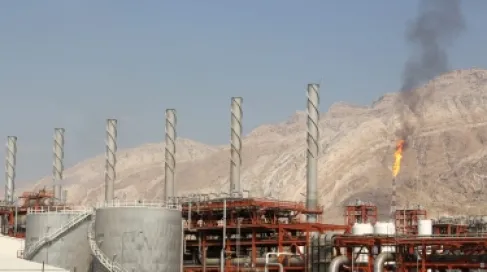
Khaberni - The toll from two weeks of Iranian assaults on the Gulf reveals the targeting of these countries with a very large number of missiles and drones, which predominantly fall on vital infrastructure, especially in the oil and aviation sectors, in addition to strong strikes on civilian sites, resulting in casualties, within a clear Iranian strategy in war management based on expanding the circle of pressure outside the direct confrontation arena with the United States and Israel by imposing the bulk of the war cost on the Gulf states.
While Tehran tried to justify the Iranian assaults on the Gulf by stating that they were targeting American bases only, the field realities and official statements issued by the countries of the region refute the Iranian claims, especially with the ongoing statistics published by the relevant ministries in the Gulf states, which confirm that the Iranian assaults on the Gulf have targeted civilian and vital facilities, from airports and energy networks to ports and residential areas, while Iranian officials continue to threaten, including a threat by the command center of Khatam al-Anbiya of the Iranian Armed Forces a few days ago to "target the economic centers and American and Zionist banks in the region" in response to targeting an Iranian bank, which led to the temporary closure of a number of banks in several Gulf states.
Calls to stop the Iranian assaults on the Gulf
Despite daily calls by officials in the Gulf states to stop the Iranian assaults on the Gulf and warnings of the danger of their continuation, Tehran ignores so far the danger of this approach and its implications for the future of Iranian-Gulf relations, especially in terms of increasing Iran's regional isolation and the difficulty of restoring trust after the relative improvement in Tehran's relations with its Gulf neighbors in the recent period after years of tension, especially after several Gulf states played roles until the last moment in trying to convince US President Donald Trump to choose negotiations and diplomacy over war.
Qatar announced on Thursday evening that it countered a new assault. The Qatari Ministry of Defense, in a statement, referred to the country being attacked by two ballistic missiles, a cruise missile, and several drones from Iran, noting that the Qatari forces successfully countered all the missiles and drones. Since the beginning of the Iranian assaults on the Gulf, Qatar has been subjected to intense attacks including ballistic missiles and drones, and two Sukhoi-24 fighter jets. Until last Thursday, it has faced 163 missiles, with 118 intercepted, and at least 72 drones, with 47 intercepted, in addition to shooting down two Sukhoi-24 fighter jets.
The National Human Rights Committee in Qatar, on Friday, welcomed the adoption of a Security Council resolution condemning the Iranian attacks on the State of Qatar and a number of Arab countries. The chairperson of the committee, Mariam bint Abdullah Al Attiyah, welcomed the content of the resolution adopted by the Security Council last Wednesday, which "included an explicit condemnation of the Iranian attacks on the territory of the State of Qatar and a number of brotherly countries, as acts of aggression inconsistent with the Charter of the United Nations and relevant international law rules," and welcomed the Security Council's emphasis on the need to respect the sovereignty, independence, and territorial integrity of nations, stating also her satisfaction with the Council's emphasis on the need to ensure the safety of civilians and civilian infrastructure, saying "This resolution is of great importance given that it made clear that the continuous attacks being waged by the Islamic Republic of Iran on the State of Qatar and the Gulf Arab states and other Arab countries, are but acts of aggression prohibited under the Charter of the United Nations, and under other relevant international treaties."
Two killed in Oman
In the Sultanate of Oman, the intermediary state in negotiations between Washington and Tehran, authorities yesterday reported scattered Iranian attacks using drones, resulting in the deaths of two individuals and injuring others in Sohar, Oman. The Oman News Agency, on Friday, quoted a security source announcing "the fall of two drones in Sohar, one in the Al-Awahi industrial area, resulting in the death of two expatriates and some injuries, and the other in an open area without registering any injuries."
On Thursday evening, the Oman News Agency reported the interception of a drone and another falling into the sea north of the Duqm region, about 550 kilometers from the capital Muscat, without recording any human or material losses. Two days ago, following an attack that targeted oil warehouses in Salalah Port, Omani President Masoud Bazshkiyan made a phone call to Sultan Haitham bin Tariq Al Said of Oman to discuss this attack and the latest developments in the region and bilateral relations between the two countries. During the call, Sultan Oman reaffirmed "his country's neutrality and its dissatisfaction and condemnation of the ongoing targeting that is affecting its territories," emphasizing that Oman "is taking all necessary measures to maintain its security and stability."
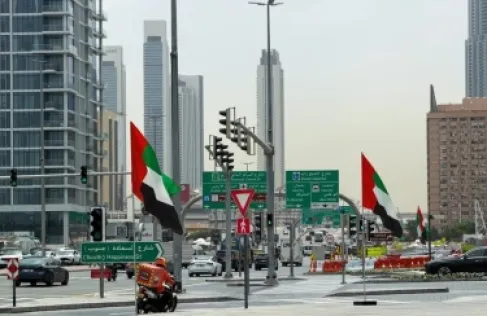
In the context of Iranian assaults on the Gulf, the UAE has experienced intense attacks. The UAE Ministry of Interior, in a statement on Friday, announced the country was subjected to an Iranian missile attack. The Dubai Government Media Office confirmed damage to a building in the city center from shrapnel resulting from intercepting the attack, while Agence France-Presse reported the building is located in the financial district of Dubai, days after companies in the region left due to Iran targeting economic objectives linked to the United States and Israel. A drone fell near the financial district in Dubai on Thursday. The UAE Ministry of Defense, on Friday, announced dealing with 7 ballistic missiles and 27 drones coming from Iran. It clarified that "since the beginning of the blatant Iranian assault on the country, the UAE air defenses dealt with 285 ballistic missiles, 15 cruise missiles, and 1567 drones," stating that these attacks resulted in 6 deaths and 141 cases of minor and moderate injuries.
In related news, Lana Nseibeh, Minister of State in the UAE Ministry of Foreign Affairs, in press statements the day before yesterday, mentioned that the Iranian officials gave no indication that the UAE was among the targets during her visit to Tehran for talks aimed at reaching a diplomatic solution to the conflict two weeks before it broke out. This lack of warning made the Iranian attacks on the UAE "shockingly heinous." While Nseibeh did not direct any criticism at the United States or Israel for launching the attack on Iran, she noted that it would be difficult to return relations with Iran to the level they were before the war "given the destruction and chaos that Tehran has caused in the region." While expressing her confidence that the war will end with a negotiated settlement, she noted that the Gulf states were profoundly shocked by Iran launching attacks on them.
Defending against attacks in Kuwait
In Kuwait, the Ministry of Defense, in a statement last Thursday, announced that it had countered a number of ballistic missiles that penetrated the air space towards the south of the country "without recording any damages, in addition to countering an attack from hostile drones." The Kuwait Government Communication Center, through the X platform last Tuesday, mentioned that since the beginning of the war on Iran, 237 ballistic missiles and 445 drones have been dealt with. The Kuwait Ministry of Defense, last Wednesday, announced the interception and destruction of 11 drones, in addition to intercepting two ballistic missiles, reaffirming the Kuwaiti defenses' ability to protect civilian and military targets from attacks. The attacks on Kuwait resulted in the deaths of 6 people and the injury of dozens, while air defenses intercepted a large number of projectiles.
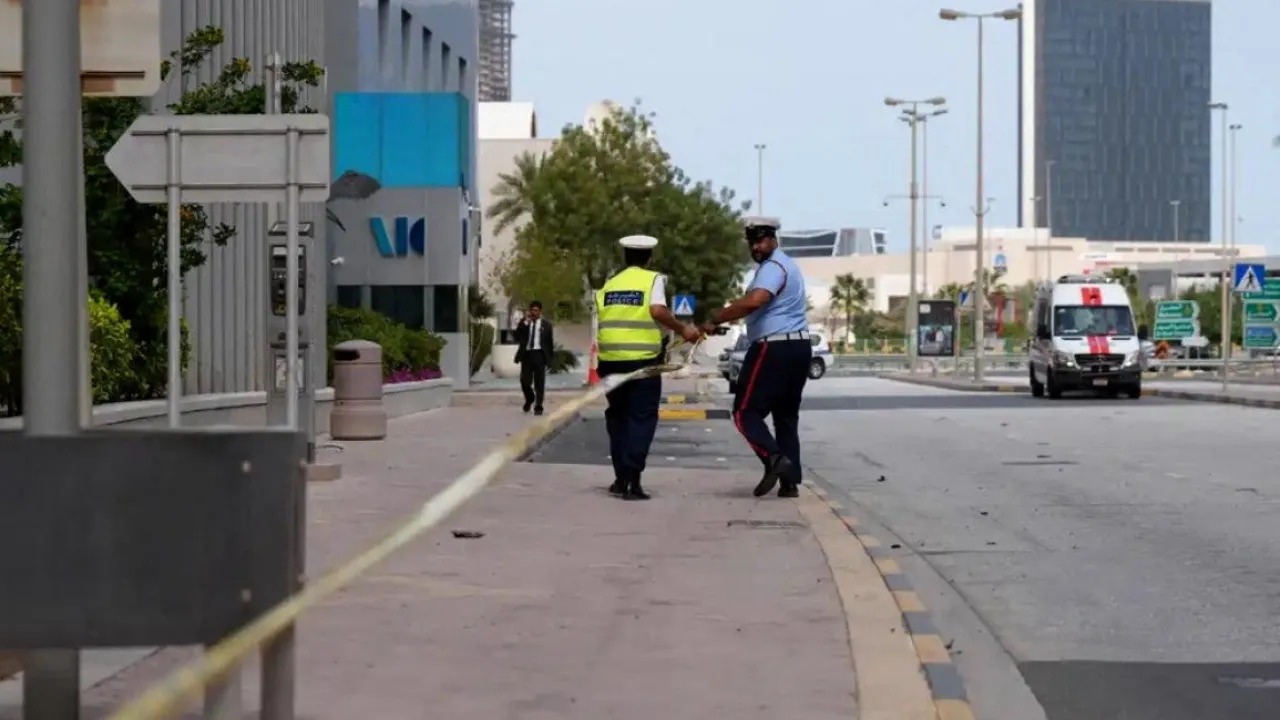
The General Command of the Bahrain Defense Force, last Thursday, announced that it had intercepted and destroyed a number of missiles and drones that targeted the kingdom since the beginning of the Iranian aggression, without mentioning the types of targeted missiles. The General Command of the Bahrain Defense Force, in a statement on Friday, announced that it intercepted and destroyed 115 missiles and 191 drones since the beginning of Tehran's attacks on its territory. The Ministry of Health mentioned, the day before yesterday on Thursday, that an attack by an Iranian drone on Sitra Island near the capital Manama resulted in the death of a woman and the injury of 32 people, among them 4 minors, one of them a two-month-old baby, with 4 people sustaining serious injuries. In the security context, the Ministry of Interior announced the arrest of 4 Bahraini citizens on charges of spying for the Iranian Revolutionary Guard.
Saudi Arabia also experienced a series of missile and drone attacks targeting strategic locations in various regions of the kingdom, resulting in the deaths of two people and injuring 12 residents, while air defenses intercepted most of the projectiles. The Saudi Ministry of Defense, on Friday, announced the downing of a drone headed towards the Embassy District in Riyadh. The ministry confirmed in a post on the X platform, the downing of a hostile drone while it approached the Embassy District, noting at the same time the interception and destruction of three drones elsewhere in Saudi Arabia. Also, the ministry said in a series of posts, on Friday, that it intercepted 53 drones after they entered the kingdom's airspace, without details on the interception locations. Shortly before, it reported intercepting seven drones targeting the eastern and central regions.
The Saudi Ministry of Defense announced, on Wednesday evening, the interception and destruction of a drone in the eastern region, bringing the total number of destroyed drones that day to 28, in addition to intercepting 3 ballistic missiles headed towards Prince Sultan Air Base southeast of Riyadh. In the preceding days, Saudi Arabia countered diverse attacks including intercepting a ballistic missile and two drones in the Rub' al Khali region headed towards the Shaybah field, in addition to intercepting 33 drones in Riyadh and its east, 23 drones trying to target the Shaybah field, along with 3 ballistic missiles launched towards Prince Sultan Base.