Khaberni - Recent press reports indicate that Israel and the United States are considering sending special forces to Iranian territory to secure the high-enrichment uranium stockpile held by Tehran, raising questions about the feasibility of the operation.
About 450 kg of high-enrichment uranium survived the American strikes in the 12-day war last June, a quantity sufficient to make about 10 nuclear bombs if further enriched.
An Economist newspaper report presented possible scenarios for this operation, pointing out the difficulties that might face the Israeli or American special forces.
Obstacles
The first dilemma that will hinder the work of the American special forces is knowing the location of the hidden high-enrichment uranium, and it's not yet clear where Tehran stores it? Is it in one location or several scattered places?
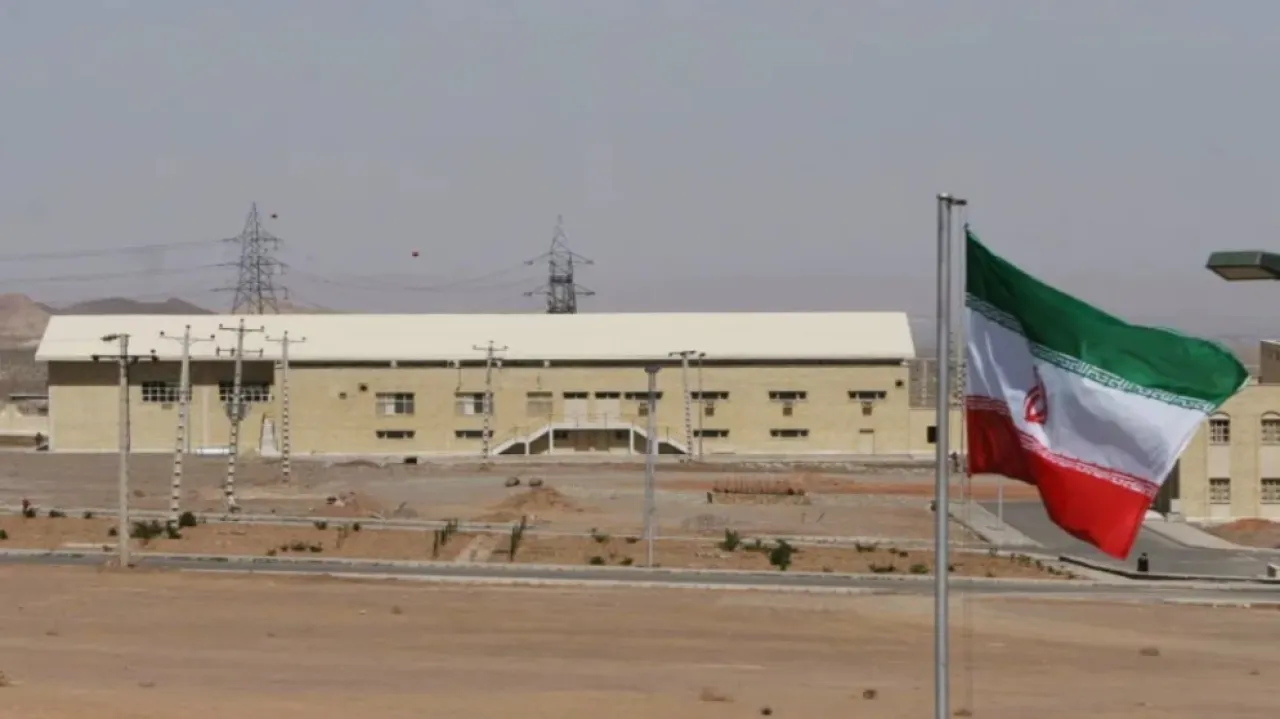
Rafael Grossi, the Director-General of the International Atomic Energy Agency, said this week that the high-enrichment uranium is mainly located at the Isfahan nuclear facility in central Iran, likely stored inside tunnels that were sealed with dirt in February.
Part of the high-enrichment uranium is still stored at the Natanz and Fordow facilities, noting that the latter was built inside a mountain that the United States bombed with bunker-busting bombs last June.
Even if the goal of the Israeli-American operation is only to take the quantities stored at the Isfahan facility, it would still require significant capabilities.
Equipment
The MH-47G Chinook helicopters used by the American special aviation unit number 160 can reach Isfahan, at least 500 kilometers inside Iranian territory, starting from ships in the Gulf. However, they will need to refuel for the return, as well as require a large military force for protection.
A few days ago, American President Donald Trump said he would not send any ground troops to Iran unless it was "destroyed to a degree that makes it unable to fight on the ground."
To achieve Trump's demand, Washington would need to bomb Iranian bases around the target, and then it would need to send air-transported forces to take control of a nearby airport like the Badr Air Base, which is 10 kilometers away from the nuclear sites in Isfahan, or set up a temporary runway for planes.
Subsequently, special equipment for dealing with nuclear materials and a bulldozer to clear the dirt and debris from the entrance of the tunnels, alongside other heavy machinery, may be dropped using parachutes.
At a minimum, Washington would need a battalion of soldiers with additional specialized units totaling more than a thousand soldiers to secure the perimeter around the nuclear site and repel any counter Iranian attack.
U.S. soldiers in Iran will need constant air cover to defend against any Iranian attack, along with the need for continuous coverage by satellites, drones, reconnaissance and attack aircraft, and dozens of refueling aircraft to keep the air forces in the sky for a potentially extended period of days.
The Israeli special forces and their engineering units have more experience in such operations, especially after dismantling a network of tunnels belonging to Hamas in Gaza, and their use would allow Trump to say he "did not send American soldiers to the ground."
However, sending Israeli special forces would require a massive airlift to transport equipment from Israel to Iran.
How to deal with uranium?
If the American or Israeli forces manage to penetrate the Iranian nuclear facilities and access the enriched uranium, the question arises: how will the soldiers handle this dangerous material?
High-enrichment uranium is often stored as uranium hexafluoride (UF6), a gaseous uranium compound, placed inside multiple containers to prevent any reaction.
According to Daniel Salisbury from the International Institute for Strategic Studies, transporting the Iranian enriched uranium would require about 19 tanks similar to scuba tanks, and they must be kept separate and carefully stored.
One available option is to detonate the enriched uranium in place, but the explosion would scatter the compound everywhere and leak it onto walls, rocks, and debris.
Another option is to "dilute" the nuclear material, but the necessary equipment must be transported to the site.
The third option is to extract the high-enrichment uranium and transport it away quickly. However, if moisture enters the cylinders during transport, it could react with the gas to produce uranyl fluoride and toxic gaseous hydrofluoric acid, potentially causing an explosion.
A former Western military commander said: "No doubt, the United States is capable of doing this, perhaps its army is the only one in the world that can, but either it has to be done very discreetly and subtly, or it has to be a large-scale operation, meaning American control over that part of Iran for some time."
The newspaper mentioned that such an operation in the style of Hollywood movies would appeal to Trump and grant him a dramatic finale to the war and a victory declaration, even if the Iranian regime remains in power.