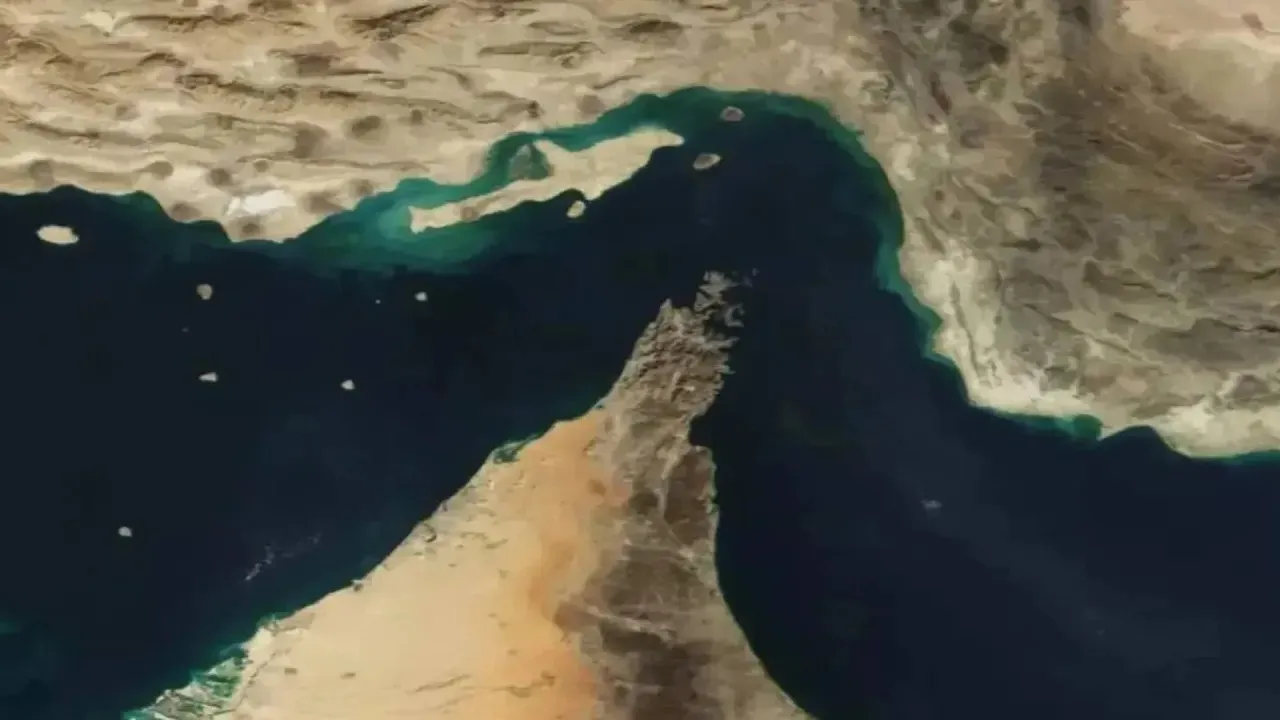
Khaberni - There are only a few alternative routes to the strategic Strait of Hormuz, and none of them allow for the same volume of oil and gas exports that pass through the Strait of Hormuz.
About one fifth of the world's oil and liquefied natural gas production typically passes through the Strait of Hormuz.
In his first message earlier on Thursday, the new Supreme Leader of Iran, Mojtaba Khamenei, said that the strait will remain closed as a "pressure tool."
Two pipeline routes extend outside the region, bypassing the strait, ensuring that a portion of the energy reaches the market. However, the International Energy Agency estimates that they only add between 3.7 and 5.7 million barrels per day of excess capacity, equivalent to a quarter of the 20 million barrels per day that typically pass through the strait.
The oil pipeline, connecting the east to the west in Saudi Arabia, carries crude oil across the country, linking the Abqaiq oil field near the eastern Arabian Gulf coast with the Yanbu port on the Red Sea. The oil giant Aramco announced that it has increased the pipeline capacity to 7 million barrels per day in March 2025, but flows at this level have not yet been tested, according to the International Energy Agency.
It is estimated that about two million barrels of crude oil pass through the pipeline, leaving an excess capacity ranging between 3 and 5 million barrels per day. However, even if the pipeline were capable of handling this additional amount of crude, the Yanbu port rarely loads more than 2.5 million barrels per day, presenting another potential barrier to exploiting this excess capacity.
The International Energy Agency says that the natural gas pipeline running parallel to the other pipeline is already fully utilized.
In the meantime, one end of the UAE pipeline was attacked, although the extent of the damage is unclear.
The pipeline, which is 400 kilometers long, extends from Fujairah, where a fire broke out last week following the interception of an Iranian drone, to Habshan, and is much smaller than its Saudi counterpart. The International Energy Agency estimates that it only adds 700,000 barrels per day of excess production capacity.