Khaberni - Maritime authorities and analysts said that remote-controlled boats have been used in at least two attacks on oil tankers in the Gulf since the outbreak of the war between the United States, Israel, and Iran, indicating a new and serious threat in the main shipping corridor.
The emergence of the unmanned booby-trapped boats, which were effectively used by Ukraine in its war against Russia, comes at a time when Iran is threatening to block oil shipments from passing through the Strait of Hormuz, a key transit point for a fifth of the world's oil.
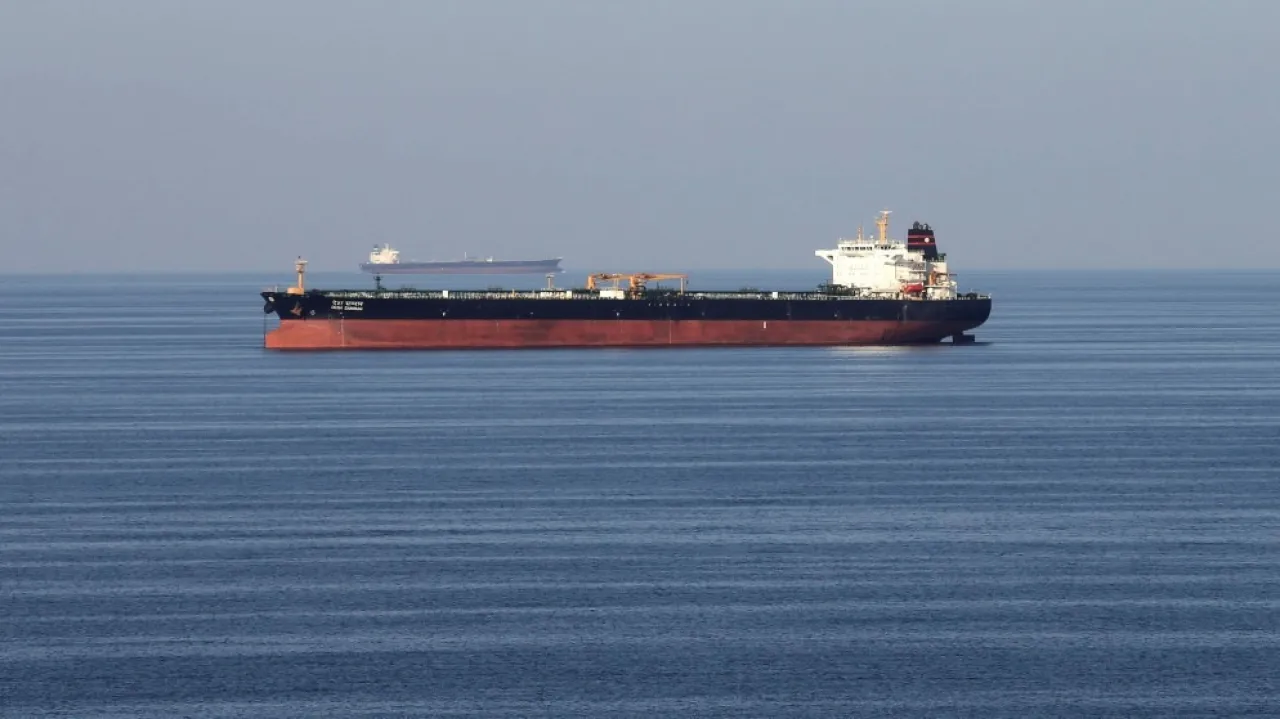
The first attack of its kind occurred on March 1, when a crude oil tanker was hit about 44 nautical miles off the coast of Oman, resulting in the death of a crew member, according to the British Maritime Trade Operations.
The British agency reported that a remote-controlled boat collided directly above the waterline with the tanker, which was flying the flag of the Marshall Islands, causing an explosion and a fire in the engine room.
Days later, the American company Sonangol Marine Services reported that a small vessel collided with the crude oil tanker Sonangol Namibe, flying the flag of the Bahamas, while it was moored near the port of Khor al-Zubair in Iraq.
The company said its crew of 23 members was safe and did not comment on the type of vessel that collided with the tanker, noting that the investigation is still ongoing.
Online footage of the attack shows a small, fast-moving boat-shaped object charging towards the side of the ship before colliding with it, causing an explosion that sent up plumes of thick smoke into the air.
UK-based maritime specialists Sidharth Kaushal, a researcher at the Royal United Services Institute, and Robert Peters from Ambrey Marine Security, said that the vessel shown in the video appears to be a remote-controlled boat that exploded upon impact.
The remote-controlled boat can disable the movements of ships
Peters said he believes Iran is responsible for the Sonangol Namibe attack, pointing out that Tehran had previously showcased its capabilities of maritime drones in military parades.
He referred to the timing of the attack, which occurred a day after the Iranian Revolutionary Guard claimed an American oil tanker was hit in the north of the Gulf and caught fire, according to the Iranian Mehr News Agency. Mehr quoted the Revolutionary Guard as saying that "rockets" were used in that attack.
Iran has stated that the world should be prepared for oil prices to rise to $200 per barrel after its forces struck commercial ships on Wednesday, and shipping through the Strait of Hormuz has nearly stopped.
Reuters was unable to determine who was responsible for the two attacks. The Iranian mission to the United Nations in New York did not immediately respond to a request for comment.
Peters explained that if Iran's involvement is confirmed, this would be the first time Iran used remote-controlled boats to attack commercial ships. Previously, Houthi militants from Yemen had used remote-controlled boats against commercial ships in the Red Sea.
Peters stated that remote-controlled boats can carry more explosives than drones, which could rival the payload of ballistic missiles. He added that while drones can kill individuals on the ground from above, remote-controlled boats can "disable ship movements if they hit the right spot."
He continued, "If your ship's movement is disabled, you will be severely vulnerable if they choose to pursue you."