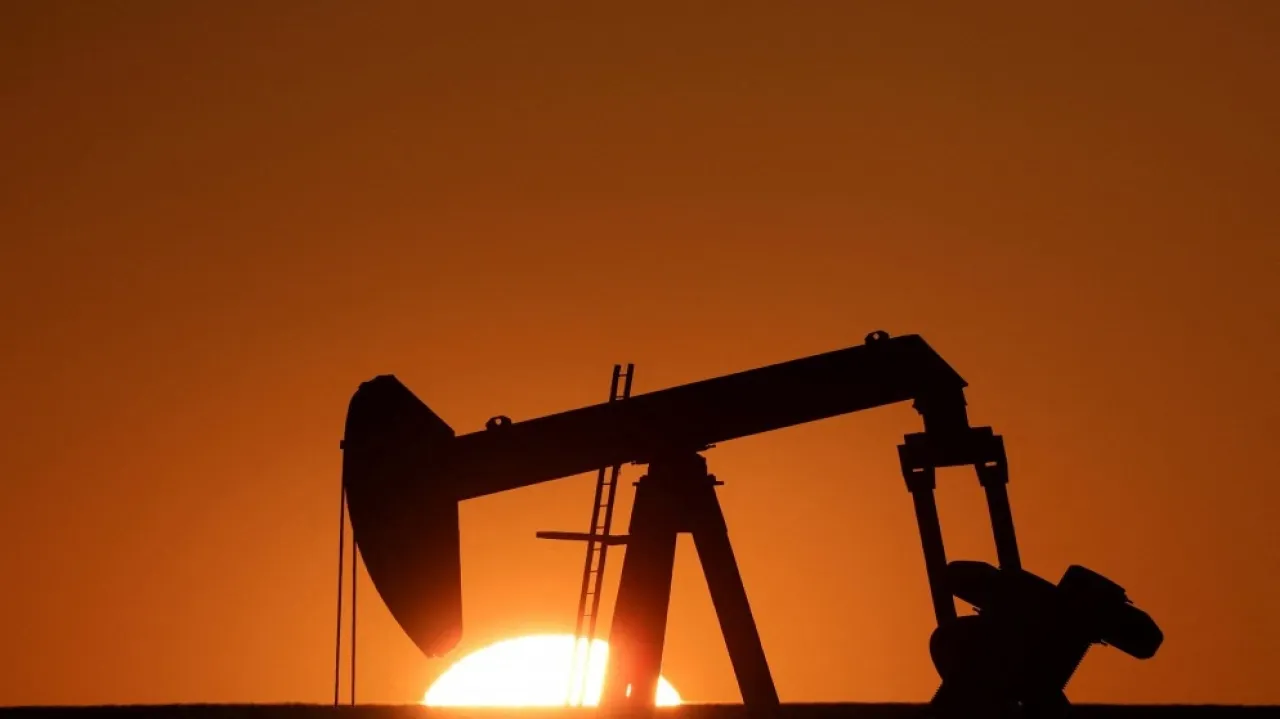
Khaberni - On Tuesday, Iran threatened that not a single drop of oil would come out of the Middle East "until further notice," apparently in sharp response to comments by US President Donald Trump, who had said the day before that the war would end soon.
Iranian Foreign Minister Abbas Araghchi stated, "We are ready to continue missile strikes against them as long as necessary," indicating that negotiations with the United States "are no longer on the table" for Tehran.
Ali Mohammad Nini, spokesman for the Revolutionary Guards, stated on Tuesday, "The Iranian armed forces.. will not allow the export of a single liter of oil from the region to the hostile party and its partners until further notice."
He added that any change would be subject to the conditions of the conflict.
The Revolutionary Guards said that Iran will "determine the end of the war" in the Middle East, following Trump’s announcement that it "would end soon."
Nini said that "their attempts to reduce the prices of oil and gas and control them will be temporary and ineffective... Trade during war is linked to security."
The Revolutionary Guards urged countries on Monday night to expel US and Israeli ambassadors from their territories in exchange for allowing ships to pass through the Strait of Hormuz.
On Tuesday, Iranian Foreign Minister Abbas Araghchi reiterated that his country is ready to continue missile attacks "as long as necessary," noting that negotiations with the United States "are no longer on the table" for Tehran.
- "Breaking Iran’s Bones" -
These statements are in contrast to what Donald Trump had insinuated hours before, when he said at a press conference in Miami that the war would end soon, without providing further details, adding that the process had gone faster than scheduled.
However, in his usual manner, he gave mixed signals, returning to threaten with "much harsher strikes" on Iran "if it held the world hostage" by disrupting the oil transport in the Strait of Hormuz, through which one-fifth of the global production of oil and liquefied natural gas passes.
He also announced the lifting of some oil sanctions in order to reduce prices that had sharply risen in recent days.
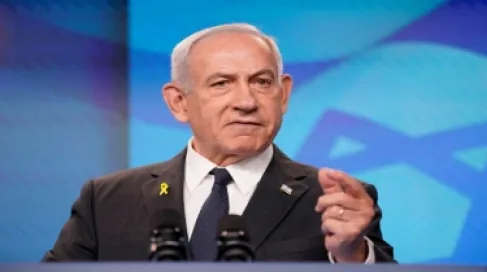
In statements that were more severe than Trump’s tone, Israeli Prime Minister Benjamin Netanyahu stated that the war on Iran "is not over yet" emphasizing that the ongoing strikes "break the bones" of the regime there.
He added, "We aspire for the Iranian people to be freed from the yoke of tyranny."
- Relief in the Markets -
Awaiting clarity, global markets experienced some relief after a wave of panic the previous day. Oil prices dropped 5% at the end of Asian trading, while European gas lost 15%.
European stock markets rose at the opening, with Paris, Frankfurt, and London posting gains ranging between 1.29% and 2.04%.
The Asian stock markets also recorded a recovery earlier (Seoul +5.35%, Tokyo +2.88%).
Analysts expect the continuation of market volatility reflecting the uncertainty surrounding the current balance of power amid conflicting statements.
- Continuing Strikes -
The Iranian Revolutionary Guards on Tuesday targeted a US base in the Kurdistan region of Iraq.
Turkey announced the deployment of the Patriot defense system, the day after NATO intercepted a second ballistic missile launched from Iran into Turkish airspace. Turkey issued a warning to Iran, while the Iranian President Masoud Pezeshkian proposed to his Turkish counterpart Recep Tayyip Erdoğan that they establish a joint investigation committee.
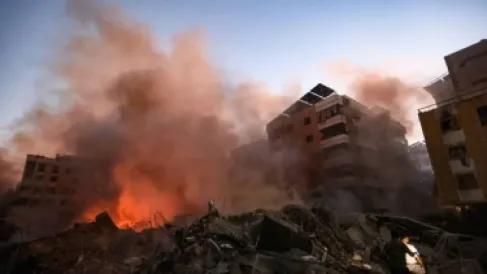
In Lebanon, on Tuesday, Israel carried out an airstrike in the city of Sour in southern Lebanon, according to the official national news agency, after the Israeli military had issued warnings for the evacuation of buildings in preparation for strikes.
Meanwhile, the United States announced having targeted more than 5,000 sites in 10 days, including more than 50 Iranian ships.
The American-Israeli strikes resulted in over 1,200 casualties, according to the Iranian toll.
Since Saturday, February 28, Israel and the United States have conducted airstrikes on Iran, which led to the death of Iran’s Supreme Leader Ali Khamenei, and since then Tehran has retaliated by targeting Israel and other countries in the region with missiles and drones.
Iran enacted a naval blockade on the passage of ships through the Strait of Hormuz, targeting oil tankers that tried to cross it.