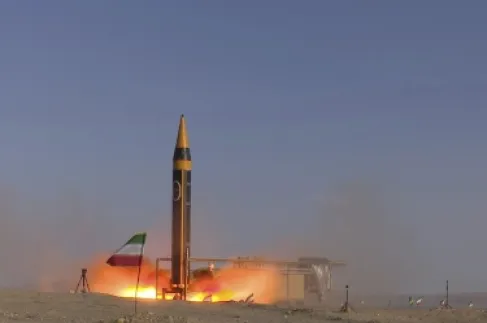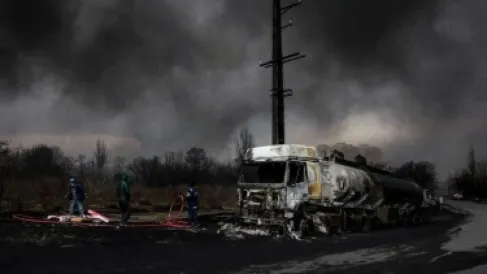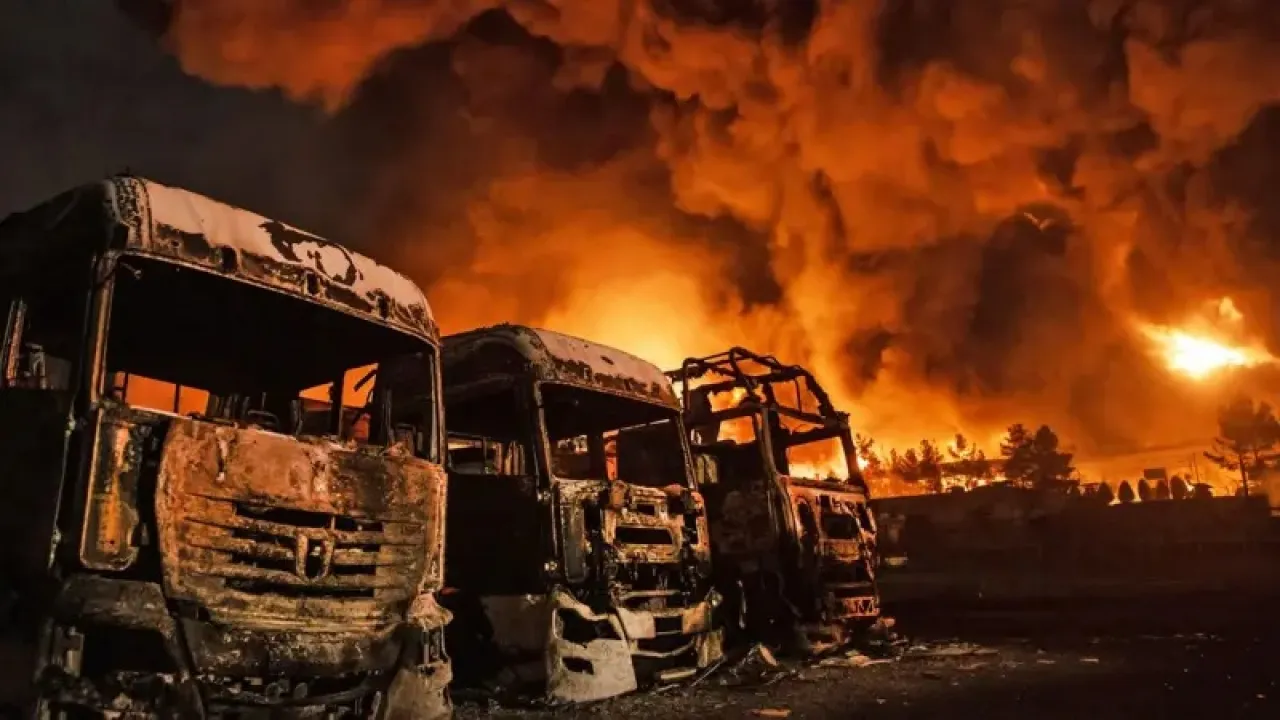
Oil prices have surpassed the $115 per barrel mark in a sharp jump driven by the ongoing American-Israeli war with Iran.
This unprecedented rise is causing concern among world leaders because of its potential implications on the global economy and consumers, especially in the United States.
US President Donald Trump quickly commented via his platform "Truth Social," stating that "high oil prices in the short term, which will rapidly decrease after eliminating the Iranian nuclear threat, represent a small price to pay for the security and safety of the United States and the world."
He added: "Only fools think otherwise."
A French government source said that using strategic oil reserves is an "option under consideration" during a meeting of the finance ministers of the G7 countries on Monday to discuss the implications of the Middle East war.
Earlier, "Financial Times" reported that finance ministers from the G7 countries would discuss the joint use of strategic oil reserves coordinated by the International Energy Agency.
Since the beginning of the war, the price of West Texas Intermediate crude has risen by about 70 percent, an exceptional increase over a short period.
This exceeds the rate of increase seen in the markets at the beginning of the Russian invasion of Ukraine when the price of a barrel reached $130.50 in early March 2022, without the same level of volatility.
The rise in oil prices could have wide-ranging implications, not only on the rising cost of filling up cars, but also on the cost of some types of heating fuel, food prices, and imported goods.
Some sources warn that if the rise in oil and gas prices continues, it could exacerbate inflation in major global economies such as the UK and the US, after a general decline in inflation rates during the past period.
Qatari Warning
The Qatari State Minister for Energy Affairs, Saad bin Sherida Al-Kaabi, warned a few days ago, of the possibility of a significant rise in oil prices if the war between Iran on one hand, and the United States and Israel on the other, continues.
Al-Kaabi said in an interview with the Financial Times that oil prices might reach "$150 per barrel" if the conflict continues for the coming weeks, adding that the ongoing war will affect the growth of the global GDP.
He stated that everyone "will suffer from rising energy prices," pointing to the possibility of a shortage in some products and a series of negative repercussions on factories that may fail to meet demand.
There are fears that the current crisis's impact on energy prices might be similar to that of the Russian invasion of Ukraine, although the increases recorded so far are still less than the levels reached in 2022.
For his part, Jorge León, an analyst at "Rystad Energy," in an interview with BBC News economy correspondent Gema Cro, said the situation represents "a real risk to the global economy." He added that the world may be facing a short-term energy crisis or the start of a broad economic and energy crisis.
León noted that if the situation continues for more than two weeks, the likelihood of significant repercussions on the global energy system and overall economic outlook will greatly increase.
Qatar is one of the leading producers and exporters of oil and liquefied natural gas in the world. "Qatar Energy" announced this week the halt of liquefied natural gas production following "military attacks" targeting its facilities and has activated the "force majeure" clause in its contracts, which frees it from liability for non-delivery due to circumstances beyond its control.
Al-Kaabi, who also serves as the CEO of Qatar Energy, emphasized that other energy exporters might have to take similar actions in the coming days if the war continues, adding that even if the fighting stops now, resuming normal production could take "weeks to months."
Approximately 20 percent of global oil supplies pass through the Strait of Hormuz daily. However, navigation through this narrow passage has almost completely halted since the beginning of the American-Israeli-Iranian war last weekend.
The closure of the strait could lead to rising prices of goods and services globally, negatively affecting some of the world’s largest economies, including China, India, and Japan, which are among the largest importers of crude oil passing through the strait.
It is worth noting that the United Arab Emirates and Saudi Arabia have pipelines that enable them to transport oil without passing through the strait.
Analysts have warned that the longer the threats facing ships crossing the strait persist, the higher the oil price will rise, and therefore the cost of its transportation.
Lindsay James, an investment strategy officer at Kilter, said that halting oil and gas production in the Gulf for an extended period is an "exaggerated scenario."
She indicated that market movements suggest that investors expect a quick resolution to the disruption of navigation through the Strait of Hormuz, but she added that the risk of the conflict lasting longer than expected is increasing day by day.