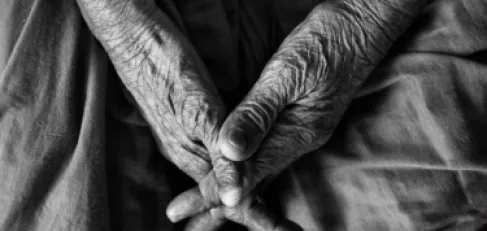
Khaberni - Amyotrophic lateral sclerosis is a serious neurodegenerative disease that affects the nerve cells responsible for controlling muscle movement, gradually leading to muscle weakness and loss of mobility.
Amyotrophic lateral sclerosis is often called "Lou Gehrig's disease" after the baseball player who was diagnosed with it. The exact cause of the disease is still unknown, though a few cases are hereditary.
Amyotrophic lateral sclerosis usually begins with trembling and weakness in the muscles of the arms or legs, difficulty swallowing, or slurred speech. Eventually, amyotrophic lateral sclerosis affects the control of muscles necessary for movement, speech, eating, and breathing. There is no cure for this deadly disease.
According to the German Society for Muscle Diseases, the disease occurs when motor neurons in the brain and spinal cord are damaged or die. These are the cells that transmit signals from the nervous system to the muscles, allowing actions such as walking, talking, and chewing. As the disease progresses, these functions gradually deteriorate and the patient may lose the ability to move significantly.
Types of the disease
Doctors typically distinguish between three main patterns of amyotrophic lateral sclerosis depending on the starting area of the disease:
Spinal form: begins in the spinal cord and leads to weakness or partial paralysis in the muscles of the limbs and trunk.
Bulbar form: starts in the brain stem and affects speech and swallowing.
Respiratory form: affects the respiratory muscles, leading to increasing breathing difficulties.
Potential causes
The exact cause of the disease remains unknown in most cases. Estimates suggest that about 90 to 95% of cases occur spontaneously without a clear cause, while a small percentage (about 5 to 10%) are linked to genetic factors.
Researchers indicate that several factors may contribute to the onset of the disease, such as autoimmune disorders, genetic changes, or exposure to certain environmental toxins, but these hypotheses are still under study. Medical sources clarify that the disease usually appears between the ages of 40 and 70.
Common symptoms
Symptoms vary depending on the starting region of the disease, but they generally include:
Gradual muscle weakness
Muscle tremors and spasms
Muscle atrophy
Difficulty in speaking or swallowing
Weakening of respiratory muscles as the disease progresses
Symptoms often begin in one hand or arm and then extend to other parts of the body over time.
How does the disease progress?
According to neurologists, the disease affects only motor neurons, while cognitive abilities and senses such as hearing and sight generally remain intact for most patients, although some may experience cognitive changes.
Treatment methods
To date, there is no cure for amyotrophic lateral sclerosis, but some treatments may help slow the progression of the disease and improve quality of life.
The U.S. Food and Drug Administration (FDA) has approved several medications for treating amyotrophic lateral sclerosis, which may extend survival, slow the rate of decline, or help manage symptoms. However, there is currently no known treatment that stops or reverses the progression of the disease.
Among the prominent medications used is riluzole, which may slow the disease's progression by affecting a neurotransmitter called glutamate. Some countries have also approved edaravone, which may help slow the deterioration of motor functions.
Treatment also focuses on alleviating symptoms through:
Physical therapy to maintain muscle movement
Speech and swallowing therapy
Respiratory support as needed
Use of assistive devices for movement and communication
Doctors emphasize that early diagnosis and regular medical follow-up can help patients manage symptoms and maintain quality of life for as long as possible.