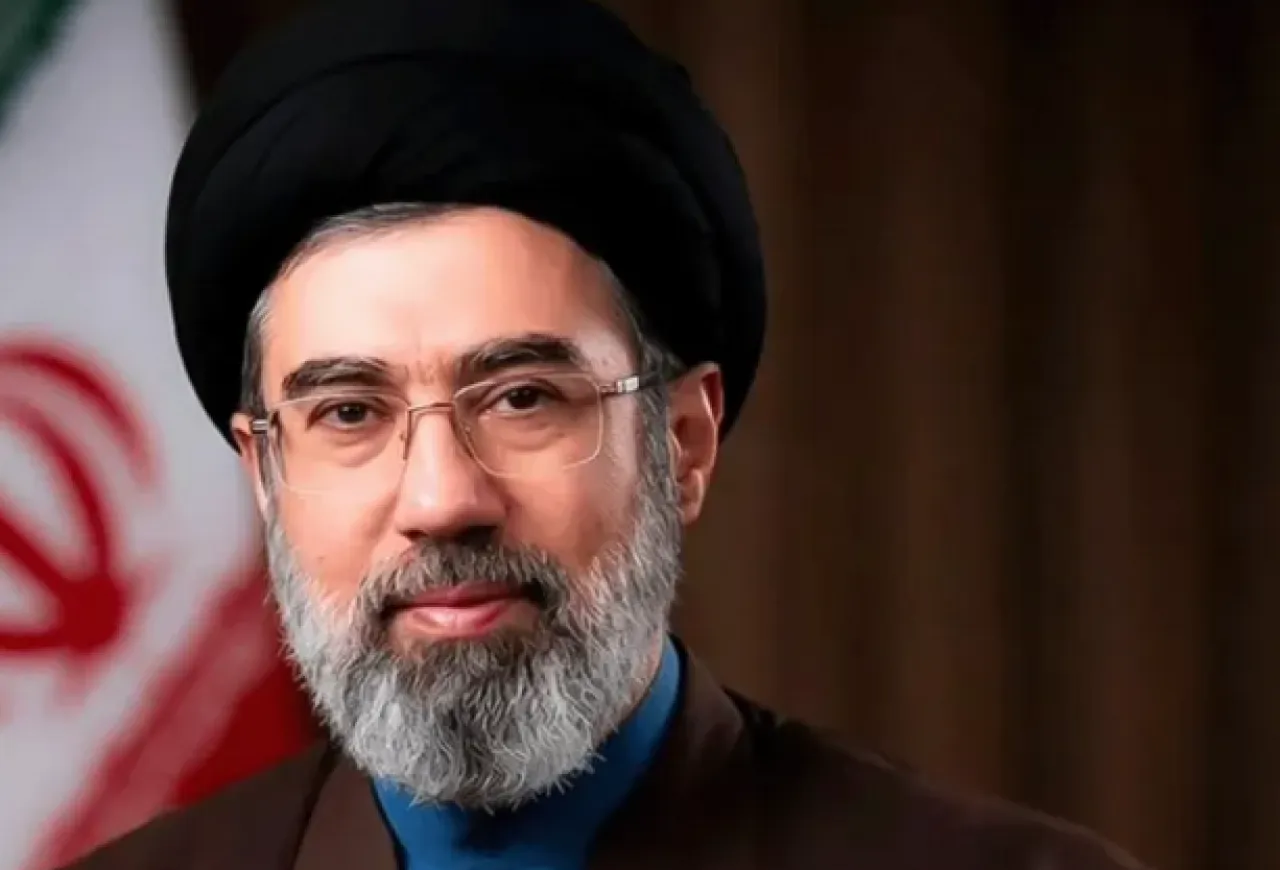
Khaberni - In the midst of the war that Iran is fighting with the United States and Israel, the name Mojtaba Khamenei quickly emerged to succeed his father Ali Khamenei, who was killed in the joint attack on Tehran last February, in a power transition that combined constitutional arrangements and considerations of political legitimacy.
The killing of the Iranian leader put the regime in front of a sensitive test related to how to manage leadership succession at a highly complex military and political moment, prompting government institutions to move quickly to stabilize decision-making centers.
In this context, the Al Jazeera bureau chief in Tehran, Nour El-Din Al-Daghir, explained that consultations began immediately after the assassination of Ali Khamenei, involving the Assembly of Experts of Leadership alongside sovereign institutions such as the Revolutionary Guard and security agencies, and the government, as well as influential bodies like the Guardian Council of the Constitution and the Expediency Discernment Council.
During these consultations, several names were raised within political and religious circles, among them Hassan Khomeini and Ali Khomeini, and some also discussed former president Hassan Rouhani; however, the name Mojtaba Khamenei remained the most prominent in the debates.
To transform this consensus into a formal decision, it was necessary to go through the constitutional mechanism, as Iranian law stipulates that the election of the leader is conducted during a physical meeting of the Assembly of Experts of Leadership with discussion of the candidates before voting.
According to the statement issued by the council, the meeting was held in full constitutional format, where deliberations took place between the members before they eventually agreed to elect Mojtaba Khamenei as the third Supreme Leader of the Islamic Republic, who had earlier officially declared taking the position on Sunday evening.
Mojtaba Khamenei, born in 1969, is among the influential figures within circles close to the decision-making center in Iran, and his name has been frequently mentioned over the past years as a potential successor to his father.
The Issue of Inheritance
However, his name has always clashed with the issue of inheritance, a sensitive matter in the Iranian regime that theoretically rests on the principle of selecting the Supreme Leader and not passing the position within the family.
The journalist specialized in Iranian studies, Abdel Kader Fayez, believes that this knot has continued to haunt the name Mojtaba Khamenei before the war, because the idea of inheritance contradicts the political philosophy upon which the Islamic Republic was established.
However, the assassination of Ali Khamenei changed the equation of legitimacy, as added to Mojtaba Khamenei - according to Fayez - what can be called "blood legitimacy," a concept that has a strong presence in Shiite political history.
Fayez points out that this legitimacy grants the leader a symbolic dimension when his name is linked to an incident of martyrdom or confrontation with external adversaries, enhancing his political position within the system.
In addition, Mojtaba Khamenei has a background that combines political and religious experience, having grown up in the house of the leader and been exposed for years to the mechanisms of decision-making in the Iranian state.
He also joined the Revolutionary Guard as a youth during the Iran-Iraq war in 1986, before eventually turning to religious studies in seminaries and achieving the level of Ijtihad, which qualifies him for the position of Supreme Leader.
Fayez sees that this background grants him a complex legitimacy combining revolutionary affiliation, institutional experience, and religious qualification, important factors in a system that relies on a delicate balance between religion, politics, and security.
But the most challenging issue facing the new leader is not just how he arrived at the position, but his ability to manage the current war phase that Iran is going through.
According to Fayez's assessment, Iran needs a strong leader capable of making decisive decisions, whether in the direction of military escalation or in seeking political settlement.
Strength for Continuation or Retreat
He notes that the political history of Iran shows that the strongest leaders are not only those who go to war, but also those who possess the ability to make difficult decisions like retreating or making settlements if necessary.
For his part, Alam Saleh, a professor of Iranian and Middle Eastern Studies at the Australian National University, sees that the election of Mojtaba Khamenei sends a clear political message to Iran's adversaries.
According to his estimate, one of the prominent outcomes of the military strike was the Iranian regime's ability to quickly reproduce its leadership, indicating that state institutions remain cohesive despite the attack.
He adds that this election reflects the role of what is known as "the deep state" in Iran, especially the Revolutionary Guard, in ensuring continuity of the regime and its foundational centers.
Saleh recalls the experience of 1989 when Ali Khamenei assumed the position even though he was not a marja (source of emulation) at the time, before later working to solidify his position through a broad network of alliances within the state.
From this perspective, Mojtaba Khamenei may face a similar path in the coming years, as he will be required to strengthen his position within religious, military, and political institutions.
The Iranian Constitution grants the Supreme Leader extensive powers making him the most influential figure in the state, as he assumes the supreme command of the armed forces and possesses the final decision in matters of war and peace.
He also oversees the appointment of senior military leaders and heads of key institutions, in addition to his crucial role in approving strategic policies set by the National Security Council.