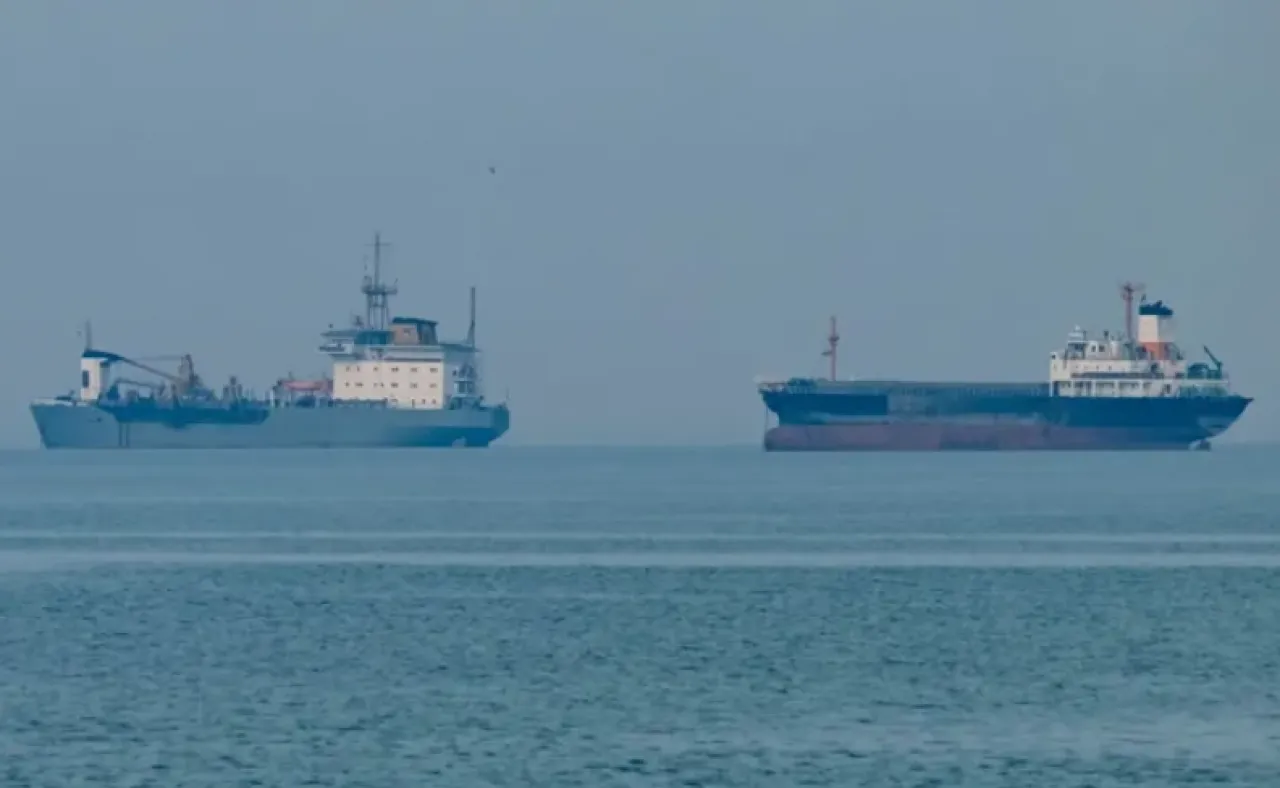
Khaberni - Concerns are escalating in global markets about the scenario of energy companies in the Gulf states declaring "force majeure", following steps already taken by Qatar, Kuwait, and Bahrain in the midst of escalating wars in the Middle East and disruptions to navigation in the Strait of Hormuz, which threatens to halt a significant portion of global oil and gas supplies in a short period.
A few days ago, Qatar's Minister of State for Energy Affairs, the Managing Director and CEO of Qatar Energy, Saad Sherida Al-Kaabi, warned that the continuation of the war for weeks might push all exporters in the Gulf to declare force majeure, which could lead to oil prices rising to about $150 per barrel, with widespread disruptions in the global economy.
These developments come at a time when the Gulf states represent one of the most important energy production centers in the world, accounting for about 32.7% of the global oil reserve, and collectively producing approximately 18 million barrels per day, equivalent to about 19% of the global demand which is nearly 99 million barrels per day.
Qatar is the second-largest exporter of liquefied natural gas in the world after the United States, holding about 20% of the global LNG trade, which makes any disruption in its exports a significant factor in the international energy markets.
Force Majeure.. What does it mean for the markets?
Companies and governments use the "force majeure" clause in international energy contracts when an uncontrollable circumstance - such as wars or disasters - occurs that makes fulfilling contractual obligations impossible or fraught with risks, allowing for the suspension of supplies without facing penalties or legal claims.
Practically, declaring this clause means stopping or reducing exports until normal conditions resume, which has already begun with Qatar Energy’s announcement to stop producing liquefied natural gas following military attacks on its facilities in the industrial cities of Ras Laffan and Mesaieed.
The Kuwait Petroleum Corporation announced force majeure on its crude sales after shipping slowdowns through the Strait of Hormuz, with a production cut of about 100,000 barrels per day as a precautionary measure that might expand later, according to Reuters.
The Bahraini company Babco Energies – today on Monday – declared force majeure on its operations following an attack targeting its oil refinery complex.
These steps suggest a potential "contagion" to the rest of the producers in the Gulf if the security risks in vital maritime passages continue.
Supply Shortages
Energy expert Nihad Ismail believes that the Gulf states declaring force majeure will lead to a halt in supplies for a period of time before resuming delivery. He points out that the Gulf states, which export about 18 million barrels per day, may have to temporarily stop exporting.
In an interview with Al Jazeera Net, he says that compensating these quantities in the short term will be very difficult, although it's possible to partially benefit from the floating oil storages of Russian and Iranian oil or increase supplies from some other producers.
He adds that the markets may witness a rapid rise in prices, possibly up to $100 per barrel in just a few days, with the possibility of exceeding that significantly if the closure of the Strait of Hormuz and disruption of energy flows continue.
He also notes that the rising costs of transportation and insurance have become an additional factor pressuring the markets, as the cost of hiring a super tanker from the Gulf to China exceeded $240,000 per day amid increasing risks in the region.
Limited Alternatives
A number of experts believe that compensating for Gulf supplies in the short term represents a significant challenge, given their huge size in the global market.
In turn, economic expert Madhat Al-Ghadamsi considers that halting supplies through the Gulf could result in a shortage ranging from 20% to 30% of global supplies, pushing importing countries to seek alternatives in other regions such as Algeria, Libya, Russia, and South American countries.
However, these alternatives - according to his estimation - will be more costly, due to the increased demand in a short period of time and higher costs of transportation and insurance.
Al-Ghadamsi predicts in an interview with Al Jazeera Net that oil prices may rise to levels near $120 per barrel in the next six months if the crisis continues, with the possibility of a global inflation wave resulting from rising energy and shipping costs.