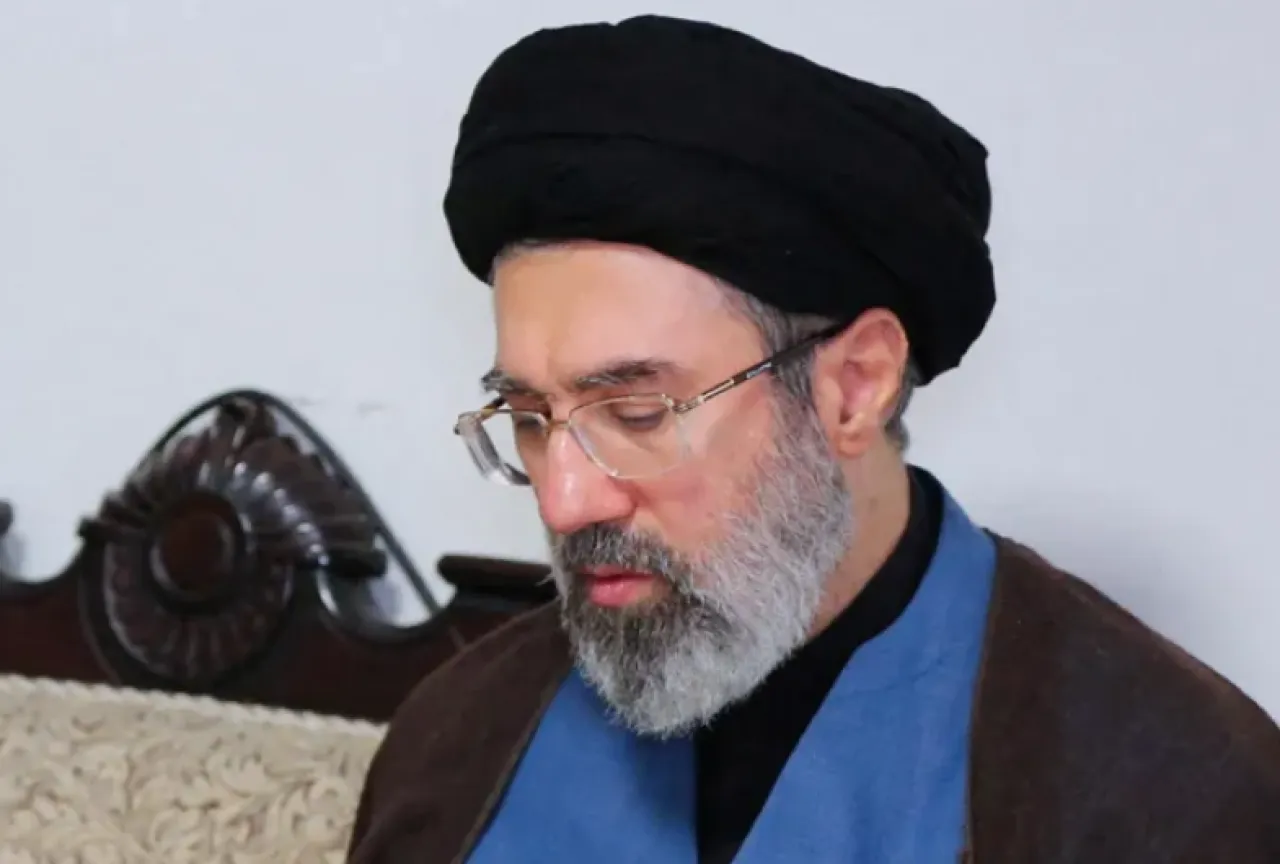
Khaberni - A number of Western newspapers reported on the appointment of Mojtaba Khamenei as the supreme leader of the Islamic Republic of Iran, with some comments focusing on referring to him as an heir and a continuation of his father's policy, noting that he gained wide support within the state institutions.
The Guardian newspaper said that the rise of Mojtaba Khamenei represents a precedent where the position of Iran’s supreme leader is transferred from father to son, and suggested that this development might stir controversy within Iran around the emergence of a hereditary system in a country that was fundamentally founded to overthrow a hereditary rule after the fall of the Shah.
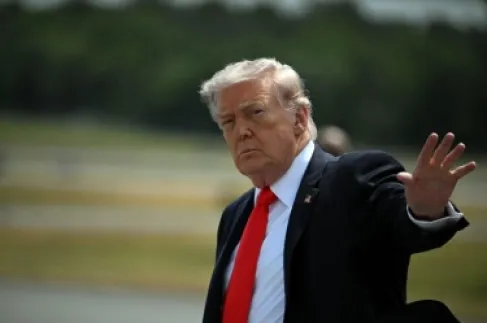
The newspaper stated that many analysts see Mojtaba Khamenei's appointment as a symbolic step aimed at portraying the Iranian regime as strong and resistant to Western pressures, especially after US President Donald Trump rejected the possibility of his leadership in Iran, emphasizing that Washington should have a role in determining Iran’s political future direction.
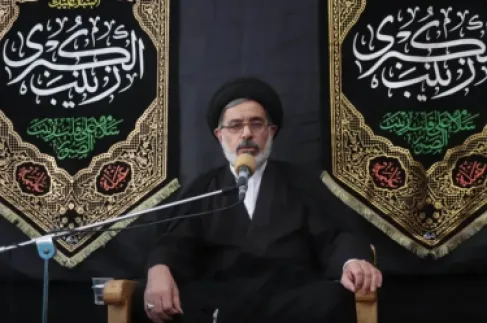
The Guardian mentioned that the clergyman, who is 56 years old, has never held any official high government or elected position, yet he has spent a major part of his life at the center of power in Iran, though away from the limelight.
For his supporters, Mojtaba Khamenei represents a continuation of the ideological line established by Ayatollah Ruhollah Khomeini and maintained by his father. However, critics see his rise as raising worrying questions about the concentration of power and the possibility of the emergence of a hereditary leadership in a state that was fundamentally set up against monarchy.
A victory for the conservative stream
The British newspaper referred to Mojtaba Khamenei’s election as both a symbolic and actual victory for the continuation of the conservative stream, as much as it represents another defeat for the reformist stream, which had called for deferring the decision in the context of the war, until a full meeting of the Assembly of Experts on Leadership, which includes 88 elected members, to choose the supreme leader.
On its part, the Telegraph described the new supreme leader as a mysterious and hardline figure with deep ties to the Iranian Revolutionary Guard, and said that he would consider the United States an enemy, and it is unlikely that he would extend an olive branch to President Trump.
The newspaper reviewed aspects of his life, and said that one of his major strengths is his experience in managing the Iranian state's apparatus behind the scenes while he was working under his father, and he has been described by some analysts as the "gatekeeper" for the close circle of the guide.
Analyst Mehdi Rahmati told the New York Times "Mojtaba is now the most sensible choice because he is fully knowledgeable about managing and coordinating the security and military apparatuses," although others appeared more skeptical of his abilities.
Telegraph continued that Iranians could have chosen a reformist or moderate figure to try to appease Trump but did not do so, and according to one analyst, this is because the Revolutionary Guard prefers to work with someone they know well and trust, and also, this decision indicates that the remaining decision-makers in Tehran choose escalation over settlement.
Pressure from the Revolutionary Guard
The Independent stated that Mojtaba Khamenei, Iran’s new supreme leader, was chosen after pressure from the Iranian Revolutionary Guard, noting that he and his father had repeatedly expressed their opposition to a hereditary rule, in alignment with Shia theological principles.
The newspaper anticipated that the choice of the new guide would stir a widespread debate inside Iran, as the Islamic Republic has historically presented itself as an alternative to the royal regime, and some critics might see the transfer of power from father to son as resembling the regime that the revolution primarily aimed to overthrow.
The newspaper Le Figaro stated that the process of choosing the new guide took place under relatively ambiguous circumstances, yet it involved 4 or 5 other candidates among them, including former President Hassan Rouhani, prominent religious figure Ali Reza A'rafi, the hardline conservative Mohammad Mehdi Mir Bagheri, and the reformist Hassan Khomeini, grandson of the founder of the Islamic Republic.
The French newspaper Libération commented that Mojtaba Khamenei was a candidate for the most hardline factions within the government, noting like his father, he wears the black turban for Sayyids, "a sign that his family claims descent" from the Prophet Muhammad, peace be upon him.
For several years, as the newspaper says, Mojtaba’s name was repeatedly brought up as a potential supreme leader, and thus, by choice, the Islamic Republic of Iran opted for a hereditary rule in power, similar to the royal regime it overthrew in 1979.