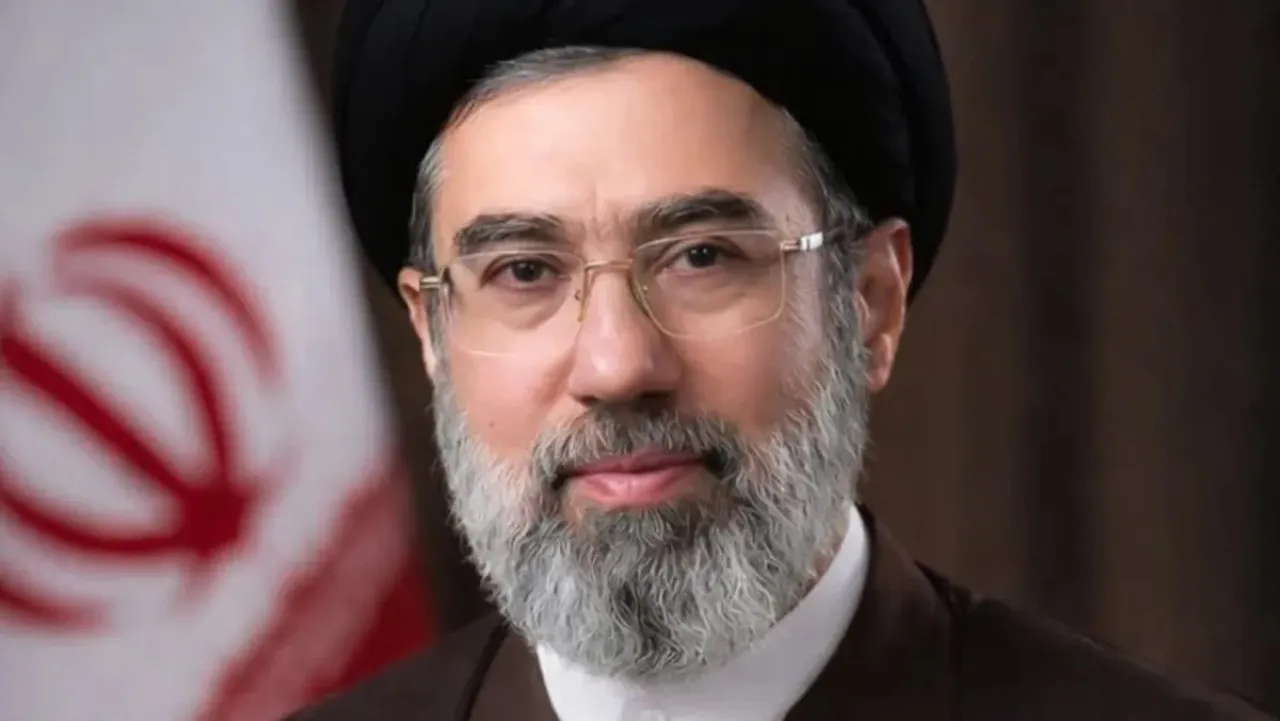
Khaberni - Mojtaba Khamenei has become the leading figure in Iran's political scene after his selection as the country’s third Supreme Leader this Sunday, succeeding his father, Ali Khamenei, who was assassinated in a raid targeting his compound in Tehran.
Attention is now being focused on Mojtaba’s career within the circles of influence in the Iranian regime and his relationships within the religious establishment and the Revolutionary Guards, to understand a personality who has been influential behind the scenes for years despite rarely appearing publicly.
Mojtaba Khamenei, 56 years old, has long been one of the most influential figures within the ruling regime in Iran, despite his rare public appearances or official political posts, according to Western reports.
He is also the second son of the Supreme Leader who was assassinated last week. Mojtaba was born in 1969 in Mashhad, which is an important religious center in Iran.
Mojtaba is a mysterious figure within Iran and has not appeared publicly since Saturday, when an Israeli airstrike assassinated his father and his wife, Zahra Haddad-Adel, who belonged to a family with a long history of supporting the Iranian regime.
Mojtaba is well-known for his close relationships with the Revolutionary Guard, having joined the military in 1987 shortly after completing high school. He served during the late period of the long Iran-Iraq war between 1980 and 1988. In the following year, his father was appointed the Supreme Leader, succeeding Khomeini.
A Shadow Figure Behind the Scenes
Mojtaba Khamenei pursued his studies under prominent clerics in Qom, then worked as a teacher at one of the religious seminaries, crafting close ties with religious leaders and earning a prominent status among them.
However, he was not a well-known figure and worked behind the scenes, managing the office of the Supreme Leader, his father, and seldom appeared in the news over the last few decades.
His selection might cause discontent in Iran, as the 1979 revolution ousted Shah Mohammad Reza Pahlavi, ending hereditary transfer of power in favor of clerical rule. However, Mojtaba’s selection brings back the idea of “hereditary rule” to the minds of Iranians.
The installment of Khamenei’s son into the position his father held could anger Iranians who had taken to the streets earlier this year in economic protests, amid reports that Mojtaba Khamenei and his family have gained access to billions of dollars and business assets spread across numerous Iranian charitable institutions, funded from the state industries and other fortunes once possessed by the Shah, since his father became the Supreme Leader in 1989.
"The Hidden Power of Khamenei"
Mojtaba’s power has grown in tandem with his father’s, operating from his offices in central Tehran. Diplomatic cables released by WikiLeaks in the late first decade of the millennium started referring to Khamenei’s son as "the hidden power behind the robe."
One such cable from 2008 mentioned an allegation that Mojtaba bugged his father’s phone, acted as his father's "chief guard," and was building his own base of power within the country.
In turn, the U.S. Treasury Department reported that Khamenei worked closely with the Iranian Revolutionary Guard, both with leaders of its "Quds Force" and the volunteer "Basij" forces that faced popular protests in January.
He was sanctioned by the United States in 2019, during the first term of U.S. President Donald Trump, on charges of working to "enhance his father’s destabilizing regional ambitions and his repressive domestic objectives."
These sanctions include allegations that Mojtaba Khamenei supported from behind the scenes the election of President Mahmoud Ahmadinejad in 2005, and his controversial re-election in 2009 which sparked the "Green Movement" protests.