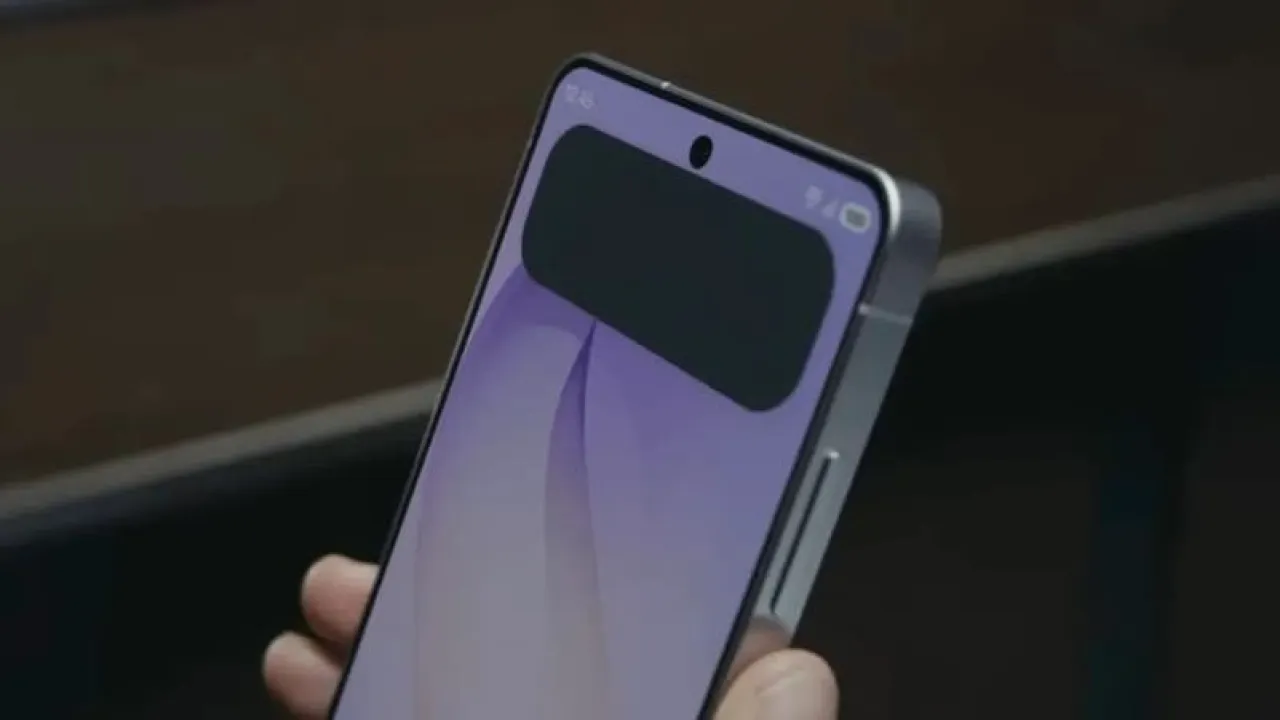
Khaberni - The new flagship Samsung Galaxy S26 Ultra has sparked widespread controversy after "Samsung" introduced for the first time a screen embedded with a privacy feature, which allows hiding the screen content from others' eyes.
Although the technology seems innovative, preliminary reports have indicated some problems that might impact the user experience.
The new technology relies on a unique screen design that includes two different types of pixels; the first is traditional and emits light at a wide angle, while the second type directs light straight forward only.
When the privacy mode is activated, only the directed pixels work, making the screen nearly impossible to view from the sides, according to a report published by "phonearena".
Samsung also offers multiple customization options, allowing users to select specific applications with automatically activated privacy mode, or to use it while entering sensitive data such as Personal Identification Numbers (PIN).
It is also possible to hide only a specific part of the screen, like the content of notifications, making the alert itself hidden while the rest of the screen remains visibly normal, thanks to pixel-level privacy control.
Eye strain raises concerns
However, preliminary reports from some users suggest that the phone's screen may cause eye strain after short periods of use, even without activating the privacy mode.
Close-up images have also shown that the screen resolution appears less advanced compared to the previous phone, Galaxy S25 Ultra.
Some users say that reading texts for a short period on the phone can quickly lead to visual fatigue, although initial impressions when testing the phone did not clearly reveal this problem.
Noticeable decline in image quality
One of the main criticisms directed at the screen is that image quality declines when privacy mode is activated, especially when using the highest protection levels.
In this mode, the clarity notably decreases, the contrast lessens, and the colors appear more faded than usual.
This makes using the feature suitable only in cases where the user needs to hide sensitive content, such as while moving in public places.
In addition, reports indicate that the actual hiding angles of the screen are still limited, meaning that some people may still be able to see part of the displayed content if they are close to the user.
Reduced effectiveness of the anti-reflective layer
Users have also noticed that the anti-reflective layer in the new screen appears slightly less efficient compared to the previous generation.
Samsung had introduced this technology in its flagship phones to improve screen clarity under strong lighting, a feature that even prompted "Apple" to develop similar layers in the iPhone 17 series.
Although the exact reason for this decline is uncertain, some experts believe it might be linked to the new privacy screen technology.
Initial experience may improve in the future
Despite these observations, many believe that introducing this technology represents a bold step by "Samsung", especially since it is the first time that a privacy screen is directly integrated into a smartphone.
It is expected that this technology will improve in future versions, especially as other Chinese companies enter the race to develop privacy screens for smartphones.