Khaberni - Electrical supply hours have decreased across Syria, due to a reduction in the quantities of natural gas supplies coming through Jordan, as a consequence of the war in the region, which will have negative repercussions on key sectors of the Syrian economy already suffering from severe crises.
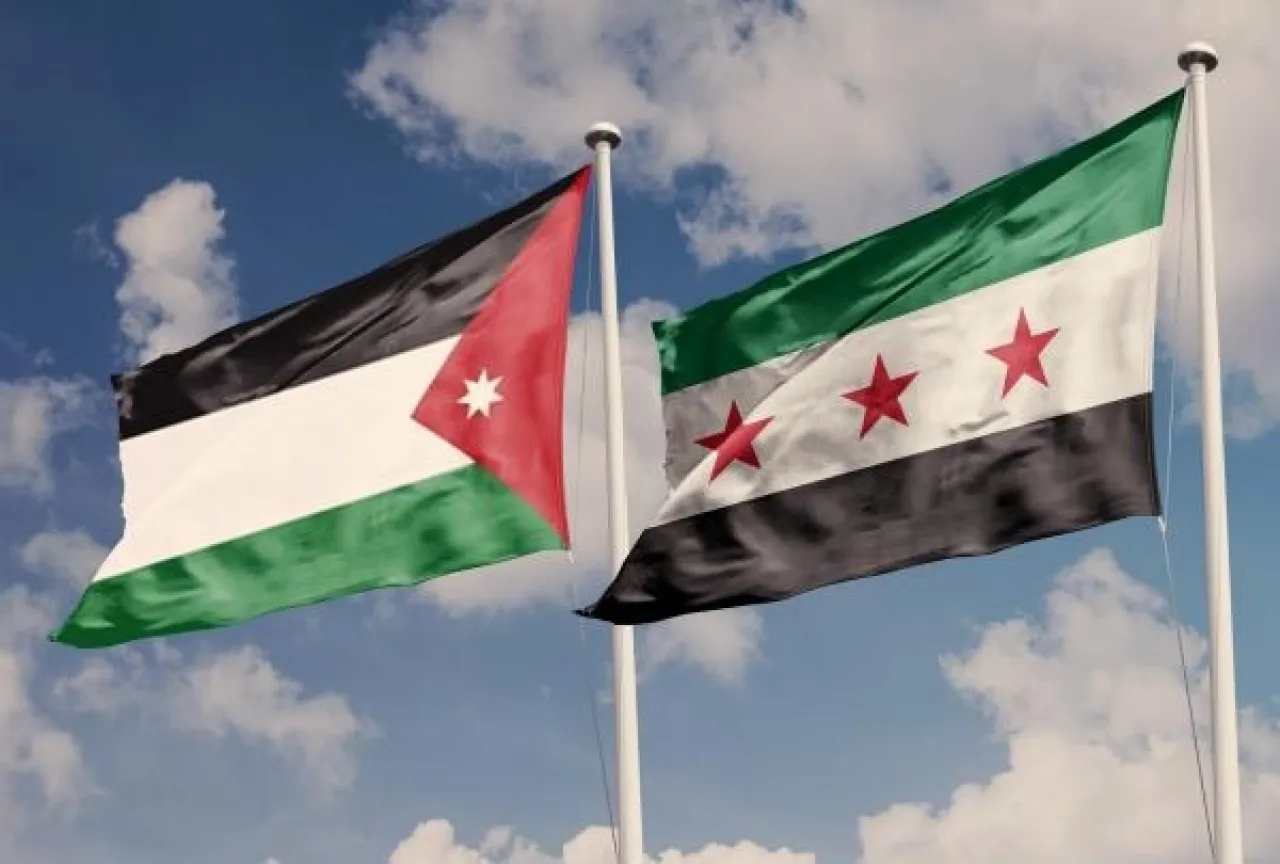
The Syrian Ministry of Energy explained in a clarification published mid-this week in local media, that the decrease in electrical supply hours across the country is due to the "reduction in the quantities of natural gas supplies coming through Jordan and allocated for operating power stations," noting that it "stops being pumped occasionally, due to the current regional escalation and the resulting temporary impossibility of continuing the gas pumping as per previous agreements." The ministry said that "technical teams are currently working on managing and supporting the electrical system relying on local gas production."
At the beginning of this year, the Syrian government signed an agreement with the Jordanian side, which stipulated supplying Syria with about 4 million cubic meters of natural gas daily; equivalent to 140 million cubic feet, to support the stability of the Syrian electrical system, and to diversify gas sources and increase the efficiency of operating power stations. This indeed reflected an improvement in electrical supply hours across the country over the last two months before the decline since the start of the war in the region.
Local gas fields need rehabilitation
Syria regained control over key gas fields in the country in the rural areas of Deir Ezzor and Al-Hasakah in January, notably the "Conoco" field and fields in the Shaddadi region, but these fields need rehabilitation which may take several months. In eastern Homs countryside, there are several gas fields, notably: Jihar field, Al-Mahr field, Al-Jazal field, Zamla Al-Mahr, which was brought into operation in 2022 with an initial production capacity of about 250,000 cubic meters per day.
The US Energy Information Administration indicates that Syria possesses gas reserves estimated at about 240 billion cubic meters, mostly associated with oil. According to Reuters in November 2025, gas production decreased from 8.7 billion cubic meters in 2011 to about 3 billion cubic meters in 2023, making electricity one of the most critical bottlenecks in the Syrian economy.
New agreements to increase gas production
Last month, the Syrian government signed a memorandum of understanding with American "Chevron" and Qatar’s "Power International" Holding for oil and natural gas exploration in Syrian territorial waters. In November 2025, the Syrian government signed a memorandum of understanding with "ConocoPhillips" and "Novatera," aiming to increase gas production by 4 to 5 million cubic meters per day within a year from the start of the work, according to the CEO of the Syrian Petroleum Company, Youssef Qablawi, who confirmed at the time that the memorandum includes the exploration of a new field, requiring development of about three years.
Direct economic impacts
Commenting on the decline in gas supplies from Jordan to Syria, the economic expert Abdul Azim Al-Maghrabi explained in a discussion with "Al-Arabi Al-Jadeed," that the reduction in gas quantities coming to Syria "will impact the Syrian economy," adding: "The decrease in electrical supply hours will negatively affect the industrial sector." He continued: "This sector will try to find alternatives through generators, which leads to increased costs that will ultimately be passed on to the prices, reflecting negatively on the citizens." He noted that the damage "also extends to the agricultural and livestock sectors," explaining that public service sectors such as health, education, and communications "will be affected due to the decline in energy quantities meaning a decrease in service quality." He added: "The reduction in electrical supply hours puts pressure on the general social condition. He explained that "citizens will resort to alternative energy, which entails additional financial burdens." He pointed out that citizens "will consume more electricity during the few supply hours, meaning increased load on the network which leads to malfunctions that require repair and expensive replacement parts, meaning more pressure on the state treasury."
Economic shock and the possibility of rising fuel prices
On the other hand, economic researcher Ziad Arabsh believed that the implications of the war in the region "formed a sharp economic shock for Syria in its transitional phase," adding: "The rise in global oil prices to the $90 per barrel ceiling will enhance the pressures on the Syrian economy, which relies on importing 110 to 120 thousand barrels per day (60% derivatives, 40% crude) through the Mediterranean and its neighbors." He continued that this could "lead to a fuel shortage if the strikes continue and the scope of the war expands, with the possibility of the state raising its prices by 15 to 25% in the coming days, in light of the rising dollar exchange rate against the lira in the parallel market."
Risks of supply disruptions and supply chain issues
Arabsh mentioned that "immediate impacts on Syria will continue as a shock in supply chains, with the interruption of maritime shipping due to the risks of the Strait of Hormuz and Bab al-Mandab, limiting fuel reserves to only 30-45 days." He explained that "fuel derivative prices might rise[ and]> in case the closure persists, with the manufacturing industry (cement, food) FileMode(...) and agriculture affected by 15-25%," adding: "Gas supplies from Egypt and Jordan or through Turkey will be partially disrupted, re-exacerbating the shortage of electricity and the crisis in heating and cooking in major provinces after we witnessed a noticeable improvement in connection hours (as a result of forced rationing by citizens fearing upcoming and burdensome bills due to the rise in electricity prices)."
He clarified that "in scenarios of escalation, partial disturbances will increase along with shipping and insurance costs along with emerging crises of domestic gas shortage, and rising prices in the black market," adding: "Despite the weak scenario of the war continuing for weeks, if it does persist it means a severe shortage in supplies, with commercial recession and an initial drop in the export of several products like fruits and vegetables to the Arab Gulf."