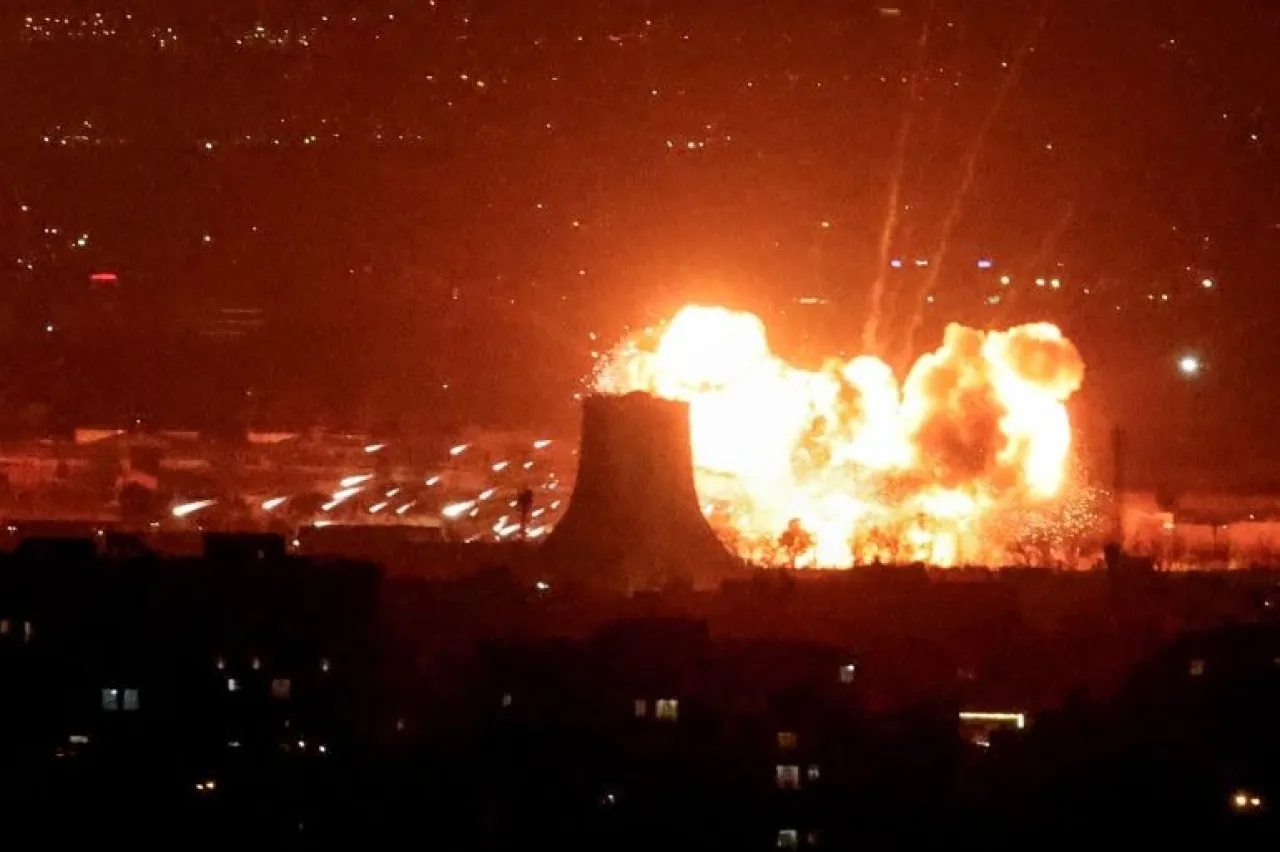
Khaberni - Massive fires broke out in the Iranian capital Tehran following the targeting of fuel tanks in the city on Saturday evening, at a time when Israeli media spoke of the army's strikes on fuel facilities in Iran.
The Israeli Channel 12 reported that the army began bombing fuel tanks in Iran, noting that the strikes targeted fuel storage sites in Tehran.
The Israeli Broadcasting Corporation quoted sources saying that Israel decided to expand its target bank within Iran to include oil facilities, in a move indicating a new escalation involving the Iranian energy sector.
In this context, the Iranian agency "Fars," quoting a source in the Ministry of Petroleum, reported that Israel targeted oil depots in several areas west of Tehran.
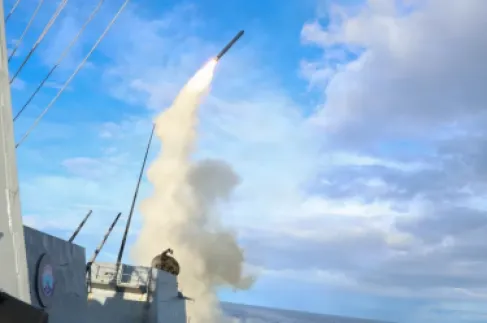
In contrast, the Iranian Revolutionary Guard announced launching a missile attack on the oil refinery in Haifa, in response to targeting energy facilities in Tehran.
The Revolutionary Guard stated in a statement that its forces "hit the Haifa refinery with Khaibar Shekan missiles in response to targeting the Tehran refinery," pointing to a mutual escalation between the two sides and targeting vital energy facilities.
Expanding the response
Al Jazeera's Tehran bureau chief Nour Eldin Al Dagher said that initial indicators of the attacks that occurred this evening show that the targeting affected fuel facilities and fuel depots inside and on the outskirts of the Iranian capital.
Al Dagher added that the size of the explosions and the flames that appeared at the targeted sites indicate the nature of the targets subjected to the bombing, noting that the attacks seem relatively different from previous strikes.
He continued that previous attacks were usually either carried out by Israeli fighter jets penetrating Iranian airspace or via guided missiles launched by U.S. forces, but the current data suggest the likelihood of drones entering into recent attacks.
Al Dagher also said that monitoring the movements of Iranian air defenses and activating ground defenses that targeted flying objects in the skies of Tehran suggests that one element of the attack in this phase was carried out via drones, noting the nature of the strikes and their precision, especially in targeting fuel tanks near residential areas, reinforcing this possibility.
Al Dagher added that these developments might indicate that Israeli military operations have entered a more advanced stage in planning, but he noted, on the other hand, that Iran has also moved to a new phase in its military strategy.
He explained that Tehran no longer relies only on traditional missiles or conventional missile defenses, but now possesses an advanced missile system used in the current confrontation.
Advanced missile arsenal
Al Jazeera's Tehran bureau chief talked about several missiles announced by Iran to be used in its attacks towards Israel, among them the "Khorramshahr" missile, which he said has a super high speed reaching about Mach 16 when exiting the atmosphere towards the target, equivalent to about 19,000 kilometers per hour, making its detection and interception more difficult.
Al Dagher said the missile is also distinguished by its ability to fragment after leaving the atmosphere, allowing it to hit multiple targets.
He also mentioned other missiles within the Iranian arsenal like the "Emad" missile, which has a strong explosive head and the ability to maneuver to face electronic warfare, in addition to the hypersonic missile "Fattah" and the "Khyber" missile.
He explained that these missiles are part of the Iranian strategic missile arsenal that Tehran has begun using in the current confrontation.
Regarding how Iran deals with Israeli strikes, Al Dagher said that the Iranian General Staff, especially the "Khatam al-Anbiya" military headquarters affiliated with it, announced that the Iranian response is based on the principle of "reciprocity."
He added that targeting the oil refinery in Tehran was met - according to Iranian statements - by targeting the oil refinery in the city of Haifa, as part of the reciprocal response between the two sides.
He explained that Iranian officials also spoke about targeting Israeli military and security sites, confirming that this pattern of response might continue in the next phase.
He noted that this escalation might lead to an increase in the number of missile volleys launched by Iran towards Israel in the upcoming period.
Warnings of an expanding scope of war
In the same context, Ali Larijani, the secretary of Iran's Supreme National Security Council, said in a television interview on Saturday evening that his country "does not welcome an expansion of the scope of the war, but if the Europeans intervene, we will deal with them in kind."
Al Jazeera's Tehran bureau chief commented on these statements, saying that this position is interpreted not only in the political dimension but also extends to the military aspect, posing a question about how Iran would respond if the conflict were to expand to include European parties.
He said that the known range of Iranian missiles currently, in some models like the "Sejjil 2" missile, reaches about 2600 kilometers, a range that may allow reaching the outskirts of Europe.
He added that some assessments indicate that Iran might be working on developing missiles with ranges between 4000 and 5000 kilometers, which could widen the scope of potential targets in case of an escalated confrontation.
Al Dagher concluded his remarks by stating that Tehran is currently operating under a strategy that targets Israeli and American targets in response to the strikes it faces, but he noted that the next stage might witness additional changes at the level of military operations should the escalation continue.
For more than a week, Israel and the United States have been launching a widespread attack on Iran, which has resulted in the deaths of hundreds, including the Supreme Leader Ali Khamenei.
Tehran responds by launching missiles and drones towards Israel, and also carries out attacks on what it describes as American bases and interests in the region.