Khaberni - The Israeli operation that was carried out on Friday evening in the Beqaa Valley in eastern Lebanon brought to mind one of the most sensitive security operations in the history of the conflict between Israel and Hezbollah, as it seemed that Tel Aviv had reverted to using the same method it employed about three decades ago when a landing operation was carried out in the nearby town of Qusarnaba.
In terms of planning, tactics, and even the objective, the new operation was similar to the one in 1994, which was also linked to the file of the missing Israeli pilot Ron Arad, but this time the stage came on almost the opposite side of the town of Qusarnaba, specifically in the town of Nabi Sheet - one of Hezbollah's main strongholds in the Lebanese Beqaa.
Before executing the operation, the Israeli army issued warnings to residents of several villages in the Beqaa to evacuate them, in two consecutive steps that included six towns including Nabi Sheet and the surrounding towns. It later appeared that these warnings were intended to secure the operation stage and limit civilian movement in the area.
Israel: We did not find the remains of Ron Arad
In a statement issued today, Saturday, the Israeli army announced that it did not find the remains of the pilot Ron Arad, who was the main target of the military operation, indicating that it did not find "any evidence related to him".
In the context, the Lebanese army reported that an Israeli bombing accompanied the landing operation at the Lebanese-Syrian border, resulting in the death of three Lebanese soldiers.
The statement mentioned that "units of the army spotted 4 Israeli helicopters flying over the Kharibeh – Baalbek area at the Syrian-Lebanese border," indicating the landing of two helicopters with a force in the vicinity of the area, simultaneously with extensive and intense aerial bombardment of the surrounding villages.
The army stated that, as a result, the military units specialized in emergency and immediate defense measures were deployed and fired illumination bombs to reveal the landing area, while elements of the Israeli force had disappeared from sight.
The Lebanese army pointed out that the landing operation included bombing and sweeping by Israelis in this area, followed by an exchange of gunfire with the residents of the area after this force moved from the landing site to the Nabi Sheet area in the Beqaa, adding that this operation continued until about three o'clock in the morning local time.
Before that, a statement by Hezbollah stated that at half-past ten on Friday evening, its fighters observed four Israeli helicopters infiltrating from Syrian territory, which landed an infantry force in an area located at the triangle of Jaroud Yehoufa, Kharibeh, and Marboun in the eastern chain of Lebanon.
According to the statement, the Israeli force moved towards the eastern district of the town of Nabi Sheet, before reaching the town's cemetery where clashes erupted with Hezbollah fighters using light and medium weapons.
The party added in its statement that the clashes escalated after the Israeli force was exposed, prompting the Israeli warplanes to carry out intensive fire belts involving about 40 airstrikes, to secure the withdrawal of the force from the confrontation area.
Social media activists shared video clips showing heavy gunfire in the air, coinciding with the flight of Israeli warplanes in the area's skies.
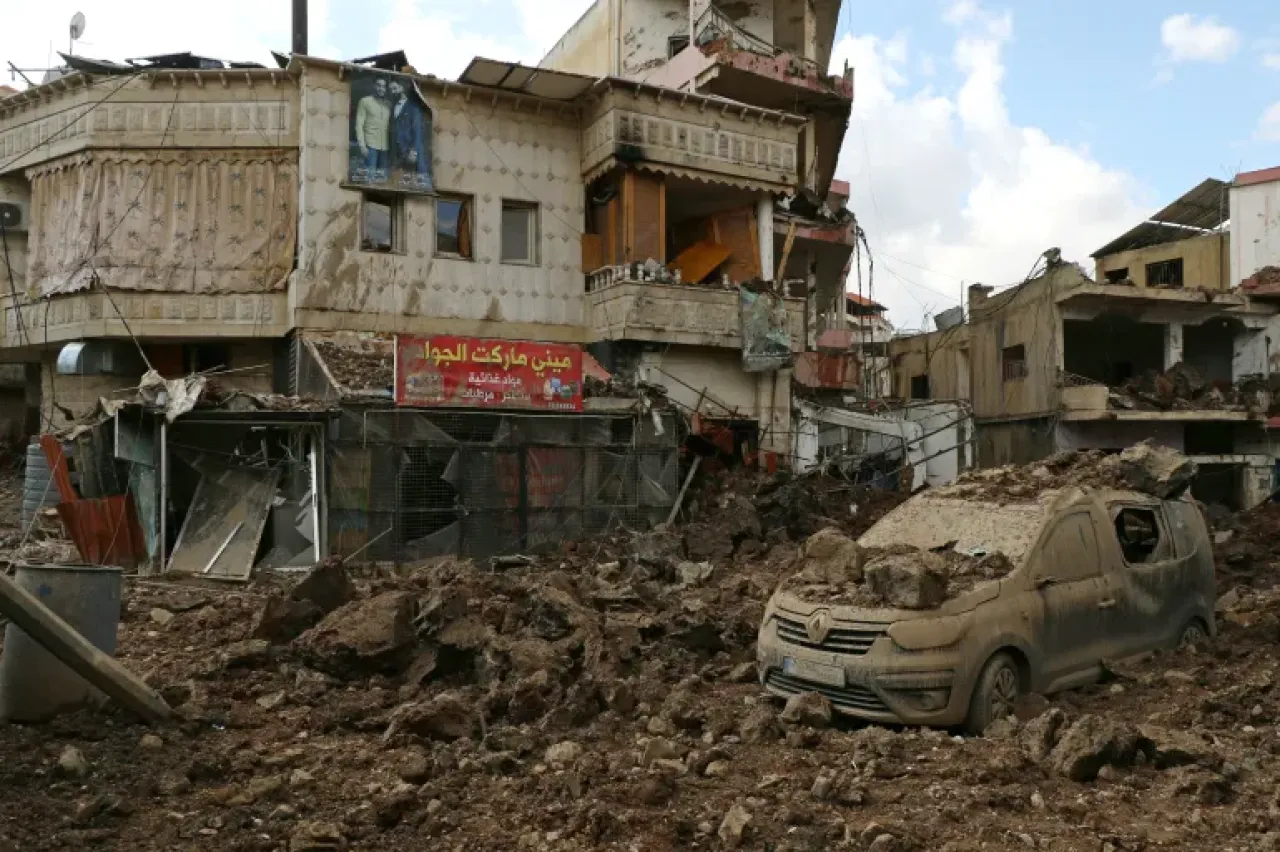
In the context, the Lebanese Ministry of Health announced the martyrdom of 26 people and the injury of 35 others in a series of airstrikes conducted by Israeli warplanes on the town of Nabi Sheet and its surroundings.
The ministry specified that among the dead were three soldiers from the Lebanese army and an element from public security, in addition to 15 residents of Nabi Sheet, nine from the town of Kharibeh, two martyrs from the town of Sareen, and another from the town of Ali al-Nahri.
Similar precedents
The landing operation in the town of Nabi Sheet, located in the eastern mountain range of Lebanon, was not the first of its kind on Lebanese territory, as Israel had previously carried out similar operations over the past decades.
The most prominent operation was the one carried out in the town of Qusarnaba in May 1994, when an Israeli force kidnapped the former leader of the Amal movement Mustafa Dirani, in an attempt to obtain information about the missing Israeli pilot Ron Arad.
At that time, Israel landed special units in the western mountains overlooking the town, before moving military vehicles to Dirani's house and kidnapping him, where he remained detained until he was released as part of a prisoner exchange deal between Israel and Hezbollah in 2004.
Ron Arad was an Israeli pilot born in 1958, kidnapped in Lebanon in 1986 while on a mission to target fighters there and was captured by the Amal movement and then Hezbollah, then disappeared. There have been many conflicting reports about him, and Israel conducted several investigations to locate him, most of which reached similar conclusions regarding his death but varied in the date of death.