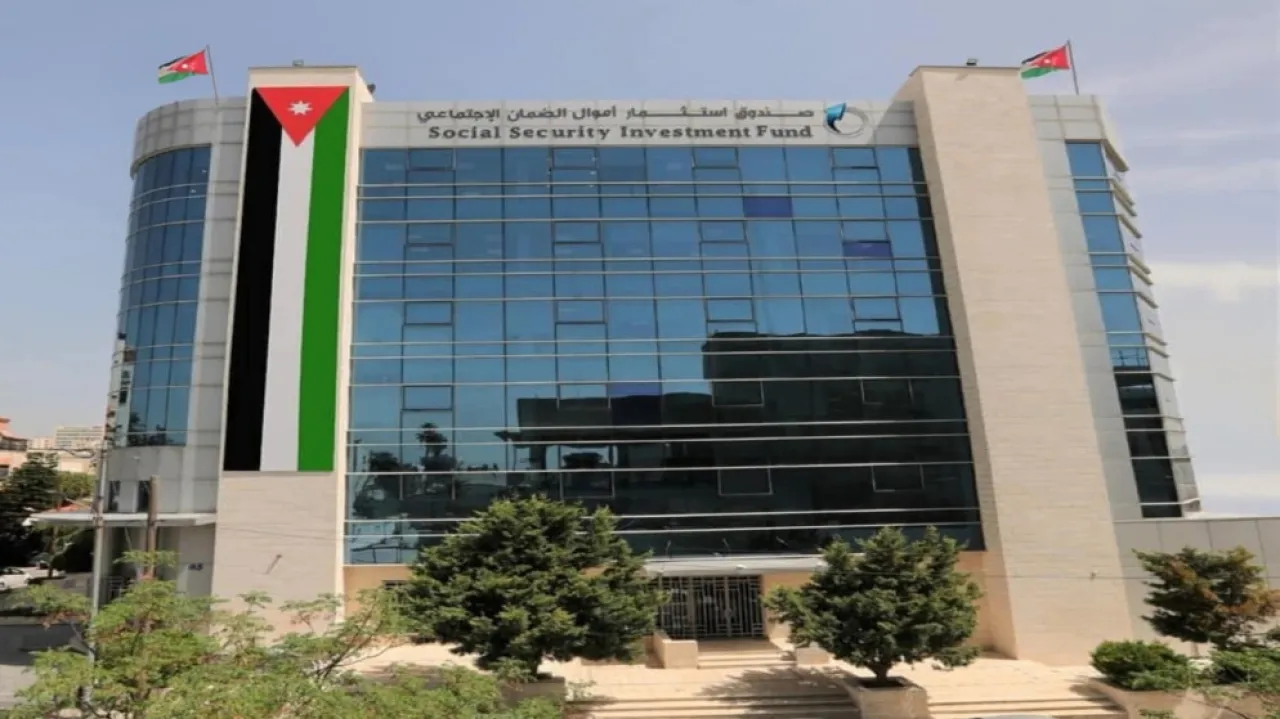
Khaberni - The head of the Social Security Investment Fund, Azedine Kanakriya, said that the fund continues to enhance its status as one of the most prominent institutional investors in the national economy, stating its assets are approximately 43% of the Gross Domestic Product, with investments spread across most economic sectors and in various governorates of the kingdom, contributing to economic development and affirming the fund’s role as a fundamental investment pillar for the national economy.
Kanakriya added that the fund's investments are managed according to a long-term investment approach based on thoughtful diversification among assets and risk management, and making investment decisions based on specialized technical and financial studies, ensuring effective returns within acceptable risk levels. He highlighted that this approach stems from the institutional responsibility of the fund in managing the savings of participants and retirees and working on their development to enhance the sustainability of the retirement system for current and future generations.
He clarified that the fund's assets have seen continuous growth since its establishment, rising from 1.6 billion dinars in 2003 to about 18.6 billion dinars at the end of 2025. He noted that this growth resulted from cumulative investment profits that reached 10.8 billion dinars, against about 6.2 billion dinars of cash surpluses transferred from the Social Security Corporation since its foundation.
He indicated that the assets increased during 2025 alone by about 2.4 billion dinars and by a growth rate of 15.2% compared to the previous year, reflecting the robustness of the long-term investment approach that the fund follows in managing the social security savings.
He pointed out that the companies and projects owned by the fund or in which it invests provide over 100,000 direct job opportunities, in addition to tens of thousands of indirect jobs in related sectors such as industry, services, transportation, and supply chains, reflecting the extensive economic impact of its investments and its role in stimulating economic activity in various sectors.
Regarding the distribution of the fund's investment portfolio across sectors, Kanakriya explained that the portfolio relies on careful diversification among different asset categories, which contributes to risk distribution and achieving stable returns in the long term, within an institutional framework that balances between the requirements of financial sustainability and national economic priorities, according to the investment policy adopted by the Social Security Corporation’s board of directors based on recommendations from the Social Security Investment Fund’s board.
He mentioned that the fund’s investments are distributed across several major investment portfolios, including bond portfolios, money market instruments, stocks, real estate investments, loans, tourism investments, as well as other investments in various projects and sectors in the national economy.
He explained that the assets are distributed over the bond portfolio and account for approximately 55.6% of total assets, followed by the stock portfolio at about 19.9%, then money market instruments at about 12.1%, while real estate investments make up about 6.2%, with loans accounting for about 3%, and tourism investments approximately 1.7% of the total investment portfolio.
Regarding sectoral distribution, Kanakriya noted that the fund's investments span most economic sectors in the kingdom, including the banking sector, mining, traditional and renewable energy, tourism, agriculture, real estate development, in addition to investing in development zones, pointing to the fund’s contribution to financing a number of major national projects through the leasing window in health, transportation, and logistic services sectors, reflecting the extensive range of investments managed and their role in supporting key economic sectors in the kingdom.
He confirmed that this distribution aligns with the nature of the fund as a long-term retirement investor, where global retirement funds tend to allocate the majority of their portfolios to fixed-income instruments, which provide stability in returns and the ability to manage long-term retirement commitments, while retaining investments in stocks and various economic sectors to enhance returns and diversify income sources, enhancing the robustness of the social security savings and their sustainability in the long run.
Regarding the investment returns of the fund, Kanakriya said that the investment fund achieved positive investment results during 2025, as the net returns realized from various investment portfolios reached about 1.1 billion dinars, with total comprehensive income rising to about 2.2 billion dinars compared to about one billion dinars in 2024, with a growth rate of about 118.5%.
He added: "The comprehensive income includes the net returns realized from various investment portfolios amounting to 1.1 billion dinars, in addition to the net change in the valuation of the strategic stock portfolio valued at 1.1 billion dinars, reflecting the efficiency of managing investment portfolios and the phased approach that the fund follows in asset development and maximizing returns".
He continued, "The returns were distributed among various portfolios, where the bond portfolio contributed the largest share of the returns at about 616.4 million dinars and approximately 54.7% of total returns, followed by the stock portfolio at about 267.7 million dinars and a share of 23.8%, while money market instruments generated returns of about 138.3 million dinars and a share of 12.3%, and real estate investments recorded returns of about 67.7 million dinars and a share of 6% of total returns, in addition to the loan portfolio which generated about 31.6 million dinars and a share of 2.8% of total returns."
He highlighted that the value of the fund's investments in publicly traded companies listed on the Amman Stock Exchange amounted to 3.4 billion dinars, which represents about 13% of the total market value of the exchange, reflecting the pivotal role of the fund as a long-term institutional investor in the financial market.
Kanakriya clarified that the fund's share in 2025 of cash distributions from listed companies' profits for 2024 amounted to about 191 million dinars, an all-time high, reflecting an improvement in the financial performance of several major companies in which the fund invests. He pointed out the importance of these returns, not only in generating direct income for the fund but also in enhancing the performance of the Amman Stock Exchange and deepening investors’ confidence in the Jordanian financial market, contributing to enhancing the attractiveness of the investment environment and stimulating economic activity in the kingdom.
These investment results reflect an improvement in the performance of several economic sectors and major national companies during the past period, confirming the close link between the national economy's performance and that of the investment portfolios, highlighting the role of institutional investments in supporting economic growth and enhancing market stability.
About emerging investment opportunities for the fund, he affirmed that the investment fund continuously works on exploring new investment opportunities that enhance the diversity of its investment portfolio and bolster its role as a long-term institutional investor in the national economy.
He added that the fund works on enhancing its presence in major strategic projects such as the national carrier, the Risha Gas Pipeline, and the phosphoric acid plant in partnership with mining companies, in addition to studying promising opportunities in education and financial technology sectors and real estate development, alongside several projects linked to the economic modernization vision.
Kanakriya highlighted that the fund is currently updating its strategic plan, reviewing its investment orientations, and reassessing asset distribution, which reflects a deeper understanding of market developments and enhances the trend towards investments with direct economic impact, in line with the long-term commitments of the Social Security Corporation, supporting the sustainability of returns and the fund's role in the national economy.
He pointed out that these investment orientations are part of the fund's commitment to participating in projects that contribute to enhancing economic infrastructure and boosting the competitiveness of the national economy, along with achieving sustainable investment returns in the long run, enhancing the community's confidence in the robustness of the social security savings and their role in supporting economic stability in the kingdom.