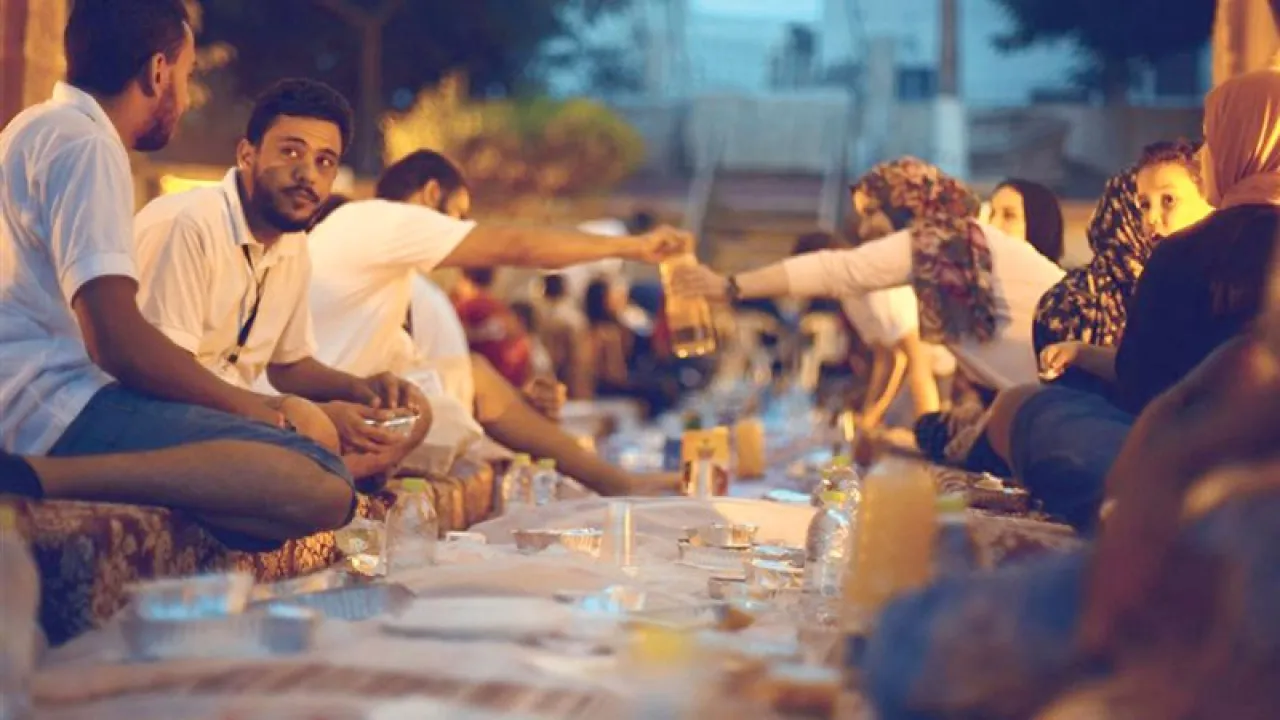
Khaberni - With the firing of the Iftar cannon, which signals the end of fasting hours, public roads, alleys, and streets in Libya become open squares filled with love, peace, and human tenderness, as neighbors exchange dishes of food, and guests, newcomers, and expatriates are immersed in an atmosphere of social solidarity, ensuring that no one feels lonely.
The tradition of "Al-Dhawqa" emerges in this context as a genuine Libyan custom by exchanging dishes of food among neighbors so that no family is without a new dish on their table, creating an unparalleled warmth and also achieving a form of simple "dietary diversity."
This behavior later developed into a popular culture that transcends walls, where families make sure to bring the "Iftar bowl" to the doorsteps or shared spaces for passersby and wayfarers to gather around, turning the entire neighborhood into a single dining room where class distinctions dissolve.
The "Mercy Tables," which are set up in public squares and near mosques, are a primary destination for migrant workers and travelers who are stranded, where these tents are managed by volunteer youth efforts that gather tangible donations.
These tables have transformed from mere passerby feeding into a tool for communication, closeness, and welcoming others, enhancing the expatriates' feeling of belonging to the local community during the holy month.
At crossroads and city entrances, a profoundly human scene is entrenched, primarily featuring groups of youth stationed before sunset to distribute light Iftar meals primarily consisting of dates, yogurt, and water to drivers who did not make it home in time.
With the rise of social media platforms to the forefront, a new form of "digital solidarity" has emerged, represented by "charity kitchens" organized by NGOs, through identifying the humble families, and preparing full meals that are delivered to their homes with complete privacy.
The idea here is to employ the technological transformation and spaces like "Facebook" and "X" and others in a way that expands the reach of the table to include those who, out of modesty, do not frequent public tables, including the displaced and orphans, turning charity work from a dispersed individual effort into an integrated institutional performance.