Khaberni - U.S.-Israeli strikes have taken a more focused approach on Iranian naval capabilities, after President Donald Trump pledged to provide military escorts for oil tankers passing through the Strait of Hormuz.
This requires extensive and advanced security for a distance of up to 2400 kilometers which ships travel within and outside the Arabian Gulf region, as military expert Brigadier Elias Hanna says.
The Iranian Revolutionary Guard announced two days ago the closure of the strait through which 20% of global energy exports pass, stating that it targeted ships that refused to comply with the transit ban.
On Wednesday evening, Iranian television reported a fierce attack on the port of Bandar Abbas by Israeli fighter jets, while the Israeli military said it was targeting infrastructure throughout the capital Tehran.
The United States had previously announced targeting the Bandar Abbas base, stating that it sank what it called the Iranian drone carrier “Shahid Baqeri,” and 20 frigates belonging to the Revolutionary Guard.
Earlier on Wednesday, the U.S. Central Command (CENTCOM) announced the sinking of an Iranian warship off the coast of Sri Lanka in the Indian Ocean.
The Sri Lankan police said that the bodies of 87 sailors from the targeted Iranian warship had been recovered.
Eliminating the maritime threat
This U.S. activity in targeting Iran's naval forces reflects Washington's desire to eliminate the navigational threat in the coasts where Iranian forces are present in the Arabian Gulf area only, which extends to 1250 kilometers reaching up to 2400 kilometers—the distance Iran can target, according to Brigadier Elias Hanna.
Iran cannot close the Strait of Hormuz with military presence, but does so through threatening to target ships passing by the area to raise the costs of transit and insurance to a level that compels companies to avoid this passage, according to the military expert.
Therefore, the United States is currently trying to eliminate Iran's naval power targeting the strait because escorting ships may not achieve the desired results, according to the military expert who pointed to the failure of this method during the Iran-Iraq war in the 1980s.
U.S.-Israeli strikes began by targeting Iranian missiles and their platforms intensively as well as naval forces, according to Hanna who said that the United States strikes everything in southern Iran, while Israel focuses on everything in northwest, including the capital Tehran.
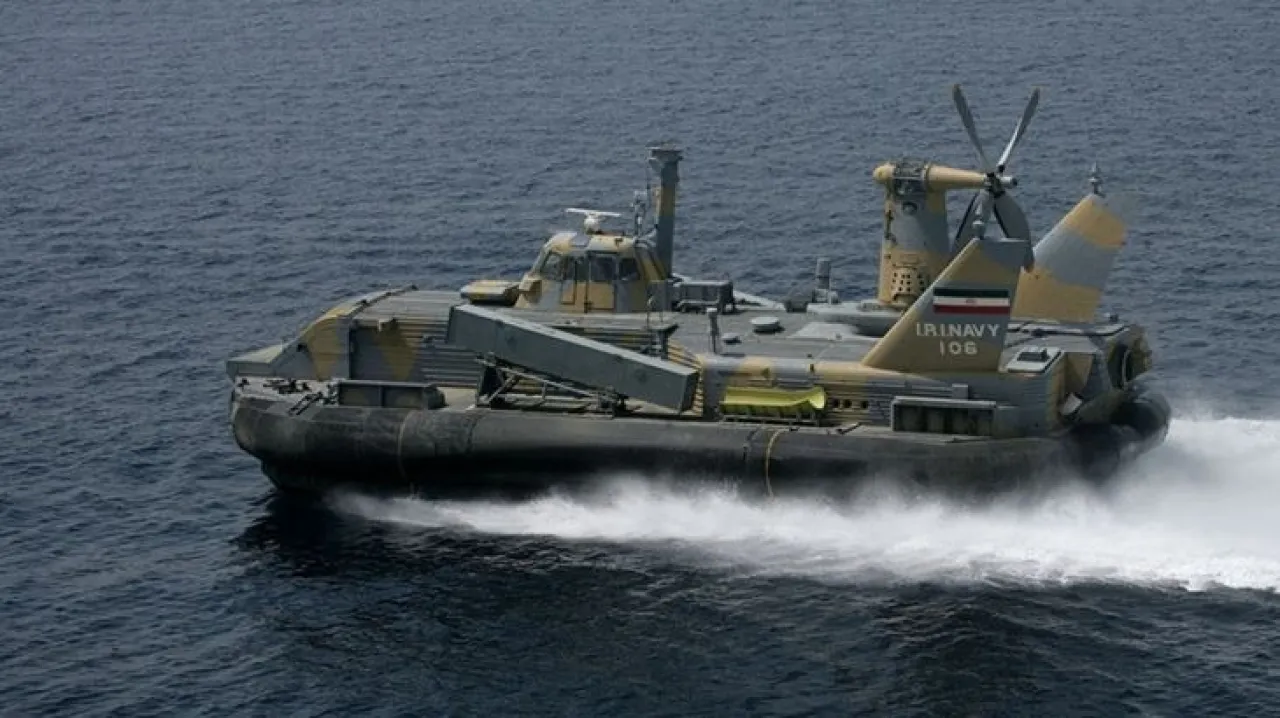
The Iranian naval force relies on asymmetric warfare that relies on boats and torpedoes which the military expert says has been successful in the Gulf region, but has not affected the American destroyers stationed in the Indian Ocean.