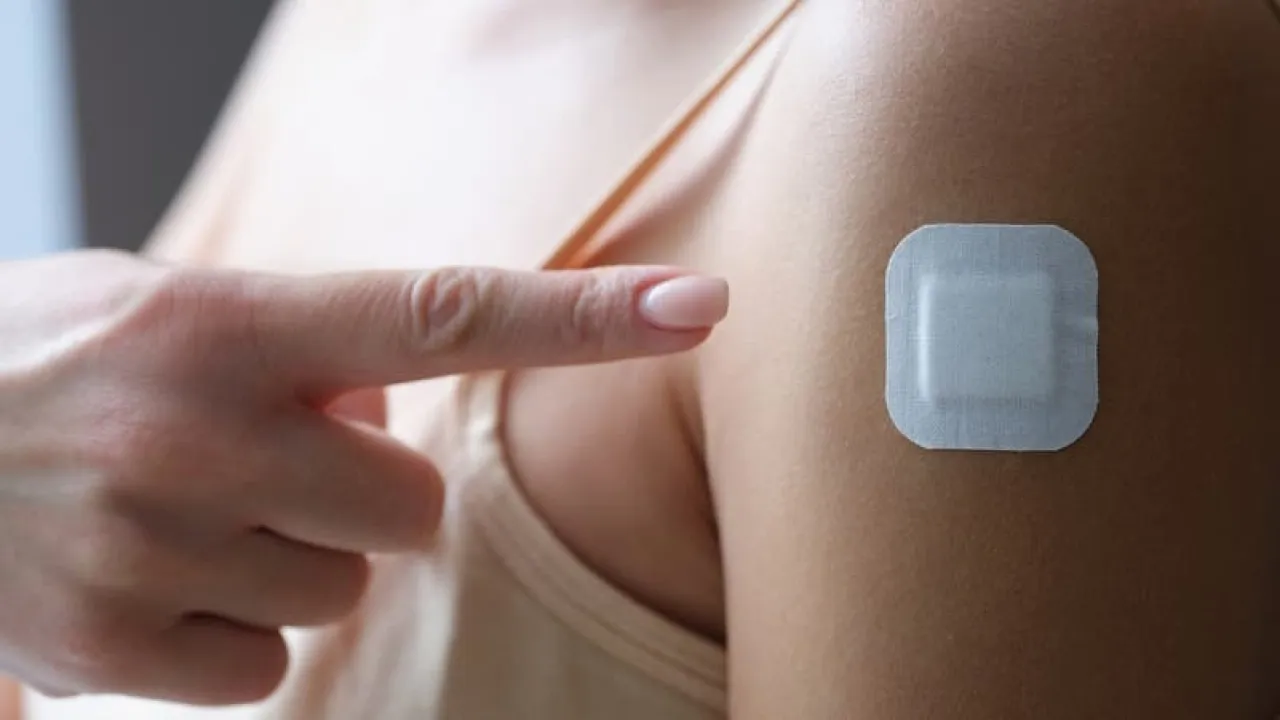
Khaberni - In a move that could change the way the immune system is monitored, researchers from the Jackson Laboratory (JAX) in collaboration with the Massachusetts Institute of Technology (MIT) developed a precise skin patch, resembling a bandage, capable of monitoring the immune response from the skin without the need for blood samples or surgical biopsies.
The study, published in the journal Nature Biomedical Engineering, is the first to demonstrate the possibility of gathering live immune cells from human skin using a patch containing hundreds of tiny microneedles, virtually pain-free, according to a report on the "MedicalXpress" scientific site.
The technique relies on stimulating a type of immune cells known as "tissue-resident T cells," which are guardian cells that live in the skin and respond quickly when recognizing familiar antigens, such as parts of a virus or allergen.
Upon reactivation of these cells with a small amount of antigen, they release signals that attract additional immune cells from the bloodstream to the skin. This is where the patch comes in, as it absorbs these cells and inflammatory molecules from the interstitial fluid in the superficial layers of the skin within minutes to hours.
The microneedles do not reach nerves or blood vessels, making the procedure virtually painless and leaving no marks.
An easier alternative to traditional testing
Traditionally, the study of certain important immune cells requires skin biopsies or frequent blood tests. However, many specialized cells that recognize infection or vaccines are rare in blood and primarily concentrated in tissues like the skin.
The new patch complements these tests, especially in monitoring the response to vaccines and tracking the activity of autoimmune diseases such as psoriasis and vitiligo, in addition to evaluating the impact of cancer treatments and studying immune changes associated with aging.
Experiments on animal models, followed by an initial human test, demonstrated that the patch is capable of collecting a rich mixture of immune cells and inflammatory proteins.
Researchers believe this technology might one day allow for immune monitoring at home, particularly for patients suffering sudden attacks in chronic skin diseases. It could also be developed for use on mucous membranes, such as the mouth or nose, which opens up possibilities for monitoring respiratory immunity.
What does this mean for patients?
While the patch does not replace blood tests or biopsies currently, it represents a promising additional tool that is less bothersome for patients, especially children, the elderly, and vulnerable patients. With ongoing clinical studies, this small bandage could represent a significant step towards more precise and comfortable medicine in monitoring immune system health.