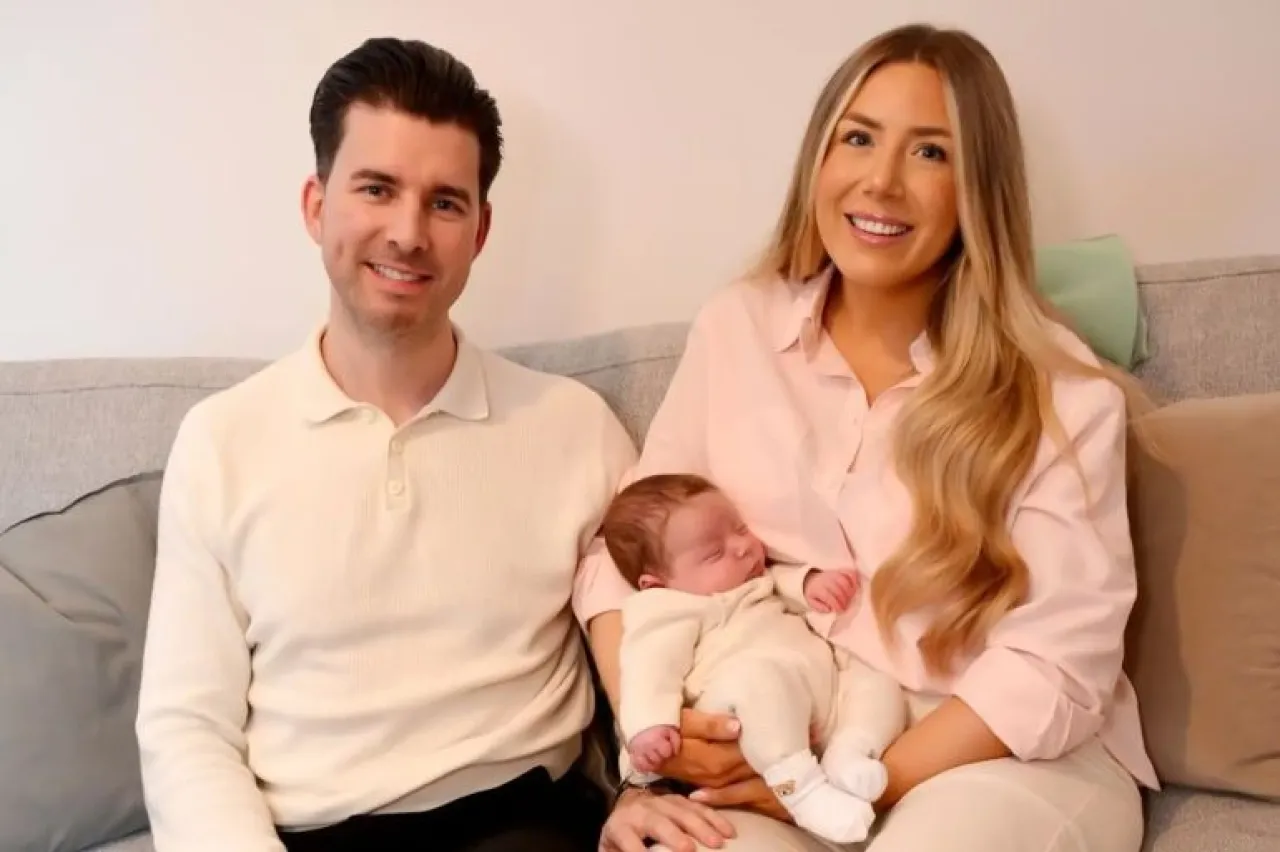
Khaberni - Britain has achieved an unprecedented medical milestone after a British woman gave birth to a healthy child without a womb, thanks to a womb transplant from a deceased donor, in a first of its kind in the United Kingdom and possibly among the few in Europe.
Grace Bell, in her early thirties, delivered a healthy male child at Queen Charlotte and Chelsea Hospital in the capital London, after undergoing a seven-hour transplant procedure followed by hormonal treatments and then artificial insemination to achieve pregnancy.
This exceptional womb transplant operation began with funding from the charity "Womb Transplant UK," founded and chaired by gynecological surgeon Richard Smith, led by organ transplant surgeon Isabel Quiroga.
Quiroga, who works at the Oxford Organ Transplant Center, affiliated with the National Health Service Foundation, says: “This is a great achievement that gives more hope to women who do not have a womb and wish to start a family."
She added: "This is the only treatment that enables them to become pregnant and give birth, and provides another option alongside adoption or surrogacy."
The world’s first successful womb transplant took place in 2012, and in April 2025, the first woman in the United Kingdom gave birth to a healthy child using a womb donated by her sister. Eight months later, Bell's child was born, this time from a deceased donor’s womb.
The family of the late donor expressed their great pride in the legacy their daughter left behind. The family said: "She has given other families a precious gift: time, hope, healing, and now life."
They added, "We urge others to consider donating, so that more of those in need may have a chance at life, just as our daughter selflessly wished."
This birth marks a qualitative step in the treatment of women with a rare condition that prevents them from carrying a pregnancy naturally, like the Mayer-Rokitansky-Küster-Hauser syndrome that Bell suffers from, and it opens new horizons in the achievements of reproductive organ transplantation.
The medical team and the supporters of the procedure applauded that this achievement might provide new hope for thousands of women who previously had no chance of pregnancy, explaining that this technique enables achieving pregnancy and birth outside traditional options like adoption or surrogacy.
A global study conducted in 2024 found that the success rates of this procedure are similar to the success rates of womb donations from living donors. Among 24 recipients who underwent a womb transplant from a deceased donor, the live birth rate was about 66 percent.
All these patients suffered from Mayer-Rokitansky-Küster-Hauser (MRKH) syndrome, a developmental disorder affecting the vagina and uterus.