The journey of death as mentioned in the Quran (death is not the end)
Good deeds reach the deceased in his grave (gifts from the living to the dead)
3 verses at the moment of death make you rethink your hatred for it
The Quran is the only heavenly book that includes stages after death
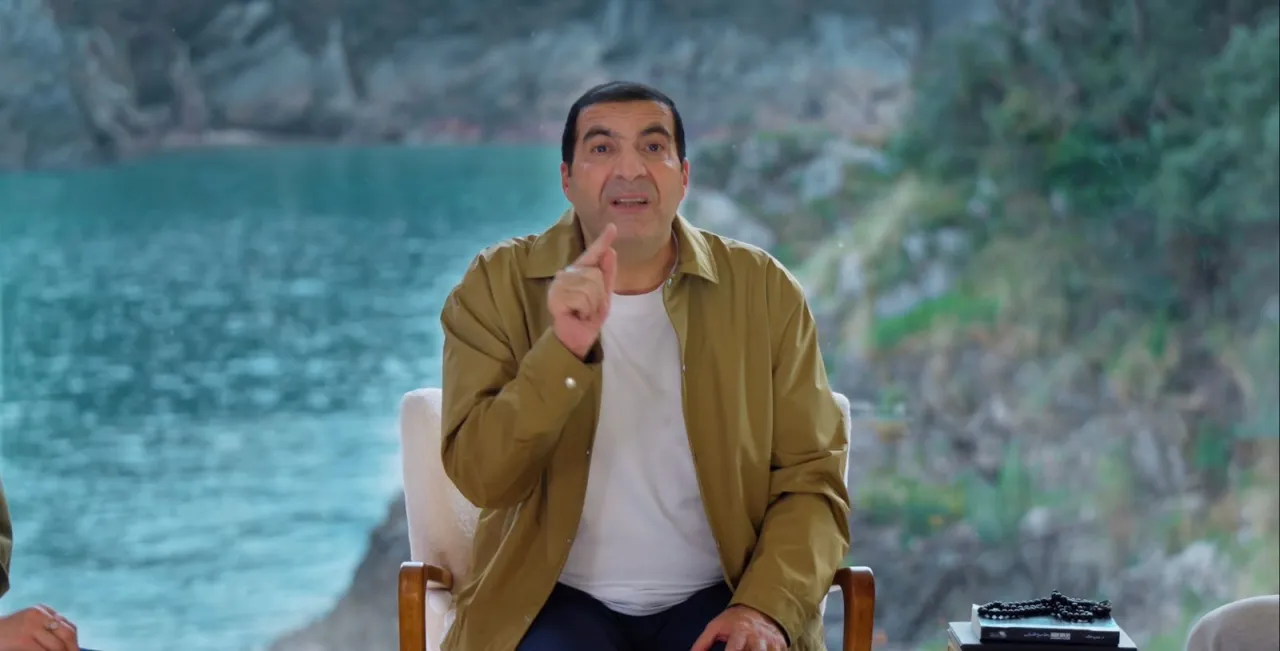
Khaberni - Dr. Amr Khaled, the Islamic preacher, said that there is no other heavenly book other than the Quran that detailed the journey of humans after death like the Quran, aiming to instill peace in the hearts and souls of the believers.
Khaled reviewed in the thirteenth episode of his Ramadan show "Guide - A Journey with the Quran," three stages a person goes through after death, based on what is included in the Quran, away from the surrounding myths, pointing out that the life in the Barzakh is the joy of the soul for the good believers.
The first stage: The moment of death and the exit of the soul includes 4 verses
1--"And the stupor of death will come in truth"; stupor is a state of loss of focus, out of God’s mercy to ease the transition, and these stupors occur to all beings including Prophet Muhammad, peace be upon him, in his moments of death he said: There is no god but Allah, indeed, death has stupors.
2- "But when it [the soul] reaches the throat" and you are at that moment, looking on," unable to help, "And We are closer to him than you but you do not see," a message of security from Allah: Do not fear, I am with you, and angels enter the home, and he begins to see them reassuring him with paradise and affirming him "Allah will keep firm those who believe with the word that stands firm in this world, and in the Hereafter."
3- "Say, 'The angel of death, who is set over you, will take you, then to your Lord you will be returned'"; the moment the angel of death arrives, "then to your Lord you will be returned," the continuity means that death is not the end.
And the feeling of the deceased at this moment is expressed by the saying of Prophet Muhammad peace be upon him: "Whoever loves to meet Allah, Allah loves to meet him, and whoever dislikes to meet Allah, Allah dislikes to meet him." Aisha -may Allah be pleased with her- asked: Is it death? For all of us dislike death, he said: No, O Aisha, but a believer, when his time comes; angels reassure him with God’s mercy and pleasure; thus he loves to meet Allah and Allah loves to meet him, and the unbeliever, when his time comes; is warned of Allah’s wrath and punishment, thus he hates to meet Allah; and Allah hates to meet him.
4-Memory flashback: "Until, when death comes to one of them, he says, 'My Lord, send me back* that I might do righteousness in that which I left behind..," or he will say when he sees the punishment, 'If only I could have another turn so I could be among the doers of good'." Studies have shown unusual brain activity at the moment of death.
The second stage: The moment angels greet the person moments before death
1-"Those whom the angels take in death, being good and pure; [the angels] will say, 'Peace be upon you. Enter Paradise for what you used to do'"; knew before death that his place is in paradise. When Prophet Muhammad felt severe distress, Fatima, may Allah be pleased with her, said: Oh the distress of my father! He said: There is no distress upon your father after today.
The third stage: The soul in the Barzakh world
1- "Indeed, you were heedless of this [fact], so We have removed your coverings, and sharp is your sight this day." He sees everything, sees the angels circling in the heavens, and hears their glorification. In fact, he hears the whole universe glorifying: "The seven heavens and the earth and whoever is in them exalt Him. And there is not a thing except that it exalts [Allah] by His praise, but you do not understand their [way of] exalting."
And you as well glorify with them, whoever had a routine of remembrance in the world will have it in the hereafter. The Prophet Muhammad peace be upon him says: "Every servant will be resurrected in the state upon which he died."
2- "Delighted in what Allah has given them of His bounty, and they rejoice in those who have not yet joined them from behind them; no fear will there be concerning them, nor will they grieve." The souls of martyrs and souls, in general, are specified in the verse with martyrs, but it means souls generally, and the specificity does not deny the general case for souls.
When Uthman appeared in a vision after his death he was asked: What did Allah do with you?, he replied: He entered me into Paradise by my good character and trust in Him. When Ibn Qayyim died, he was asked: What did Allah do with you?, he replied: He honored me, had mercy on me, and forgave me, when asked: By your knowledge?, he said: No, but by His grace and mercy.
3- "Indeed, it is We who bring the dead to life and record what they have sent before and their traces, and all things We have enumerated in a clear Register," sending good deeds to a person after death is a sign of Allah’s love for him, and He is the one who supported them on it. In the hadith narrated by Tirmidhi: "Indeed, the grave is either a garden from the gardens of Paradise or a pit from the pits of Hell"
And for someone who died a thousand years ago, the grave may feel like minutes and vice versa, for time is under the sole dominion of Allah, "And indeed, a day with your Lord is like a thousand years of what you count." All these stages and verses are summarized by the Prophet in one narration. On the authority of Al-Bara bin Azib, he said: We went out with the Prophet Muhammad peace be upon him to the funeral of a man from the Ansar, and we arrived at the grave and it was not yet dug, so the Prophet sat down and we sat around him as if birds were on our heads and in his hand a stick he was striking with on the ground, then he raised his head and said seek refuge with Allah from the torment of the grave twice or thrice.
Watch the episode:
https://www.youtube.com/watch?v=iW5n2VSlBCE