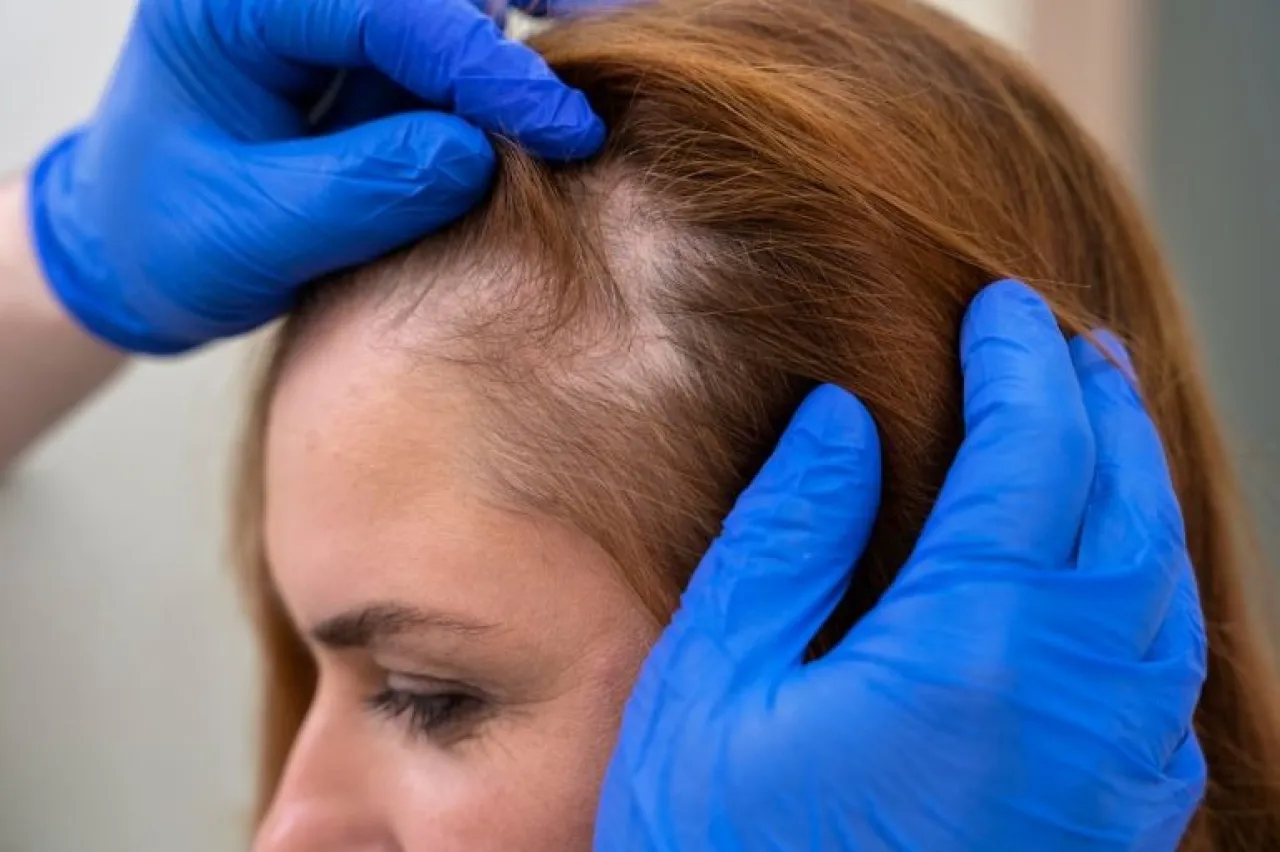
Khaberni - Hair loss in women happens when a woman, or anyone born female, loses more hair than the normal rate. About half of all women will experience hair loss at some stage in their lives. It often begins in the fifties or sixties, but it can occur at any age and for multiple reasons.
Hair growth begins from follicles within the skin, where new cells accumulate to form the hair shaft. Hair goes through three main stages:
The growth phase: This includes about 90% of scalp hair at any time, lasting two to eight years, and grows at a rate of about 15 centimeters per year.
The transition phase: Lasts from two to four weeks, during which hair growth stops and detaches from its nourishment source.
The resting phase: Lasts from two to four months, during which the hair stabilizes before falling out and a new growth phase begins.
Because hair continuously sheds and grows, initial hair loss may not be noticeable. However, when a large percentage of hair enters the resting phase at once, or when follicles are damaged, hair loss becomes significantly visible.
Hair loss in women
A woman typically loses between 50 and 100 hairs a day, which can go up to 250 hairs on shampoo days. However, losing larger amounts or noticing significant thinning requires attention.
Key symptoms include:
Finding more hair than usual on your brush or comb.
Accumulation of hair on the pillow, clothing, or bathroom drain.
Thinning hair and a more visible scalp.
Gradually widening hair part or thinner ponytails.
Unlike men, women's hair loss generally does not occur at the front of the head, but as thinning on the top part or front third of the scalp.
The most common cause
Female pattern baldness or androgenetic alopecia is the most widespread global cause. It has a strong genetic factor and can be inherited from either mothers or fathers. It often starts in the fifties or sixties but can appear at an earlier age.
In this case, follicles gradually shrink, and the growth phase shortens, resulting in thinner, shorter hair. Some follicles may completely stop producing hair. This type usually doesn’t lead to total hair loss but can worsen over time if untreated.
Other types of hair loss
Anagen effluvium:
Occurs due to medications that harm the follicles, like chemotherapy or radiation therapy. Hair loss generally starts a few weeks after beginning treatment, and hair growth resumes months after the treatment ends.
Telogen effluvium
Occurs when a large portion of hair enters the resting phase due to:
Physical illness or infection.
Psychological or emotional stress.
Vitamin or mineral deficiencies.
Hormonal changes such as pregnancy.
It is often temporary.
Diseases that may cause hair loss
Among the medical conditions associated with hair loss:
Thyroid gland disorders.
Anemia.
Polycystic ovary syndrome.
Diabetes.
Scalp infections.
Autoimmune diseases like alopecia areata where the immune system attacks the follicles.
Scarring alopecia that leaves smooth patches on the scalp.
Stress and lifestyle
Physical stress from childbirth or surgery, or psychological stress from events like divorce or job loss, can lead to temporary hair loss weeks or months after the triggering event.
Also, rapid weight loss, or deficiencies in iron and protein, excessive vitamin A, or lack of vitamin D, may contribute to hair loss.
Hormonal changes
Menopause: Lower levels of estrogen and progesterone weaken hair and slow its growth.
Pregnancy and childbirth: Hair loss may be noticeable three months after childbirth due to hormone drop, generally improving within 6 to 9 months.
Ageing: Naturally slows hair growth and some follicles may stop functioning.
Hairstyles and their impacts
Tightly pulled hairstyles like braids or tight ponytails can lead to traction alopecia, which is reversible if treated early. Also, high heat and harsh chemicals weaken the hair.
How is hair loss diagnosed?
The diagnosis relies on:
Clinical examination.
Blood tests to check for anemia or thyroid disorders.
Pull tests.
Scalp examination.
Biopsy in some cases.
Treatment options
Treatment depends on the cause, and prominent options include:
Minoxidil: A topical treatment endorsed to extend the growth phase.
Spironolactone: Inhibits the effects of male hormones.
Nutritional supplements in cases of deficiencies.
Hair transplants in advanced cases.
Home laser devices to stimulate growth.
PRP (Platelet-Rich Plasma) therapy with microneedling.
Medical recommendations suggest that early intervention increases the chances of restoring density.