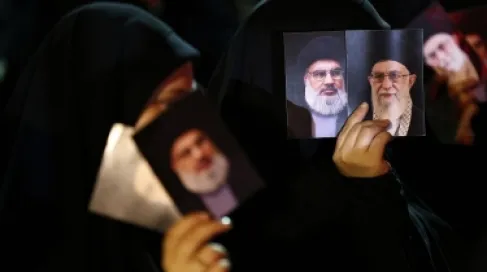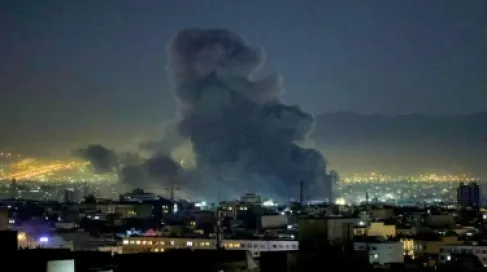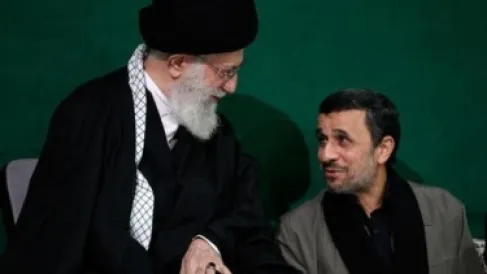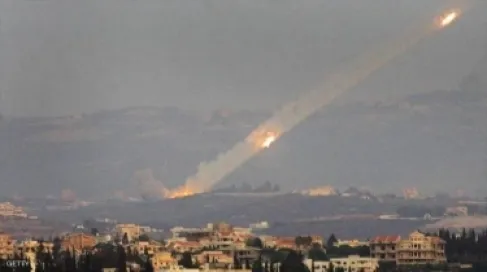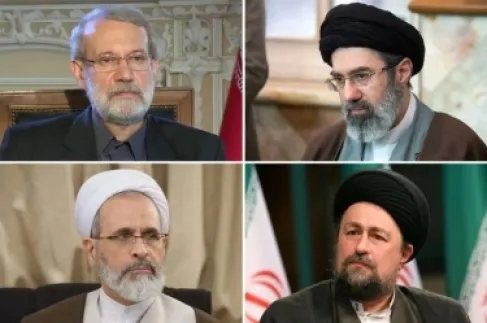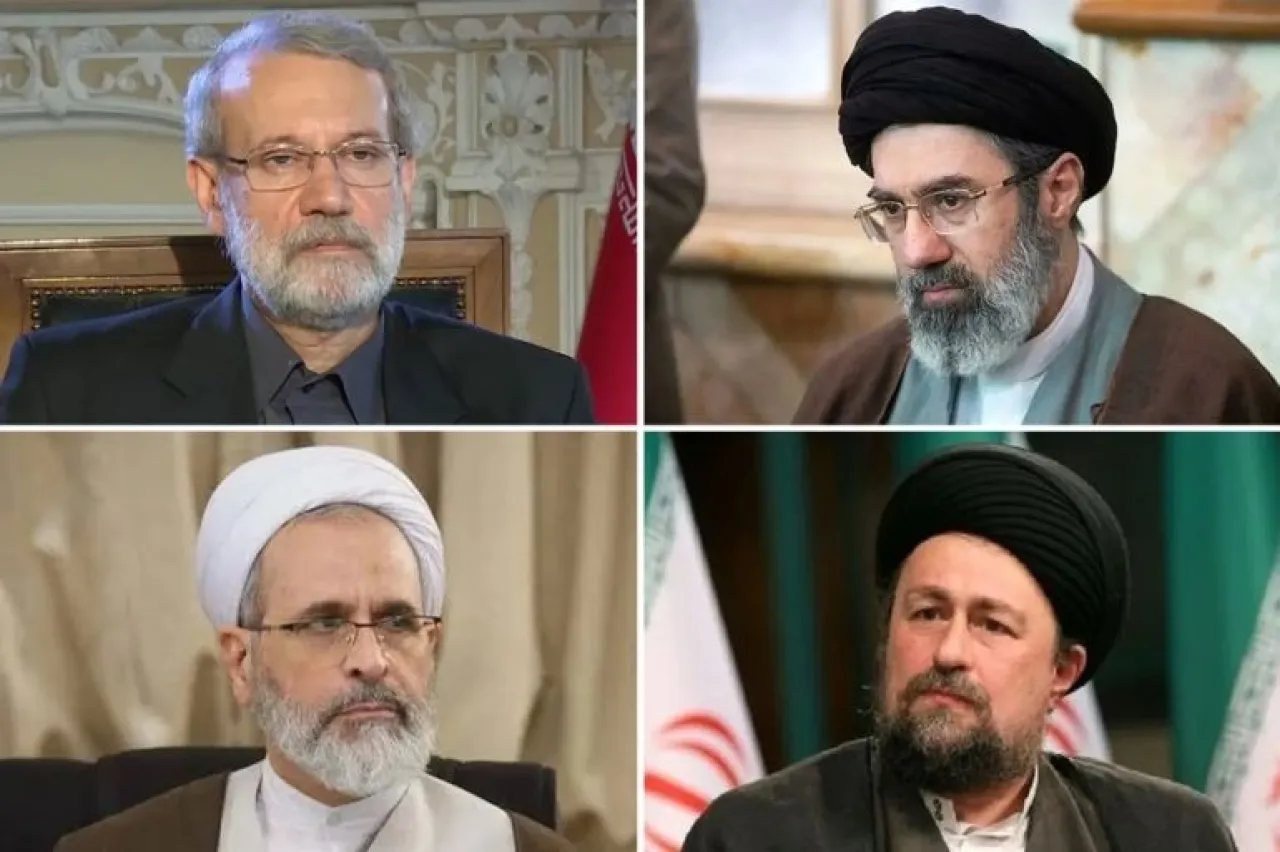
Khaberni - Newsweek magazine reported that the death of Iranian leader Ali Khamenei in the American-Israeli attack last Saturday, has opened a wide discussion about who will succeed him, as he has led the Iranian regime since 1989.
This major event has raised numerous questions about the future of Iran and the political vacuum that may occur after his death, while the magazine discussed names that are candidates for his succession.
Ali Larijani
The magazine mentioned in a report by defense affairs editor Ellie Cook that Ali Larijani is among the most prominent political figures in Iran, and is the Secretary-General of the Supreme National Security Council of Iran.
The magazine continued that Larijani is described as pragmatic and patriotic, and he is well versed in Iran's diplomatic strategy.
Last month, the United States imposed sanctions on him on the grounds of "supporting the suppression of protesters" in Iran, and Cook notes that many consider him a strong candidate for the post, given his political history and prominent role in nuclear negotiations.
Mojtaba Khamenei
According to the magazine, some speculations suggest Mojtaba Khamenei - the son of the late guide - as a potential candidate. Though he is a well-known cleric - Cook explains - he has not previously held a major political position.
In addition, the transfer of power from father to son may encounter opposition from some influential figures within the regime.
Hassan Khomeini
The magazine also spoke about Hassan Khomeini, the grandson of the late Supreme Leader Ayatollah Khomeini, as one of the names proposed.
Ali Reza A'rafi
The magazine continued that some believe Ali Reza A'rafi might be one of the candidates to assume the post, noting that A'rafi is one of the prominent clerics in Iran, and has been appointed a member of the interim council currently governing Iran.
Interim Council
Newsweek points out that the option to continue with an interim governing council remains plausible, adding that A'rafi is one of three individuals appointed to this council charged with managing Iran's affairs at the moment.
Alongside him are the President of Iran Masoud Pezeshkian and the Head of the Judiciary Gholam Hossein Mohseni Ejei.
The council will manage the country's affairs until a new leader is elected by the Assembly of Experts, a body consisting of 88 members.
External Candidate
Regarding candidates from outside Iran, Reza Pahlavi, the son of the late Shah of Iran, comes as one of the prominent figures who "believes in an Iran that aligns with the United States."
Pahlavi has stated that the death of Khamenei represents the end of the regime, and that any attempt to appoint a successor is doomed to fail.
Provocative Scenario
About a week ago, Foreign Policy magazine spoke about post-war scenarios for Iran, where the United States desires regime change but without chaos.
At that time, the report by Mark Lynch, Professor of Political Science and International Affairs at George Washington University, stated that the most likely scenario is the Revolutionary Guard taking control.
According to Lynch, in a "chaotic transitional environment," the Revolutionary Guard remains the best-equipped and organized force, enabling it to assert control.
The magazine mentioned that a government led by the Revolutionary Guard—if this scenario indeed materializes—might continue under sanctions and remain unstable, but it might focus on bolstering national anger against the American-Israeli attack to strengthen its power.
Current Situation
It is worth mentioning that following the confirmation of Khamenei's death, Mohammad Mokhber, advisor to the late guide, announced the formation of a triumvirate to lead the transitional phase, consisting of President Masoud Pezeshkian, the Head of the Judiciary Gholam Hossein Mohseni Ejei, and a jurisprudent from the Guardian Council Constitution, with Ali Reza A'rafi later chosen.
Quoting Article 111 of the Constitution, Mokhber announced that in the absence of the leader, his duties are temporarily assumed by a three-member body including the President, the Head of the Judiciary, and one of the jurisprudents of the Guardian Council selected by the Expediency Discernment Council, until a new leader is elected as soon as possible.