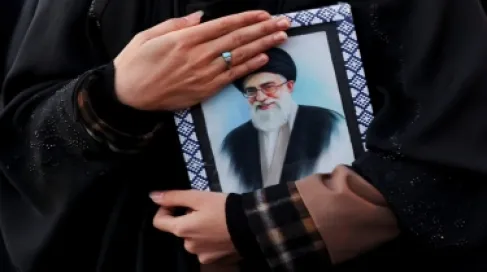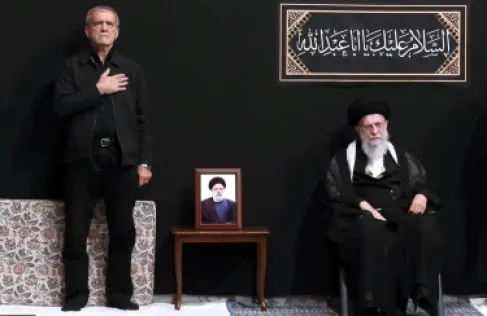
Khaberni - Despite the Iranian leadership's preparations in recent weeks for the worst scenario that occurred today with the announcement of the death of the Supreme Leader Ali Khamenei, his will was apparently not executed.
The agency "IRNA" reported that Iranian President Masoud Bzshkyan, the Chief Justice Gholam Hossein Mohseni, and a member of the Guardian Council will manage the transitional period.
The constitutional provisions for cases of leadership absence, especially Article 111 of the Constitution, state that "in case of the leader's death, resignation, or dismissal, the Assembly of Experts is obliged to take the necessary measures as soon as possible to appoint a new leader."
Until the leader is appointed, a council composed of the President, the Chief Justice, and one of the jurists from the Guardian Council, elected by the Expediency Discernment Council, shall temporarily undertake all the leader’s duties.
If one of them is unable to perform their duties during this period for any reason, another person elected by the council by a majority of the jurists will replace him in the council.
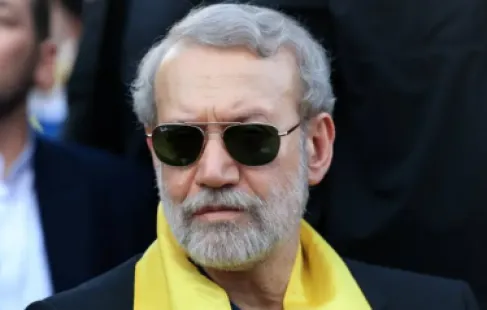
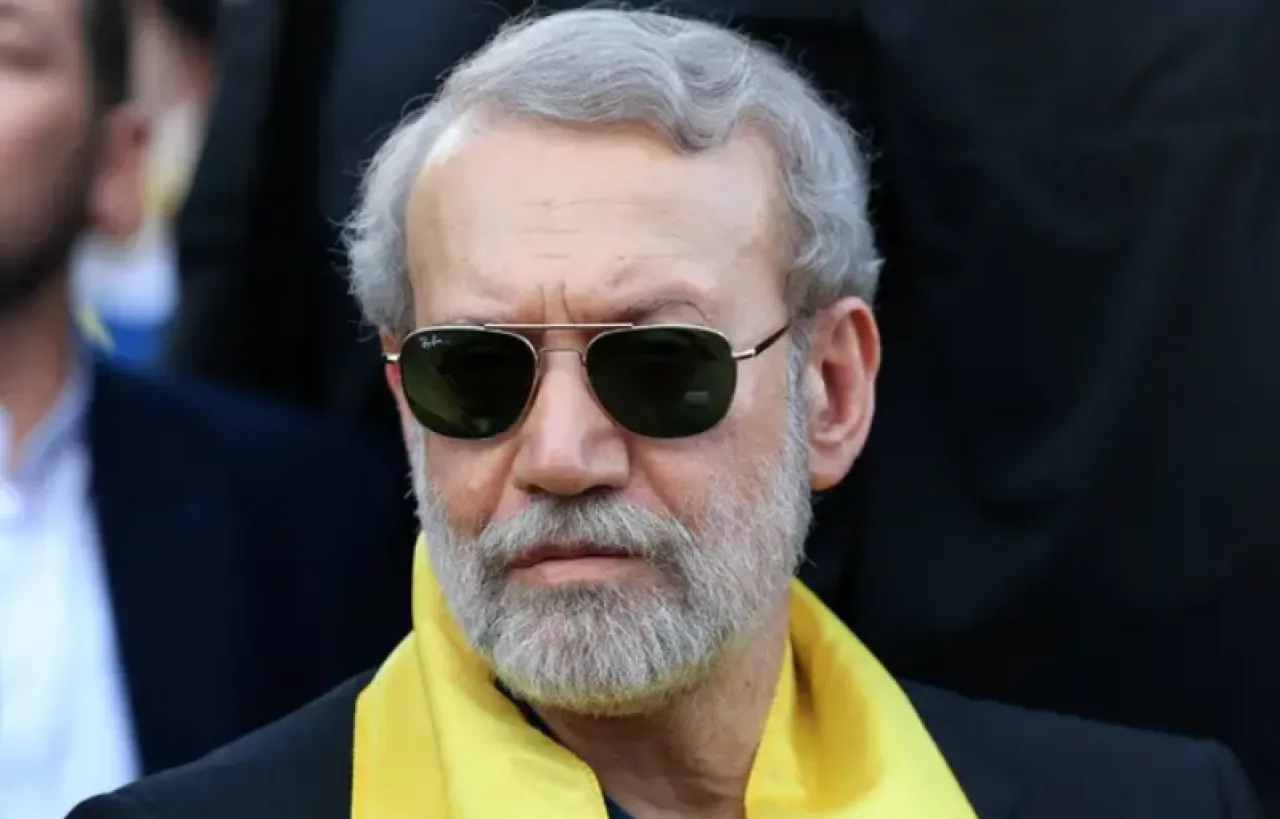
This decision came despite senior Iranian officials having confirmed that the Iranian leader, Ali Khamenei, had tasked Ali Larijani, his trusted top official and Secretary of the Supreme National Security Council, to manage the country's affairs in case of his assassination along with his son Mojtaba, according to the "New York Times" last week.
Six senior Iranian officials and three members of the Revolutionary Guard and former diplomats then explained that Larijani had practically managed the sensitive political and security portfolios since the start of the protests in the country and the American threats in early January.
The newspaper also mentioned that Larijani (67 years old), the seasoned politician and former Revolutionary Guard leader and current head of the Supreme National Security Council, had actually managed the country's affairs.
The Supreme Leader’s Will
The six officials and members of the Guard pointed out that Khamenei had instructed issuing strict directives to Larijani and a limited number of close political and military associates, to ensure the survival of the "Islamic Republic" against any American or Israeli strikes.
They also clarified that the Iranian leader’s directives had specified four layers of replacements for each military or governmental position personally appointed by him, and mandated all leaders to name up to four potential successors.
He delegated powers to a narrow circle of close ones to make decisions if communications with him were cut off or if he was killed.
"Iran's Delcy"
The Iranian leadership’s plans included scenarios for maintaining the same political system, including who would lead the country after the assassination of Khamenei and senior officials.
The leadership also considered who could be "Iran's Delcy," referring to Delcy Rodriguez, the Vice President of Venezuela who negotiated with the Trump administration to manage the country after the arrest of President Nicolas Maduro.
The officials saw Larijani at the top of the list, followed by Mohammad Baqer Qalibaf, the Speaker of Parliament, as well as the former President Hassan Rouhani despite his distance from the leader’s circles.
It is mentioned that Ali Larijani, the Secretary of Iran's Supreme National Security Council, had issued a strong warning on Saturday to both Israel and the United States, threatening to teach them an unforgettable lesson, following news of the death of the Supreme Leader Ali Khamenei, before it was officially confirmed.
Larijani said in a tweet on the platform "X": "The brave soldiers and the great Iranian nation will teach the international invaders a lesson that will not be forgotten."